
Isomalt is a functional sugar alcohol naturally found in certain plants and can also be synthesized artificially. It has very low calories, providing about half the calories of regular sugar, making it suitable for weight management. It exhibits high stability, withstanding high temperatures and humidity, which facilitates processing and storage. Its resistance to moisture absorption helps maintain food texture. Isomalt is not merely a sweetener but also a “technological lever” driving innovation and advancement in the food industry. With scientifically-backed health benefits, diverse application scenarios, and sustainable market potential, it is redefining the value of “sweetness”.
I. Candies and chocolate: a balance of health and fun.
1. Lozenges/candies: The heat-resistant properties of isomalt maintain the vibrant color of candies, while its low hygroscopicity prevents melting. With a sweetness level of about 50% that of sucrose, it leaves no aftertaste and offers excellent direct compression properties for easy shaping.
2. Low-Calorie chocolate: Replacing part of the sucrose with isomaltitol maintains a smooth texture while reducing calories, meeting the needs of fitness enthusiasts and weight managers.
II. Sports nutrition products: stable energy supply.
1. Energy bar: The low glycemic properties of isomaltitol help maintain stable blood sugar levels and prolong satiety, while its resistance to moisture absorption extends the product’s shelf life.
2. Sports drinks: As a sweetener combined with electrolytes, isomaltitol can provide sustained energy support and prevent fatigue caused by rapid fluctuations in blood sugar levels.
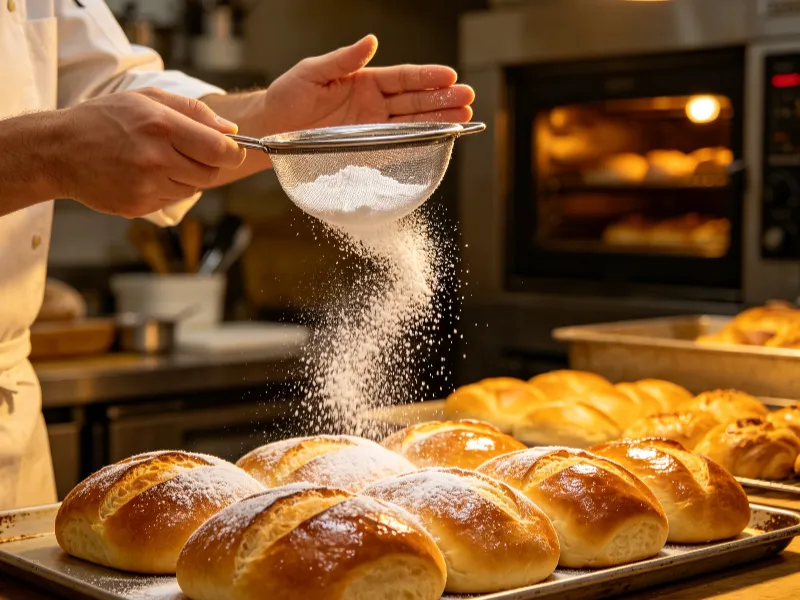
III. Baked goods: the “invisible assistant” for quality upgrades.
1. Cake/cookies: Isomaltitol replaces sucrose to form a uniform texture, with low hygroscopicity preventing product deformation and extending shelf life. For instance, adding 8% isomaltitol to plant-based bread can increase its volume by 25%, while maintaining softness even after 3 days of storage.
2. Cereal grains: As a coating sweetener, isomaltitol enhances the crispness of products while preventing caking caused by sucrose moisture absorption.
IV. Health food and probiotic beverages: dual empowerment of function and flavor.
1. Tablets/capsules: Isomaltitol is used as an excipient to enhance the tabletting performance due to its excellent solubility and stability.
2. Probiotic beverage: Isomaltitol not only provides sweetness but also acts as a prebiotic to promote the proliferation of probiotics, creating a dual selling point of “sweetness + functionality”.
V. Seasonings: the “flavor balancer” for healthy sugar reduction.
1. Soy sauce/oyster sauce: Adding 8% isomaltitol can neutralize saltiness and soften sharp flavors while preserving fermented umami. For example, replacing 5% sucrose with isomaltitol in light soy sauce enhances saltiness and umami, reducing the loss rate of soy aroma by 20% after 6 months of storage.
2. Chili paste: Buffers the burning sensation of capsaicin through hydrogen bonding, reduces saltiness, while preserving the fragrance of the raw ingredients.


 English
  Russian
  Spanish
  French
  Arabic