
Short answer: for most people, in most products, no. Xylitol remains an approved sweetener in the US and the EU, and regulators have not changed its status. But the short answer now carries an asterisk. In August 2026, researchers presented the largest study yet on xylitol and heart health at the European Society of Cardiology congress. Their headline: people with the highest blood xylitol levels had significantly higher rates of heart attack, stroke, and death over long follow-up periods. That finding is an association, not a verdict, and it measured blood levels rather than chewing gum. The honest answer to “is xylitol bad for you” is therefore not a single word. It depends on which exposure route you mean, how much you take in, and what your own risk profile looks like. This article walks through all three.
What Xylitol Is, and What Kind of Question “Bad for You” Actually Is
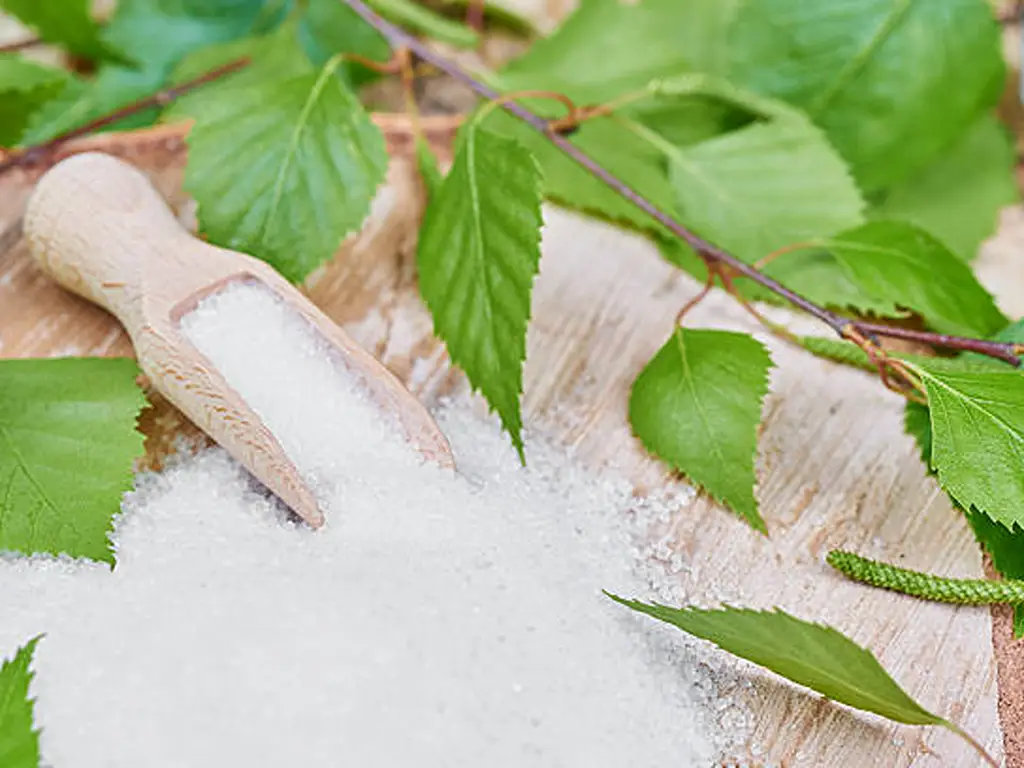
Xylitol is a sugar alcohol (polyol): a carbohydrate that tastes and sweetens like sugar but is metabolized differently. It has roughly 40% fewer calories than sugar (2.4 versus 4 per gram) and a glycemic index of about 7, compared with 60–70 for table sugar (Healthline, 2023). Your body also makes tiny amounts of it on its own as a byproduct of glucose metabolism, and it occurs naturally in small quantities in fruits and vegetables (European Society of Cardiology, 2026). The commercial version, usually produced from corn cobs or birch wood, is added to sugar-free gum, mints, candy, baked goods, peanut butter, oral care products, and medicines.
On regulatory status, xylitol is not banned anywhere mainstream. It is authorized in the EU as E 967, and EFSA’s re-evaluation of polyols including xylitol is ongoing (European Polyols association, 2026). In the US, the FDA permits sugar alcohols such as xylitol as sugar substitutes and does not regulate them as food additives (US FDA, 2025). The WHO/FAO expert committee JECFA has set xylitol’s acceptable daily intake at “not specified,” its term for the highest level of confidence in a substance’s safety (International Food Information Council, 2023). So if you were searching because a headline made you wonder whether xylitol got banned in Europe: it did not.
Here is the more useful way to ask the question. Sugar’s harms are established facts: excess calories, tooth decay, blood glucose spikes. Xylitol’s open questions are newer: digestive tolerance at high doses, and two large observational studies linking blood xylitol levels to cardiovascular events (NIH, 2024). Comparing the two is not comparing a bad option with a clean one; it is comparing proven risks with open ones. Which matters more depends on how much xylitol you actually consume and by which route, which is where the rest of this article goes.
Where You Actually Meet It: Six Exposure Routes, Not One Risk
Product lists tell you xylitol is “in” gum, toothpaste, jam, and peanut butter, but they do not tell you what those products actually do with it. The route matters as much as the amount, because each route carries a different dose pattern into the body.
The six xylitol exposure routes
| Route | Why it’s there | Dose pattern | Risk note |
|---|---|---|---|
| Oral care (toothpaste, mouthwash) | Dental benefit: bacteria cannot metabolize xylitol | Not swallowed; negligible systemic intake | Cardiologist quoted by NIH: no need to throw out toothpaste; Cleveland Clinic states no danger in oral care doses |
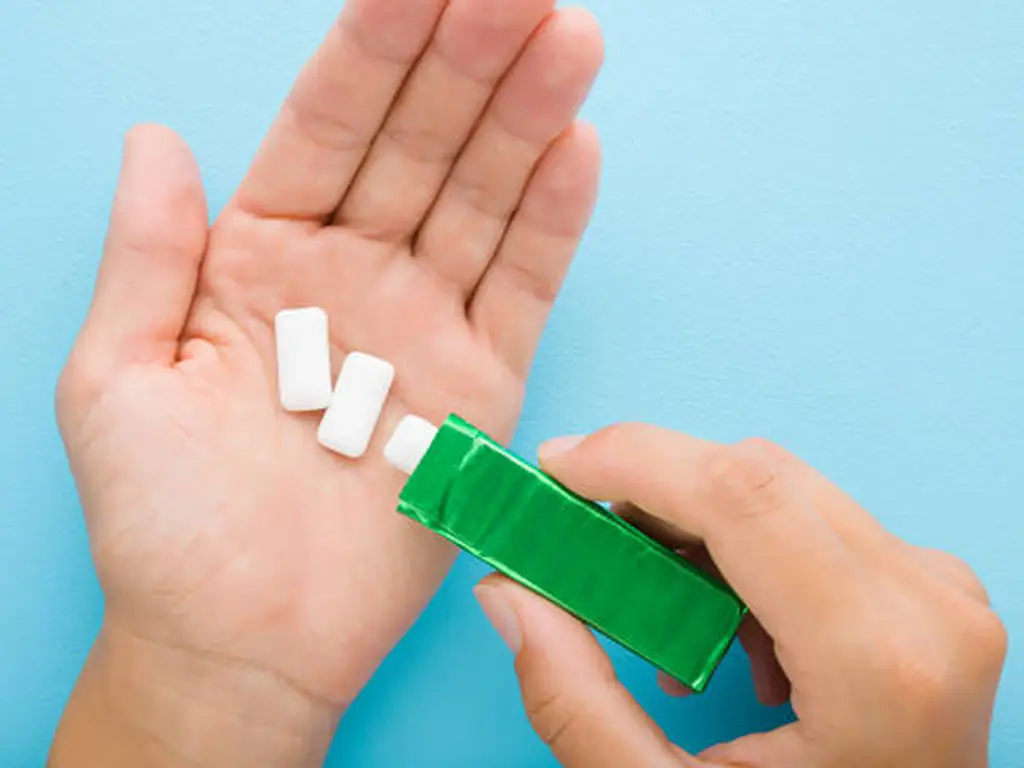
| Chewing gum and mints | Same dental mechanism, 27–75% reduction in cavity-linked bacteria reported | Small amounts, high frequency: roughly 0.3–1 g per piece, several times a day | Safe inside tolerance limits; GI symptoms when pieces pile up (see next section) |
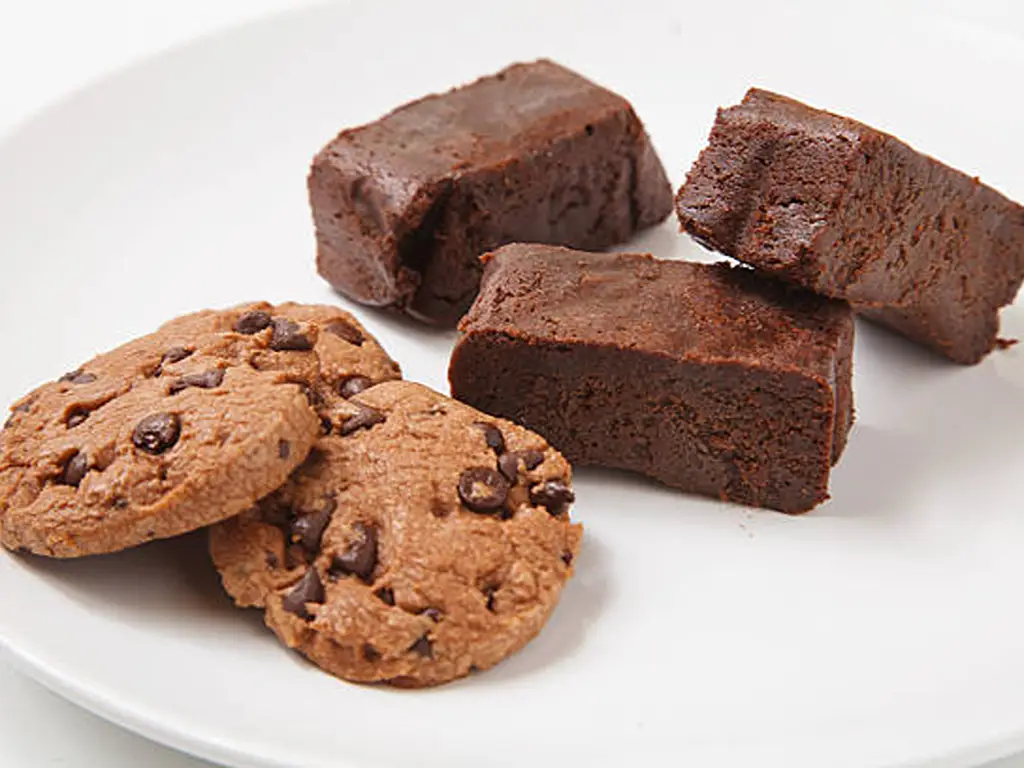
| Baking and tabletop sweetening | Blood-sugar-friendly sugar replacement: GI ~7, 1:1 sweetness swap | Large single servings: a batch of brownies can carry tens of grams | Highest GI-tolerance risk of any route; dose discipline required |
| Beverages | Sweetening without blood glucose spikes | Fast liquid intake with no fullness signal | Easy to overshoot tolerance because nothing slows consumption |
| Hidden “sugar-free” combinations | Multiple products: gum plus candy plus protein bars plus peanut butter | Repeated small doses that add up unnoticed | British Heart Foundation: people assume healthier and consume more than they realize |
| Medicines and supplements | Chewable tablets and some formulations use it as a sweetener/carrier | Small per dose, but stacks on dietary sources | Worth counting if you take several daily chewables |
DataSource: Exposure route synthesis from Cleveland Clinic, Healthline, British Heart Foundation via The Guardian, ESC 2026 press release
Two of these routes double as the reason xylitol has fans. The dental route works because Streptococcus mutans, the main cavity-causing bacterium, cannot use xylitol for fuel; studies report reductions of 27–75% in harmful oral bacteria with xylitol-sweetened gum, and dentists’ organizations have long recommended it (Healthline, 2023). The blood-sugar route is why people with diabetes and low-carb eaters reach for it: negligible glycemic impact at realistic doses. A fair account of the benefits should also carry their evidence grade. The pediatric dentistry association AAPD retired its dedicated xylitol policy in July 2025, having earlier acknowledged that evidence for significant caries reduction in children is inconsistent (AAPD, 2025), and a 2024 randomized trial in young children found no reduction in ear infections, respiratory infections, or cavities (Healthline, 2024). Adult gum chewing for dental benefit remains reasonable and widely endorsed; treating xylitol as a proven therapeutic is not.
One number explains why the exposure frame matters more than the molecule itself. Xylitol in commercial products is added at over 1,000 times the levels found naturally in foods, and the 2026 heart study’s concern centers on those high circulating levels (European Society of Cardiology, 2026). Your toothpaste never enters that circulation. The dose you bake into a cake absolutely can.
The route, not the molecule
The risk attaches to the route, not the molecule.
Xylitol in your toothpaste and xylitol in a pan of brownies are not the same question.
Six exposure routes, four dose numbers, two study waves
How Much Is Too Much? Four Numbers, Four Different Questions
Search “how much xylitol is safe per day” and you will collect a pile of numbers that contradict each other: a few grams, 20 to 70 grams, 45 grams for children, 100 grams for adults. They are not actually fighting. Each number answers a different question, and the confusion comes from reading them as one.
One sitting, one day, and a label threshold are not the same question
The single-sitting number comes from controlled testing: a 50-gram xylitol load in water caused bloating and diarrhea in 60–70% of subjects within two hours (Meyer-Gerspach et al., PMC, 2021). The mechanism is mechanical, not allergic: xylitol is absorbed slowly and incompletely in the small intestine, so the remainder pulls water into the gut and feeds gas-producing fermentation (Healthline, 2023). The daily number is a band, not a limit: intake in the range of roughly 20–70 grams per day is commonly tolerated once your gut has adapted, and no authority has set a formal daily cap (International Food Information Council, 2023). The clinical reference line sits higher: diarrhea has been reported in children around 45 g/day and in adults around 100 g/day (Nayak et al., PMC, 2014). And there is a fourth number that is not a safety threshold at all: in the EU, any food with more than 10% added polyols must carry the statement “excessive consumption may produce laxative effects” (EFSA Journal, 2023). That is a labeling trigger for formulators, not a personal danger line.
Five xylitol numbers and what each one actually answers
| The number | The question it answers | Exceeding it means | What you do |
|---|---|---|---|
| 5–6 g, 3–5 times daily | Does this dose help my teeth? (therapeutic range used in dental studies) | Nothing acute; this is a target, not a limit | Spread gum or mints across the day after meals |
| 20–70 g/day | What can a tolerant adult eat in a day? | You are above the commonly tolerated band; expect GI effects | Count total daily sources, not just one product |
| 50 g in one sitting | What happens if I eat a large amount at once? | 60–70% of tested subjects got bloating and diarrhea within 2 hours | Split large recipes or servings; never treat it like sugar in bulk |
| 45 g/day children, 100 g/day adults | Where does diarrhea become a documented clinical outcome? | Clinical-grade laxation, not mere discomfort | Keep total intake well below these lines, especially for kids |
| >10% added polyols (EU label rule) | When must a product warn “excessive consumption may produce laxative effects”? | A legal labeling obligation, not a toxicity line | Check labels; formulators: this is a spec item |
DataSource: Meyer-Gerspach et al. 2021 (PMC7828005); Nayak et al. 2014 (PMC4232036); IFIC; EFSA Journal 2023; FDA “Paws Off Xylitol”
The daily-gum arithmetic
For the most common real-world regimen, the math is forgiving. A piece of xylitol gum carries roughly 0.3–1 g. A dental-use pattern of several pieces spread across the day lands you at a few grams, nowhere near the tolerated daily band. The failure stories follow a different pattern. A r/keto user describes baking an entire cheesecake sweetened only with xylitol, with cramps, bloating, and gas as the evening’s sequel. On r/Microbiome, a user reports stomach aches after chewing just two pieces a day for three days, which points to individual sensitivity plus a gut that had never adapted. On r/CarieBUSTERS, a reader switching from gum to mints for dental reasons keeps cramping because the total daily load never actually dropped. The lesson in all three is the same: symptoms track the dose pattern, not the ingredient.
If a dog eats any of it, the arithmetic changes completely. Veterinary toxicology puts serious risk in dogs at roughly 0.1 g per kg of body weight, because canine bodies mistake xylitol for glucose and release a surge of insulin; a single piece of gum can endanger a small dog (Healthline, 2023). The FDA’s standing consumer advisory is blunt: keep xylitol products away from dogs, and if one eats any, contact a veterinarian immediately (US FDA, 2025).
Building tolerance without learning the hard way
Adaptation is real. Regular exposure lets your gut adjust, which is why long-term users handle amounts that would flatten a first-timer. The practical protocol is boring and effective: start with small single servings, step up over days rather than in one leap, and count the invisible sources (sugar-free candy, protein bars, peanut butter) that stack on top of your planned intake. If you have IBS or follow a low-FODMAP approach, xylitol is a polyol your gut may flag at much lower doses, and avoiding it is a reasonable default (Healthline, 2023).
What the 2026 Study Found, and What It Still Doesn’t Prove
What the cohorts actually measured
The new research comes from Marco Witkowski’s group at Charité University Hospital in Berlin. It was presented at ESC Congress 2026 in Munich and picked up widely in the days that followed (European Society of Cardiology, 2026; The Guardian, 2026). The analysis pooled 17,710 participants from two long-running cohorts, the Canadian Longitudinal Study on Aging and EPIC-Norfolk in the UK, and compared cardiovascular outcomes across blood xylitol levels.
The headline findings: over six years of follow-up in the Canadian cohort, people in the top quartile of blood xylitol had a 57% higher risk of major adverse cardiovascular events (death, heart attack, or stroke) than the bottom quartile, after adjustment for age, sex, smoking, lipids, diabetes, and hypertension. Over 30 years of follow-up in the British cohort, the top quartile still carried an 18% higher risk. Across the middle quartiles, the relationship tracked dose: higher blood xylitol, higher event rate.
Three qualifiers have to travel with every one of those numbers. First, it is observational: it links blood levels to outcomes but cannot prove xylitol causes them, a limitation the ESC’s own commentator, Professor Dan Atar, stated plainly (The Guardian, 2026). Second, it measured blood xylitol, not dietary intake. Why some people run high blood levels, how much of that comes from sweetened products versus their own metabolism, and what else might explain the association are open questions. Third, the work was presented as a congress report; the peer-reviewed publication is the version to watch. It extends a published 2024 study from the same first author, working with Stanley Hazen’s team at the Cleveland Clinic. That study found the top third of blood xylitol in more than 2,000 patients carried roughly 50% higher cardiovascular event risk over about three years. It also showed xylitol making human platelets and mouse arteries more clot-prone, and gave ten healthy volunteers a 30-gram xylitol drink: blood levels spiked 1,000-fold within 30 minutes, platelet reactivity rose while levels were high, and baseline returned after 4–6 hours (Witkowski et al., European Heart Journal, 2024; NIH, 2024). The 2026 work is the larger, longer population echo of that paper, not a new direction.
The 2026 evidence, graded
What it found
Blood xylitol in the top quartile tracked 57% higher MACE risk at 6 years and 18% higher at 30 years, dose-dependent, across 17,710 people in two cohorts
What it does not prove
That xylitol caused the events (observational design); that eating xylitol produces those blood levels; that oral care products matter (measured is blood level, not toothpaste use)
What would change the picture
A peer-reviewed publication of the cohort work; randomized or mechanistic intervention trials; any regulatory review by FDA or EFSA
Source basis
ESC Congress 2026 press release; Witkowski et al., European Heart Journal 2024
DataSource: ESC press release 2026; European Heart Journal 2024
Who should be cautious now, and who should wait
If you already have cardiovascular disease or significant risk factors, this research is a reasonable thing to raise with your doctor when you discuss sweetener use, particularly if you consume it heavily. If you are a daily heavy user (large amounts in baking, drinks, and snacks stacked together), knowing which exposure route you are on is the actionable part; the dose section above is where your leverage is. If you are an ordinary consumer whose xylitol intake is a few pieces of gum and a toothpaste, neither the 2024 nor the 2026 work gives you a reason to change anything, and the British Heart Foundation’s dietitian made the complementary point: this study is not a green light to return to sugar, which has proven harms of its own (The Guardian, 2026).
Rather than waiting on headlines, watch three concrete things: whether the 2026 cohort analysis clears peer review with its findings intact; whether any interventional trial tests the blood-level/platelet mechanism directly in humans; and whether EFSA’s ongoing polyol re-evaluation, which includes xylitol (European Polyols association, 2026), issues an updated opinion. Those are the events that would actually move the regulatory or scientific consensus.
Cancer, Liver, Gut, Pregnancy: The Other Worries, Answered Straight
Does xylitol cause cancer? There is no established link. Xylitol has not been classified as a carcinogen by any major body, and the “sweeteners cause cancer” discourse circulating in searches largely stems from the aspartame controversy, which involves a different molecule entirely (Cancer Council Australia, 2023). Absence of a cancer link is not proof of lifetime safety, but nothing in current toxicology or epidemiology connects xylitol to tumors.
Is xylitol hard on the liver? In humans, there is no established liver-toxicity signal at normal intakes. The liver failure you see in xylitol coverage is a dog fact: high doses in canines, on top of the insulin-driven blood sugar crash, can destroy liver tissue (US FDA, 2025). Human livers handle xylitol through pathways that do not produce the canine response. If a search result told you xylitol destroys human livers, it was carrying a veterinary finding across species.
Does it destroy gut bacteria? The honest answer is that modest evidence points the other way and strong claims exist in both directions. Xylitol reaching the colon is fermented by gut microbes (that is the source of gas), and some research describes it feeding beneficial bacteria similar to soluble fiber (Healthline, 2023). Xylitol also has documented antimicrobial effects against specific species like S. mutans and Candida. “Reshapes” is a fair word; “destroys” is not supported in human studies.
Is it safe in pregnancy and for children? Major food-safety authorities impose no specific restriction on xylitol in pregnancy; the UK’s NHS considers approved sweeteners a safe alternative to sugar (NHS, 2023), and the practical limit remains digestive tolerance, with children’s clinical laxation line around 45 g/day (Nayak et al., PMC, 2014). For supplements or large amounts during pregnancy, the standing advice applies: ask your midwife or doctor, not because of a known risk, but because supplement-level dosing is simply under-studied.
One comparison question belongs here because searches keep pairing them: xylitol versus stevia is not a safety contest with a winner. They have different evidence files (xylitol: decades of dietary use, digestive tolerance limits, the new cardiovascular questions; stevia: zero calories, no GI effect, but an aftertaste and its own, shorter research history). Choosing between them is a taste and application decision first.
Need the spec side of these questions? We document every xylitol batch against USP/BP/FCC and support label decisions per market, including the EU polyol statement.
Request the spec packageIf You Make, Sell, or Buy Products With Xylitol
For the professionals on the supply side, the 2026 study changes none of your compliance obligations today and all of your context. GRAS status in the US and E 967 authorization in the EU are unchanged. What has shifted is the evidentiary posture: blood-level associations in 17,710 people, an ESC stage, and product xylitol volumes trending upward (the researchers’ own framing) add up to a reasonable expectation that retailers and consumers will start asking harder questions than “is it sugar-free.”
That translates into three concrete formulation actions. First, put single-serving xylitol content and expected daily intake on paper for every SKU, so the answer to “how much is in there” is a documented number rather than a shrug. Second, audit each market’s labeling thresholds; the EU’s rule is explicit, with any food over 10% added polyols carrying the laxative statement (EFSA Journal, 2023), and export markets deserve the same check. Third, revisit product positioning for at-risk groups; a cardiovascular-targeted product leaning hard on xylitol now carries a talking point you did not have in 2023.
On substitution, be honest with yourself about what a swap buys. Blending xylitol with high-intensity sweeteners cuts both cost and single-serving exposure, and erythritol or allulose can carry part of the sweetness load. But erythritol has its own observational cardiovascular literature (NIH, 2024), and allulose comes with a different regulatory profile. There is no free replacement; there is only a portfolio decision made with current evidence on the table.
For distributors and buyers, the customer-facing question arriving with this news wave is some version of “can we still sell this?” The answer that survives scrutiny is structured: approved status is unchanged; the new findings are observational associations with blood levels, not ingestion; tolerance and labeling rules are the operative consumer protections; and the serious watch items are the peer-reviewed publication, intervention trials, and EFSA’s re-evaluation. A supplier worth its quote should volunteer batch specifications (assay, moisture, residual polyols, microbiology) and documentation without being chased for them.
If you are auditing a xylitol supply line against that standard, SAIGAO GROUP publishes its full xylitol specification sheet (USP/BP/FCC grade, assay 98.5–101.0%, moisture ≤0.5%) with COA and compliance documentation provided on request; you can contact our team for the spec package and evaluation samples.
Buyer checklist: what to ask a xylitol supplier in the 2026 context
- Current pharmacopoeial spec (USP/BP/FCC) with assay range on the datasheet
- Batch COA availability, not just a static spec sheet
- Moisture and residual polyol limits tied to caking and tolerance behavior
- Written confirmation of which markets’ labeling rules your grade supports (EU >10% polyol statement)
- Documentation pack: certifications, non-GMO and origin traceability
- Sample policy for pilot testing before commitment
DataSource: Buyer diligence framework; supplier spec conventions (USP/BP/FCC)
Put the Checklist to Work
Xylitol to USP/BP/FCC grade with assay 98.5–101.0% and moisture ≤0.5%. Batch COAs, compliance documents and evaluation samples, with 12-hour responses to international inquiries.
Get the Spec SheetReferences
- European Society of Cardiology. “Xylitol may increase the risk of cardiovascular events.” 2026. escardio.org
- Witkowski, M., Nemet, I., Li, X.S., et al. “Xylitol is prothrombotic and associated with cardiovascular risk.” European Heart Journal, 2024; 45(27):2439–2452. oup.com
- NIH Research Matters. “Xylitol may affect cardiovascular health.” 2024. nih.gov
- Cleveland Clinic. “Eating Foods With Xylitol Can Be a Risk to Your Heart.” 2024. clevelandclinic.org
- The Guardian. “Sweetener used in chewing gum and jam linked to strokes and heart attacks.” 2026. theguardian.com
- Healthline. “Xylitol: Everything You Need to Know.” 2023. healthline.com
- Meyer-Gerspach, A.C., et al. “Effect of the Natural Sweetener Xylitol on Gut Hormone Secretion and Gastric Emptying.” 2021. nih.gov
- Nayak, P.A., et al. “The effect of xylitol on dental caries and oral flora.” 2014. nih.gov
- U.S. Food and Drug Administration. “Paws Off Xylitol; It’s Dangerous for Dogs.” Updated 2025. fda.gov
- U.S. Food and Drug Administration. “Aspartame and Other Sweeteners in Food.” 2025. fda.gov
- American Academy of Pediatric Dentistry. “Policy on the Use of Xylitol in Pediatric Dentistry” (retired July 2025). 2025. aapd.org
- EFSA Journal. “Re-evaluation of erythritol (E 968) as a food additive” (documents the EU >10% polyol laxative labelling rule). 2023. wiley.com
- European Polyols. “Food legislation: polyols, E 967 Xylitol, EFSA re-evaluation ongoing.” 2026. polyols-eu.org
- WebMD. “Xylitol: Uses, Side Effects, Interactions, and Warnings.” 2024. webmd.com
- NHS. “The truth about sweeteners.” 2023. nhs.uk
- Cancer Council Australia. “Information sheet: Intense sweeteners and cancer risk.” 2023. cancer.org.au
- International Food Information Council. “What is Xylitol?” 2023. ific.org
 English
 Russian
 Spanish
 French
 Arabic