
Search comparisons of allulose and monk fruit usually end the same way: a verdict that one “tastes more like sugar” and the other “has an aftertaste.” That verdict is not wrong, but it skips the decision that actually matters. These two are not competing for the same job. Once you see which job each one does, the choice in your kitchen, your formulation, and your target market stops being a taste debate and becomes a specification.
Allulose vs Monk Fruit: Two Sweeteners, Two Different Jobs
Allulose is a rare sugar, an epimer of fructose that occurs naturally in trace amounts in figs, raisins, and wheat. Because those traces are far too small to extract economically, commercial allulose is made by enzymatically converting fructose, usually from corn starch (ZOE, 2026). It delivers about 70% of sucrose’s sweetness at roughly 0.2 to 0.4 kcal/g, the figure the US FDA uses for labeling.
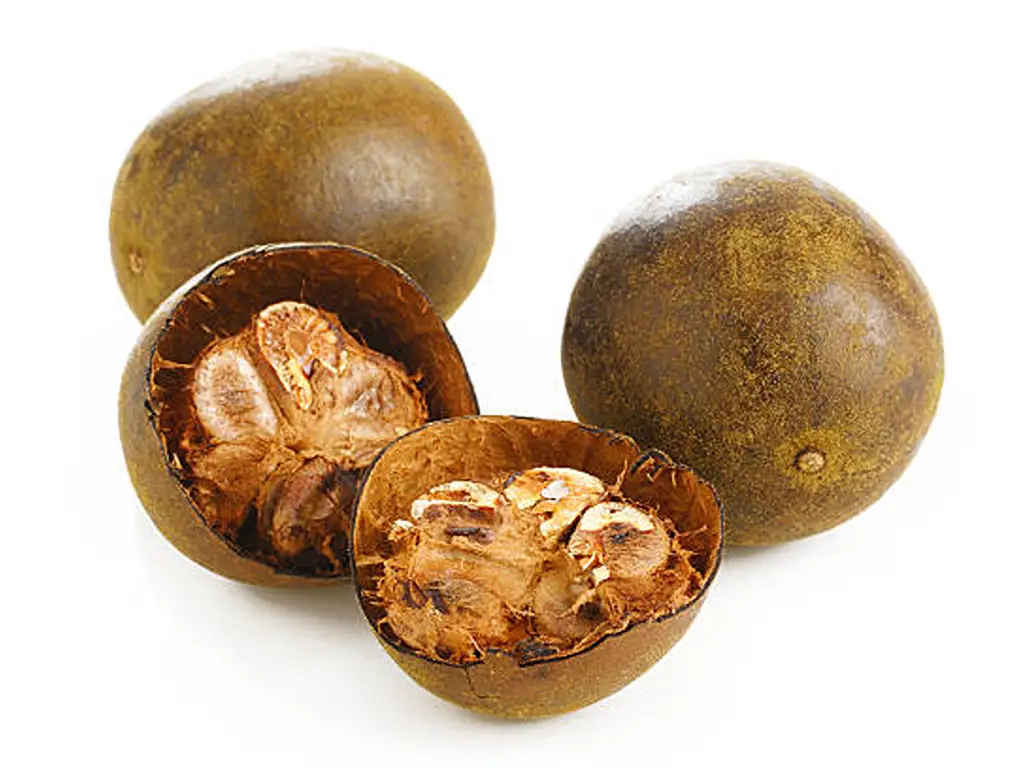
Monk fruit (luo han guo) is a small melon from southern China whose sweetness comes from mogrosides, chiefly Mogroside V. Commercial extracts are standardized to 25%, 40%, 50%, or 55% MgV, and third-party references put them at 150 to 250 times sweeter than sucrose (ZOE, 2026). If you have seen the sweetness multiplier quoted anywhere from 150 to 400 times, that spread is mostly the purity grade talking: higher MgV content measures sweeter and tastes cleaner. Monk fruit extract is calorie-free.
Now put the numbers side by side and the “versus” framing starts to look strange:
Two sweeteners, measured in their own units
| Property | Allulose | Monk fruit extract |
|---|---|---|
| Sweetness vs sucrose (~100) | ~70 | 150–250× (purity-dependent) |
| Calories | 0.2–0.4 kcal/g (US FDA) | 0 |
| Typical dose to sweeten | grams (≈135 g replaces 100 g sugar) | milligrams (≈0.3–0.5 g at 50% MgV) |
| What it contributes | bulk, browning, moisture | sweetness only |
| Sources | ZOE (2026) | BSH Ingredients (2026) |
To match the sweetness of 100 g of sugar you need roughly 135 to 140 g of allulose, or about 0.3 to 0.5 g of a 50%-MgV monk fruit extract. One ingredient works in grams, the other in milligrams. That is not a ranking; it is a division of labor. Allulose is a bulk base that carries texture; monk fruit is a high-intensity booster that carries sweetness. Every practical choice below follows from this one structural fact.
What Each One Does in a Real Formula
Baking: browning, bulk, and moisture
This is allulose’s home ground. It joins the Maillard reaction and caramelizes, so cookies brown, crusts set, and toppings turn properly golden (ZOE, 2026). It replaces sugar roughly 1:1 by weight for bulk, and because it is hygroscopic it holds moisture and slows staling. The catch is the sweetness gap: at 70% of sucrose, an allulose-only recipe tastes noticeably less sweet unless you add more, add a second sweetener, or accept a lighter sweetness.
Monk fruit contributes none of that. It has no bulk and does not brown. A formula sweetened only with monk fruit tends to taste flat or disproportionately sweet, because the sugar’s structural job is simply missing. In baking it appears almost exclusively through a carrier such as erythritol, a fiber, or allulose itself.
Drinks and frozen: clarity versus body
In water-based systems the roles flip. Monk fruit dissolves cleanly at milligram-level doses, adds no viscosity, and stays stable across typical beverage pH ranges. That is why zero-calorie teas and flavored waters are its strongest category. Allulose in a beverage adds body: a mild, syrupy mouthfeel that suits smoothie-type and dairy drinks but can be more than a crystal-clear sparkling water wants.
In frozen desserts allulose has a property almost no other sugar substitute offers: it depresses the freezing point like sucrose, which keeps ice cream scoopable instead of icy. Monk fruit cannot do this, so frozen applications use allulose (or sugar alcohols) as the base and monk fruit, if at all, as the sweetness top-up.
What your body does with each
Both are close to glycemic-neutral. Monk fruit is consumed in amounts too small to move blood glucose. Allulose is absorbed in the small intestine but not metabolized for energy; most is excreted unchanged, and the 20 to 30% that reaches the large intestine can be fermented by gut bacteria (ZOE, 2026). Evidence here is unusually concrete for a sweetener. A 2024 meta-analysis of six randomized controlled trials found allulose reduced post-meal glucose spikes in people with type 2 diabetes.
The practical limit is digestive tolerance. A 2018 dose-escalation study landed on roughly 0.4 g per kg of body weight in a single sitting, or about 0.9 g/kg across a day, as the amount most adults clear comfortably (ZOE, 2026). Beyond that line, some people get bloating, gas, or loose stools. Home users on r/keto describe the same wall and the same workaround: ramp up slowly over a week rather than starting at full replacement doses.
Dose check before you commit
Two honesty notes. First, individual responses vary; people with diabetes on r/diabetes_t2 report that some individuals see a rise from one sweetener and not the other, so the only test that matters is your own meter. Second, you may have seen allulose called an “OTC Ozempic.” Early research does suggest allulose can stimulate GLP-1 secretion in the gut, but the leap from that finding to a “natural GLP-1 drug” is not supported by current evidence. Treat it as an interesting lead, not a reason to choose.
Where Each One Wins: Two Forks That Decide It
The application fork
Follow the functions from the last section and the mapping almost draws itself. Zero-calorie beverages, teas, and flavored waters favor monk fruit: it delivers target sweetness with no body and no calories in a matrix that never needs bulk. Cookies, cakes, muffins, protein bars, and confectionery favor an allulose base for browning, structure, and moisture. Ice cream and frozen desserts favor allulose for freezing-point control. Tabletop sweeteners and syrups are usually blends, because the 1:1 measuring convenience consumers expect requires both roles at once.
The jurisdiction fork
Here is the part most comparison articles skip: the answer can flip depending on where you sell. In the United States both are GRAS, and allulose carries a labeling advantage: the FDA excludes it from “added sugars” and “total sugars” on the Nutrition Facts panel. In the EU and UK, allulose is not yet authorized; it is still under novel food review, with the UK’s FSA assessing the application (ZOE, 2026). Note the wording: not banned, not yet authorized. For a UK buyer today, monk fruit is simply the only one of the two you can buy (Groovy Keto, 2026). Japan and South Korea approve both, and China approved D-allulose as a new food raw material in July 2025 (NHC Announcement No. 4 of 2025).
Decision matrix: where each option stands
| Application / Market | Allulose alone | Monk fruit alone | Allulose + monk fruit |
|---|---|---|---|
| RTD beverages | possible, adds body and cost | strong fit | fit, MF-led |
| Baked goods | strong fit, top up sweetness | weak, no bulk | standard approach |
| Frozen desserts | strong fit, freezing point | weak | fit |
| Tabletop 1:1 | light sweetness, needs top-up | needs carrier | standard approach |
| Selling into US/Asia | approved | approved | approved |
| Selling into EU/UK | not yet authorized | approved | not yet authorized (contains allulose) |
| Sources | ZOE (2026) | Groovy Keto (2026) | BSH Ingredients (2026) |
One more fork is hiding in the matrix’s last column: the market has already voted on this question, and its answer is “and,” not “or.” Lakanto launched a monk fruit and allulose blend in October 2023 (Lakanto, 2023). In June 2026, Truvia added an allulose-plus-stevia-and-monk-fruit tri-blend to a national retail rollout (PR Newswire, 2026; Food Business News, 2026). Independent reviewers note that most allulose products on store shelves are already blends (WhatSugar, 2026).
The Blend: How the Market Answers the “vs”
The logic of a blend is complementary roles, not compromise. Allulose takes over 100% of sugar’s weight job: bulk, browning, moisture, freezing point. A small dose of monk fruit bridges the 30% sweetness gap. A supplier-published starting point for baking: 100 g of allulose plus roughly 0.015 to 0.03 g of monk fruit extract at 50% MgV. Adjust by sensory testing, from the low end upward. In beverages the ratio can invert, with monk fruit leading and a touch of allulose for body.
Why not just use more allulose instead, about 135 g per 100 g of sugar? Two reasons, and both compound: you pay for the extra 35%, and you push every serving closer to the digestive tolerance ceiling from the last section. The blend solves the same problem from the other direction.
The two dosing ledgers, in formula numbers
HIGH-INTENSITY SWEETENER USE LEVEL
0.01–0.5%of total formula weight
BULK BASE (ALLULOSE) USE LEVEL
50–100%of sugar’s weight, replaced 1:1
More than 95% of a blended formula’s sweetener weight and spend sits on the base side.
That arithmetic is worth internalizing before sourcing: the base is nearly all of the purchase. It means the high-intensity side is a spice decision measured in grams, while the base is the decision that sets your texture, your label claim, and most of your ingredient cost.
One discipline note: blends and pure allulose are not interchangeable. One r/diabetes_t2 user’s subscription was silently swapped from pure allulose to a blend. The difference was immediate enough that they switched suppliers to get the original back. And blends can mislead in the other direction too. A typical store blend is over 95% allulose by weight, yet up to 80% of its sweetness can come from the high-intensity component (WhatSugar, 2026). When someone says they “don’t like allulose,” they are often reacting to the blend’s other ingredients. Carrier choice matters for the same reason: erythritol is the low-cost standard but brings a cooling note and, for some people, its own digestive complaints, while soluble corn fiber, inulin, or polydextrose add fill with a fiber claim.
Five Ways This Choice Goes Wrong
The five-point pre-production check
Each item traces to a real failure, not a hypothetical. Home users report tolerance walls and slow-ramp workarounds; low-purity extracts ship bitter batches; one swapped subscription turned out to “not be the same thing” at all. And UK shoppers simply cannot buy allulose yet. The checklist version is the whole point: every one of these has a concrete check you can run before production, not after.
Sourcing the System, Not the Winner
Reframe the purchase the way the dose table already implies. The high-intensity side is a spice you buy by the kilo. The bulk base is a commodity you buy by the ton. It determines whether your cookie browns, your ice cream scoops, and your label reads the way you planned. So the supplier question that matters is not “which sweetener do you sell,” but “how well can you hold a specification on the base, at volume, year-round.”
Supply structure differs more than most buyers expect. Monk fruit is a harvested crop concentrated almost entirely in one region of China, so supply tracks growing seasons and harvest quality. Allulose is fermented year-round from corn-derived fructose, a globally traded feedstock, which is why its pricing has trended downward as capacity expands. Published supplier references give indicative bulk ranges of roughly $3 to 8 per kg for allulose versus $80 to 300+ per kg for monk fruit extract. Both figures shift with volume and grade. Either way, the number that matters is cost-in-use, not price per kilo.
What to actually check when evaluating a base-sweetener supplier
| Check | What good looks like |
|---|---|
| Specification depth | dual forms (crystal and syrup) with full spec tables, purity stated on a dry basis, per-batch COA |
| Supply stability | year-round production lines, stated capacity, no single-harvest exposure |
| Compliance file | Non-GMO raw material statement, food-safety certifications, complete export documentation for your market |
| Responsiveness | free samples within limits, clear MOQ, fast answers to international inquiries |
On the base side, specification depth is where suppliers separate. SAIGAO’s allulose runs in two finished forms from a dedicated allulose production workshop. The crystal grade specifies D-allulose at ≥98.5% on a dry basis. The syrup specifies ≥95.0% allulose with ≥70.0% dry matter and water activity below 0.75. Both ship with full published specification tables (allulose crystal specification sheet; allulose syrup, 70% solids). Because eight parameters, from purity and pH to particle size and packaging, are adjustable to a customer’s formulation, the spec you test is the spec you ship.
If you are assembling the system rather than picking a winner, test that claim directly. We are SAIGAO. In-stock allulose powder ships in 7 days, custom orders run 20 to 30 days, and bulk orders start from 1 ton with free samples within limits. International inquiries get a reply within 12 hours (request a sample or quotation).
Get the Allulose Spec Sheets Before Your Next Blend
Crystal and syrup allulose with published specification tables, eight customization axes, and free samples within limits for buyers in 50+ countries served.
Request Allulose SamplesReferences
- ZOE. “Is Allulose Healthier Than Sugar? Facts, Benefits, and Risks.” 2026. zoe.com
- National Health Commission of China. “Announcement No. 4 of 2025: D-Allulose and 19 Other ‘Three New’ Foods.” 2025. zwfw.nhc.gov.cn
- PR Newswire. “Truvia Brand Portfolio Expands with New Allulose Plus Stevia Sweetener & Monk Fruit Sweetener.” 2026. prnewswire.com
- Food Business News. “Truvia Debuts Tri-Blend Sweetener.” 2026. foodbusinessnews.net
- Lakanto. “Lakanto Expands Monk Fruit Sweetener Line with New Allulose Blend.” 2023. lakanto.com
- WhatSugar (Adriane Campos). “2026 Allulose Review: What It Is and How To Use It Right.” 2026. whatsugar.com
- Groovy Keto. “Monk Fruit vs Allulose: Which Is Better (and Which Can You Buy).” 2026. groovyketo.co.uk
- Reddit r/keto. “Which Sugar Substitutes Allulose or Monk Fruit Sweetener for Sugarless Drinks?” 2025. reddit.com
- Reddit r/keto. “Is Allulose Alone, a Blend of Both, or Monk Fruit Better as a Sweetener?” 2025. reddit.com
- Reddit r/diabetes_t2. “Allulose Plus Monk Fruit Syrup vs Pure Allulose.” 2025. reddit.com
 English
 Russian
 Spanish
 French
 Arabic