
Search “maltitol vs stevia” and most results will try to crown a winner. The honest answer is that the question is miscast: these two sweeteners sit at opposite ends of one spectrum, and the products that actually work usually use both. Which one should do which job is the decision worth your time.
Two Sweeteners from Two Different Categories
Pick up any sugar-free product and read the ingredient list. There is a good chance one of two names appears: maltitol or stevia. They get compared constantly, yet they are not really the same kind of ingredient.
Maltitol is a sugar alcohol (a polyol, designated E 965 in the EU), made by hydrogenating maltose, which is itself derived from starch, typically corn. It comes in two commercial forms: a crystalline powder and a syrup. That form distinction looks like a footnote and is actually a load-bearing fact; several numbers later in this article depend on which form you mean.
Stevia is not one molecule but a family of sweet compounds called steviol glycosides, extracted from the leaves of Stevia rebaudiana and purified into powders or liquids (designated E 960 in the EU). What a retail shopper buys as “stevia” is often a spoonable blend in which the actual extract is diluted with carriers such as maltodextrin or inulin. Only the high-purity extract itself is calorie-free.
So the category verdict: maltitol is a nutritive bulk sweetener. It replaces sugar’s sweetness and much of sugar’s physical body. Stevia is a non-nutritive high-intensity sweetener: enormous sweetness potency at doses so small that they contribute nothing else. One is a stand-in for sugar’s mass; the other is a seasoning for sugar’s sweetness. One more verdict while we are here: “stevia is natural” is true only as a statement of origin. Leaf extraction followed by resin purification is industrial processing, and the purity spectrum within E 960 is wide.
The Numbers Everyone Compares First
The comparison table below is the one most articles start with, and it is genuinely useful, provided every number keeps its qualifiers.
Maltitol vs Stevia: The Core Numbers
| Parameter | Maltitol | Stevia (high purity) | Why it matters |
|---|---|---|---|
| Sweetness vs sucrose | ~75-90% | 200-350× | sets dosing strategy and blend ratio |
| Calories | 2.1 kcal/g (US label factor) / 2.4 kcal/g (EU factor) | 0 kcal/g | sugar-free ≠ calorie-free |
| Glycemic index | 36 (crystalline) / 52 (syrup) | 0 | form changes the answer |
| Bulk, texture, freezing-point contribution | Yes, substantial | None | determines whether the product holds together |
| Aftertaste profile | Close to sugar, slight cooling | Bitter-licorice note at higher doses | flavor chemistry, not marketing |
| Digestive tolerance | EU packs >10% polyols must carry laxative statement | No fermentation, generally well tolerated | portion design |
| Additive designation | E 965 | E 960 | regulatory identity |
Two rows deserve immediate unpacking. On calories, the same molecule carries two label values. US rules assign maltitol 2.1 calories per gram (US FDA, 21 CFR 101.9, current). EU rules assign a single energy factor of 10 kJ/g (2.4 kcal/g) to all polyols (EU Regulation 1169/2011, Annex XIV). Neither is wrong; they are different regulatory ledgers, and your label market decides which applies.
On the “sugar-free” claim: EU claim rules cap it at no more than 0.5 g of sugars per 100 g (ChemLinkED regulatory review, 2024). Polyols are not sugars, which is why a maltitol-sweetened product can carry the claim while still delivering calories and its own nutrition line. The mirror-image trap sits on the stevia side of the aisle: spoonable “stevia” packets bulked with maltodextrin or inulin carry real calories per serving. The zero only belongs to the pure extract.
One boundary sentence and we move on. EU packs containing more than 10% polyols must state that excessive consumption may produce laxative effects (Regulation 1169/2011, Annex III). Tolerance and dose deserve their own article and are deliberately not expanded here.
Blood Sugar: Where the Comparison Is Actually Real
If one row of that table decides the comparison for a large share of searchers, it is glycemic index. This is also where most sources quietly mislead, because they quote a single GI for maltitol when the literature reports two.
The peer-reviewed figures are 36 for crystalline maltitol and 52 for maltitol syrup, with the syrup value explicitly attributed to “a higher hydrogenated oligosaccharides content” (Saraiva et al., 2020). The form difference is a composition difference. A typical commercial maltitol syrup specification (referenced to GB 28307 / USP / FCC) runs maltitol at ≥50%, with hydrogenated co-products such as sorbitol in the profile. The syrup is not a pure maltitol dose, and its GI sits higher accordingly. When you see the argument “maltitol GI is 35” in one article and “52” in another, both are usually citing the literature correctly and the molecule incorrectly.
GI, by form: the number that ends the argument
36
Crystalline maltitol
powder form, standardized trials
52
Maltitol syrup
not a pure maltitol dose: hydrogenated co-products ride along
What about the tests people run at home? A widely read keto site measured maltitol with a blood-glucose meter and reported a rise “almost as much as regular table sugar” (KetoConnect). A 2024 lab round-up places the same molecule in the mid-range of sweetener GIs (GoodRx). Both can be honest. Standardized GI is an average under fixed conditions; a home meter reads one person, one portion, one moment, and whether the test ran fasting or with a meal changes the answer. The practical verdict is not to referee the studies but to count correctly: read the “of which polyols” line on the label and count it against your daily carbohydrate budget, partially or fully according to the plan you follow.
Mainstream guidance also splits, in a way that confuses readers less once you see the pattern. Healthline calls maltitol acceptable on keto “in moderation” (Healthline, 2020); Diet Doctor recommends avoiding it (Diet Doctor, 2026); the testers above say avoid entirely. And there is a newer question: the World Health Organization’s 2023 guideline advises against using non-sugar sweeteners for weight control, and steviol glycosides are among the sweeteners that recommendation covers (WHO guideline, 2023). Maltitol is not on that list, not because it was cleared, but because the guideline’s own definition excludes sugar alcohols: polyols contain calories and therefore are not NSS (WHO guideline executive summary). The two sweeteners are scrutinized by different regulatory frameworks for a structural reason, not a safety ranking.
That is the exact failure real buyers report: in diabetes forums, users describe discarding sugar-free candy after their readings contradicted the promise on the front of the pack (r/diabetes discussion). If blood sugar is the axis you care about, stevia wins this station outright, and maltitol’s honest position is “lower than sugar, not nothing.”
Beyond Sweetness: Bulk, Texture, and Flavor Chemistry
The Division of Labor, Written in Formula Language
Professional formulators, especially in gelato and ice cream, quantify the two jobs separately. POD expresses sweetening power with sucrose at 100; PAC expresses anti-freezing power, the ability to depress freezing point and keep a frozen product scoopable. For maltitol versus stevia powder, one formulation tool puts it in single numbers: POD 85 versus 30,000; PAC 99 versus 0 (Free Gelato Balancing ingredient compare).
Sweetness potency and physical contribution are two different ledgers: maltitol fills the mass at 85% of sugar’s sweetness and 99% of its freezing-point work, while stevia sweetens at 300 times the potency but contributes nothing to weight, texture, or freeze behavior.
The two ledgers, in formula numbers
Sweetening power (POD, sucrose = 100)
85 vs 30,000
Anti-freezing power (PAC)
99 vs 0
Sweetness potency and physical contribution are two different ledgers; the ‘vs’ answer is a division of labor.
Formula parameters per the Free Gelato Balancing ingredient compare; gelato formulators dose both jobs separately.
What Sugar Actually Does Inside a Product
Consider browning first. Sucrose itself is not a reducing sugar, but during baking it inverts into glucose and fructose, which drive Maillard browning and crust color. Polyols including maltitol are not reducing sugars and cannot contribute to non-enzymatic browning, which is why polyol-sweetened bakes come out paler (American Society of Baking, Maillard reaction overview). The fix is well understood in industrial baking: compensate with adjusted bake parameters or browning contributions from other recipe components. It is one more reason maltitol is a 1:1 starting point rather than a guaranteed 1:1 endpoint.
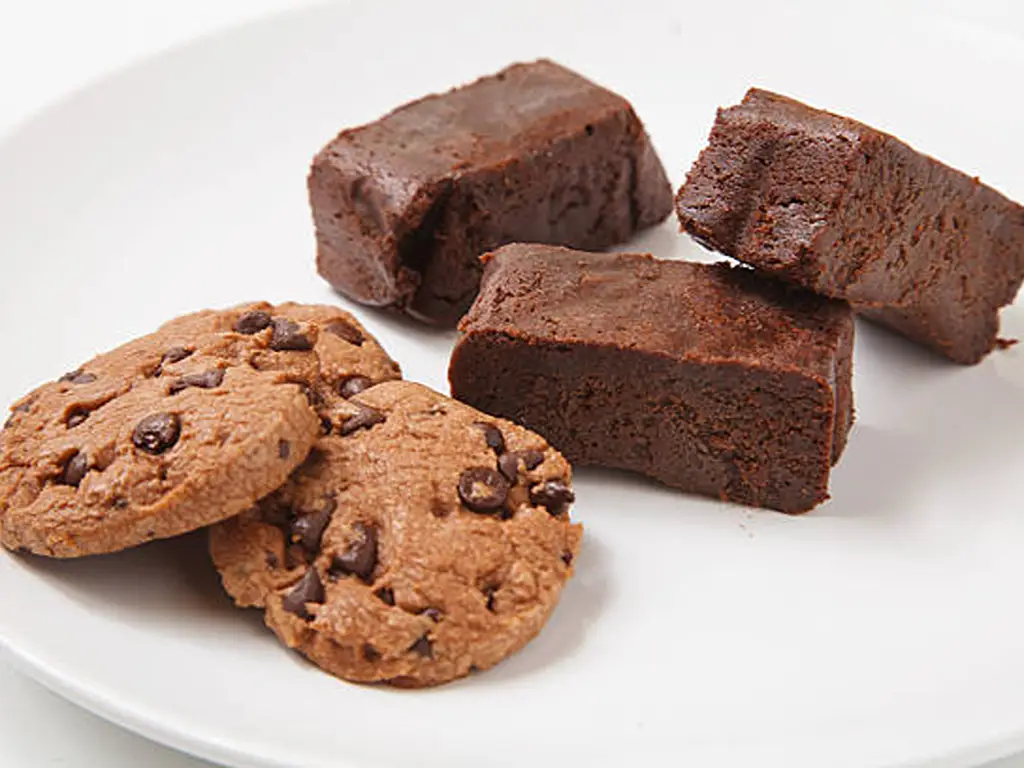
In chocolate, maltitol is the category’s benchmark bulk polyol precisely because it mimics sucrose’s snap, melt, and molding behavior. The same technical literature notes that maltitol formulations can show higher yield stress than isomalt or xylitol ones, traced to maltitol’s particle size distribution (Wiley, International Journal of Food Science & Technology, 2022). In practical terms: the powder’s particle specification is a processing parameter, not paperwork.
Where Each Sweetener Carries the Bulk, and Where the Swap Fails
| Application | Who carries bulk | Typical sweetness top-up | Where the swap fails |
|---|---|---|---|
| Sugar-free chocolate | Maltitol (crystalline) | Stevia, ppm-level | yield stress and temper drift if particle spec is uncontrolled |
| Hard candy and gummies | Maltitol syrup or crystal | Stevia or other HIS | moisture pick-up and crystallization control; residual reducing sugars |
| Baked goods | Maltitol + fiber carriers | Stevia blends | crust color and structure; polyols do not brown |
| Ice cream / gelato | Maltitol (PAC 99) | Stevia (PAC 0) | scoop softness collapses if freezing-point math is ignored |
| Beverages | Often none needed | Stevia, often alone | missing mouthfeel body; aftertaste is more audible in low-viscosity systems |
Stevia’s Real Problem Is Chemistry, Not Reputation
Stevia’s aftertaste has a mechanism: steviol glycosides activate bitter receptors on the tongue, and overcoming the resulting bitter or licorice-like note remains an active research topic (Muenprasitivej et al., 2022). What has genuinely improved is purification: extracts richer in rebaudioside A taste cleaner than crude stevioside-heavy material, and blending masks the rest. So when a brand says “modern stevia has no aftertaste” while user forums still brim with rejection, both sides are describing real products at different points of the purity spectrum. If you are sourcing stevia, the glycoside composition on the spec sheet is the single best predictor of whether your customers will taste it.
The Blend Is the Standard Answer, and It Can Still Fail
The Standard Formula
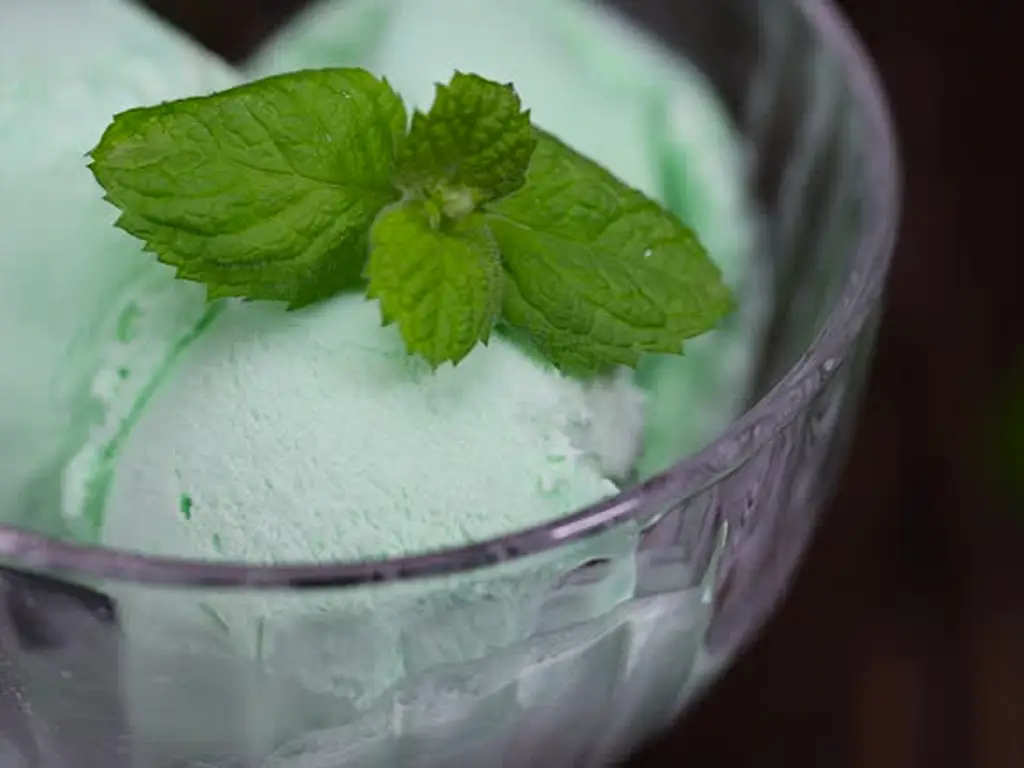
Once sweetness and body are understood as separate jobs, the industry’s default solution writes itself: a bulk polyol carries mass and texture, and a high-intensity sweetener tops sweetness up to full sucrose equivalence at ppm-level doses. Sugar-free chocolate brands document exactly this system in public: maltitol for the bulk, snap, and melt; stevia for clean potency. A third position also exists on the shelf: rare sugars such as allulose combine near-zero calories with real bulk, which is why blend strategies keep expanding rather than collapsing into single-ingredient answers.
Why Formula Copy-Paste Fails
The division of labor is a hypothesis until a sensory panel passes it. A 2019 study of sucrose-free milk chocolate built exactly the standard architecture, polydextrose and maltitol as bulking agents with stevia as the sweetener, and that formulation scored negative on sensory acceptability against the control (Aguilar-Villa et al., 2019). A companion trial in the same field succeeded with inulin and polydextrose bulks under stevia sweetness (Rad et al., 2019). Same formula family, opposite outcomes. Three failure points recur:
- Carrier flavor conflict. The bulking agent is not flavor-neutral in every system; polydextrose and inulin each carry their own notes at working doses.
- Dosing window. At 200 to 350 times sucrose sweetness, stevia’s workable range is a few hundred ppm; small weighing errors are audible in the cup.
- Aftertaste stacking. Stevia’s bitter note and the polyol’s cooling effect can arrive as a combined off-experience rather than canceling out.
Sourcing the Decision: How Buyers Should Read This Comparison
For a purchaser, the comparison lands on three different accounting calibers, and a supplier conversation that mixes them up produces quotations that cannot be compared. Per kilogram, maltitol is among the more affordable polyols and is used at gram scale per serving. Per unit of sweetness delivered, stevia’s ppm dosing flattens its unit price dramatically. Per function, only the bulk line can carry mass, texture, and freezing-point work at all. On the ledger, “maltitol vs stevia” resolves into two lines to source and one division plan to validate, not a flag to plant.
Before you shortlist suppliers, the checklist that keeps quotations comparable:
Procurement self-check before the quotation
This is the conversation we build for. At SAIGAO GROUP we produce maltitol in both commercial forms. We specify the crystalline grade to USP, BP and FCC reference standards (assay 98.0-100.5% on a dry basis, reducing sugars ≤0.1%) (crystalline maltitol specification). We also adjust eight customization axes including purity, particle size and packaging to your application, rather than asking your formula to fit our bag. Bulk orders start from 1 ton, in-stock powder ships within 7 days, custom production runs 20-30 days, and international inquiries get a response within 12 hours.
If you are weighing which line should carry your next sugar-free SKU, we will send specifications and samples for both sides of the decision: request maltitol specifications or samples.
Get Both Spec Sheets Before You Decide
Crystalline and syrup maltitol under USP / BP / FCC reference standards, eight customization axes, and samples for buyers in 50+ countries served.
Request Maltitol SpecificationsReferences
- U.S. FDA. “Nutrition Labeling of Food, 21 CFR 101.9 (Sugar Alcohol Caloric Factors).” Current. ecfr.gov
- EU Regulation 1169/2011. “Annex III (Polyol Labeling Statement) and Annex XIV (Energy Conversion Factors).” 2011, consolidated. eur-lex.europa.eu
- WHO. “Use of Non-Sugar Sweeteners: WHO Guideline.” 2023. who.int
- WHO. “Use of Non-Sugar Sweeteners: Guideline Executive Summary.” 2023. ncbi.nlm.nih.gov
- Saraiva, A., et al. “Maltitol: Analytical Determination Methods, Applications in the Food Industry, Metabolism and Health Impact.” 2020. pmc.ncbi.nlm.nih.gov
- Perrier, J.D., et al. “FDA Regulatory Approach to Steviol Glycosides.” 2018. pubmed.ncbi.nlm.nih.gov
- Aguilar-Villa, C., et al. “Sucrose-Free Milk Chocolate Manufacture Using Bulking Agents and a Non-Caloric Sweetener.” 2019. scielo.br
- Rad, A.H., et al. “Effects of Polyols on the Quality Characteristics of Sucrose-Free Milk Chocolate.” 2019. pmc.ncbi.nlm.nih.gov
- Muenprasitivej, N., et al. “The Effect of Steviol Glycosides on Sensory Properties and Acceptability.” 2022. pmc.ncbi.nlm.nih.gov
- American Society of Baking. “Maillard Reaction (Polyols and Non-Enzymatic Browning).” asbe.org
- Free Gelato Balancing. “Ingredients Compare: Maltitol vs Stevia Powder (POD/PAC).” freegelatobalancing.app
- ChemLinkED. “Navigating the Global Regulatory Landscape of Sugar-Free and No-Added-Sugar Claims.” 2024. food.chemlinked.com
- KetoConnect. “Is Maltitol Keto? We Tested It!” ketoconnect.net
- GoodRx. “The Best and Worst Sweeteners, Ranked by GI Index.” goodrx.com
- Healthline. “Can You Use Maltitol on the Keto Diet?” 2020. healthline.com
- Diet Doctor. “Keto Sweeteners Ranked from Best to Worst.” 2026. dietdoctor.com
- Wiley, International Journal of Food Science & Technology. “Polyols and Chocolate Technology: Recent Developments.” 2022. ifst.onlinelibrary.wiley.com
 English
 Russian
 Spanish
 French
 Arabic