
Ask around and “maltitol vs erythritol” produces two confident camps. Keto forums call maltitol sugar in disguise; confectionery technologists call erythritol nearly impossible to work with in chocolate. Both camps are right, because they are answering different questions. Both compounds are sugar alcohols (polyols), both are approved in the US and EU, and both sweeten thousands of “sugar-free” products. But almost every number in this comparison depends on details the summary tables rarely state: which form of the ingredient you are holding, how big a dose you are counting, and whose labeling rules apply. This guide works through the comparison the way a formulator would. First, where the difference physically comes from. Then what the numbers say and when they stop being comparable. Then how each behaves in a real recipe, how to answer “which is safer” without hand-waving, and what to verify before you order either one.
Same “Sugar-Free” Label, Two Different Molecules
Erythritol is a four-carbon monosaccharide polyol, produced commercially by fermenting glucose with yeast. Maltitol is a twelve-carbon disaccharide polyol made by hydrogenating maltose syrup derived from corn, wheat, or potato starch (Cleveland Clinic, 2024). Same family label, very different machinery.
Size is not trivia here; it decides what your body does with each one. Roughly 90% of ingested erythritol is absorbed in the small intestine and excreted unchanged in urine. That is why it barely feeds gut bacteria, and why it shows up in blood tests at all (Regnat et al., 2018). Maltitol is partially digested in the small intestine and partially fermented in the colon. Its calories, its blood glucose response, and most of its digestive side effects all trace back to that second path (Mäkinen et al., 2016).
The rest of the family is broader: xylitol, sorbitol, isomalt, and lactitol are also polyols, and each sits somewhere else on the same axes of sweetness, calories, and tolerance. A bad experience with one sugar alcohol does not transfer to the whole family.
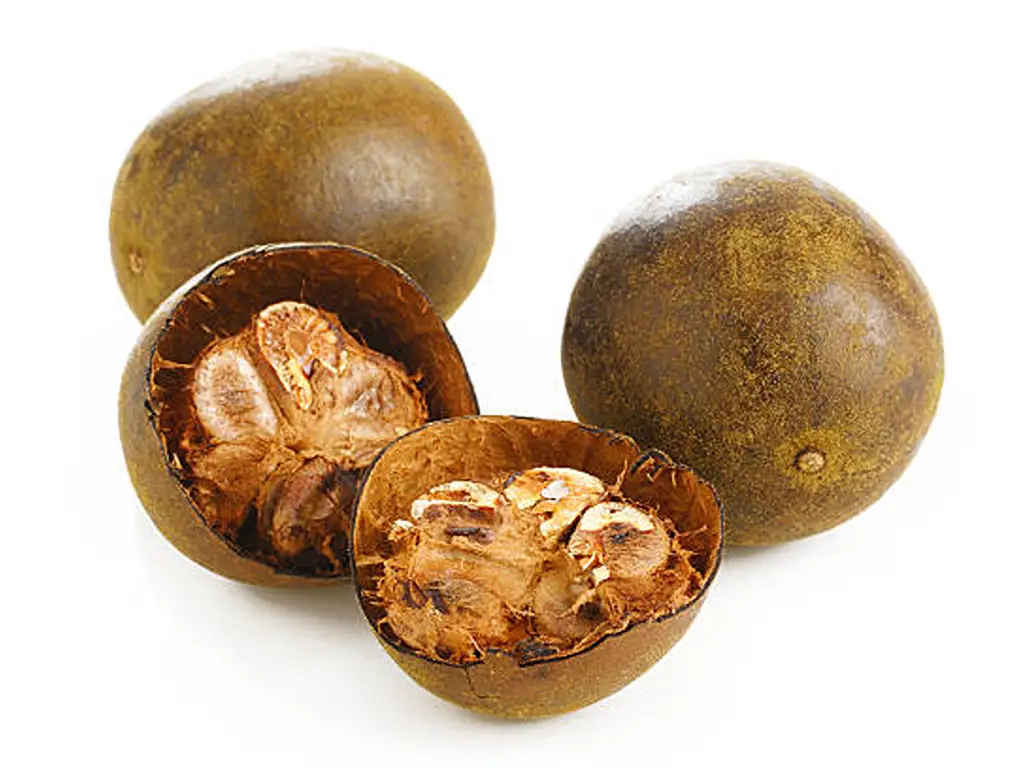
(Allulose, stevia, and monk fruit are not polyols at all, so they sit outside this comparison entirely.)
The Numbers, and Where Each One Comes From
Erythritol vs Maltitol at a Glance
| Property | Erythritol | Maltitol |
|---|---|---|
| Sweetness vs sucrose | 60–80% | 75–90% |
| Calories | ~0.2 kcal/g on US labels; EU counts 0 | ~2.1 kcal/g; EU calculates all polyols at 2.4 |
| Glycemic index | ~0 | 36 crystalline / 52 syrup |
| Laxative threshold | 0.66–0.80 g/kg body weight (single dose) | ~40 g/day adults; ~15 g children |
| Cooling sensation | noticeable | minimal |
DataSource: Cleveland Clinic 2024; Saraiva et al. 2020; Mäkinen et al. 2016; Regulation (EU) 1169/2011
Numbers first; the fine print immediately after, because every row above hides a condition.
Glycemic Impact and Calories: the Form Decides
Erythritol’s glycemic index is effectively zero and it produces no meaningful insulin response (Regnat et al., 2018). On US nutrition labels it counts as 0.2 kcal/g, which rounds to zero at serving sizes. EU nutrition calculation is blunter: erythritol counts as 0 kcal/g outright, while the other polyols are calculated at 2.4 kcal/g (Regulation (EU) 1169/2011, Annex XIV). If your market is making a calorie claim, the same bag of sweetener can be labeled differently on each side of the Atlantic.
Maltitol’s glycemic index splits by form: 36 for crystalline maltitol and 52 for maltitol syrup, on the same testing methodology (Saraiva et al., 2020). That split has a material basis, not a measurement quirk. Published specifications for a typical 75% maltitol syrup declare maltitol content at ≥50% with sorbitol ≤8.0%, the balance being hydrogenated oligosaccharides (maltitol syrup 75% specification, 2025). In other words, two products sharing one ingredient name are actually different mixtures with different glycemic behavior. Most retail labels do not tell you which form is inside, which is exactly why the same “sugar-free” chocolate can spike one person’s glucose monitor and barely register on another’s.
Maltitol syrup is not crystalline maltitol.
A typical syrup specification declares maltitol ≥50% plus sorbitol ≤8.0%, and the syrup form measures GI 52 versus 36 for the crystalline form.
Same label, different behavior; the form is the variable.
Digestive Tolerance: Dose, Body Weight, and No Adaptation
Maltitol’s tolerance numbers look generous until you convert them to servings. Healthy adults handle roughly 40 g per day without meaningful symptoms, and children around 15 g (Saraiva et al., 2020). Single doses of 30–40 g delivered in chocolate were well tolerated in a double-blind trial. At a 45 g single dose, though, 29 of 34 participants reported laxation in one trial (cited in Mäkinen et al., 2016). Fasting makes symptoms worse. And nine days of daily intake produced no measurable gut adaptation, so “your body gets used to it” is not supported for maltitol (Mäkinen et al., 2016).
Erythritol is measurably easier to tolerate. Doses of 20–35 g in liquid were well tolerated by healthy volunteers with no symptoms (Tolerance study, Eur J Clin Nutr). Estimated laxative thresholds sit at 0.66 g/kg body weight for men and 0.80 g/kg for women, roughly double maltitol’s per-kilogram allowance (Oku et al. 1999, cited in Mäkinen et al., 2016). EFSA’s 2023 re-evaluation set a formal acceptable daily intake of 0.5 g/kg body weight per day for erythritol, and noted that average EU exposure already exceeds it (Food Safety Magazine, 2023). Easier to tolerate is not the same as impossible to overconsume; portion size still does the work.
Taste and Processing Behavior Decide the Rest
The numbers above still don’t explain why chocolate makers keep choosing the higher-GI option. The answer is physical.
Erythritol dissolves endothermically, pulling heat from your tongue, which is where its signature cooling sensation comes from. It also recrystallizes aggressively: dissolve it into a syrup and it will seed crystals back out as it cools, a failure mode home bakers report repeatedly with syrups that turn gritty mid-recipe. In beverages and tabletop blends this is manageable; in a chocolate bar or a soft filling it is a formulation problem.
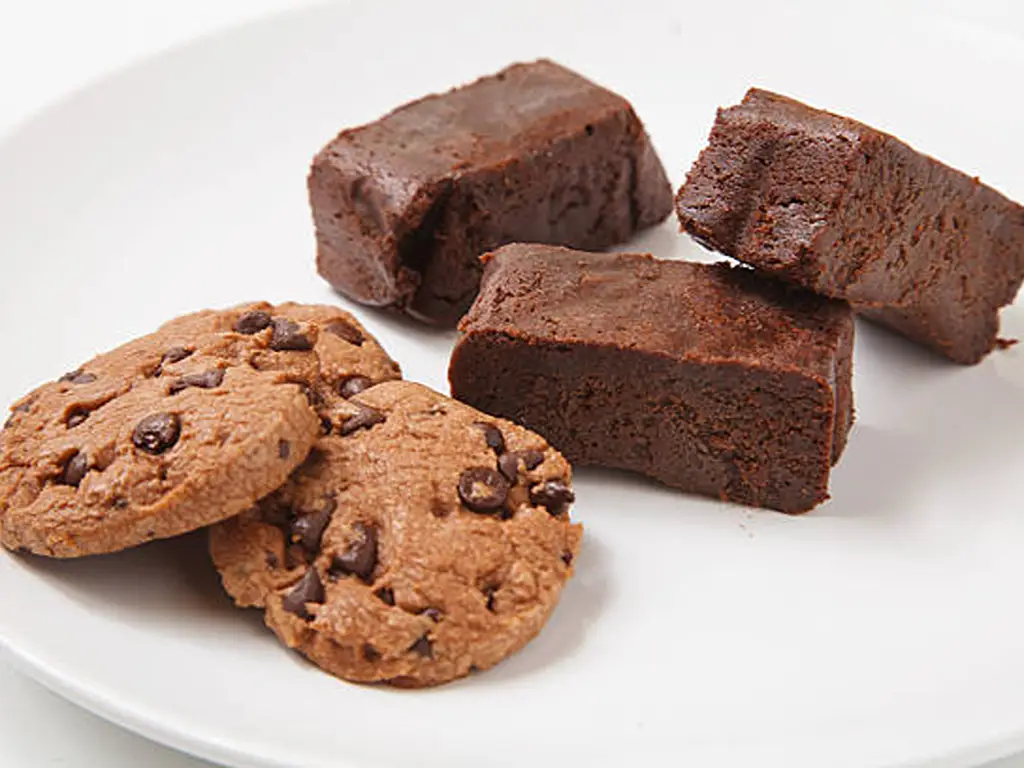
Maltitol behaves the way sugar behaves. Its sweetness sits at 75–90% of sucrose with minimal cooling, and it delivers the body, viscosity, and snap that confectionery systems were designed around. That is why, despite the glycemic tradeoff, maltitol remains the practical manufacturing choice for sugar-free chocolate and gummies (Elchemy, 2026). The industry is not ignoring the blood sugar data; it is paying it off with texture.
So the real comparison is not “which compound wins.” It is which failure mode your product can afford: erythritol’s processing costs, or maltitol’s glycemic liability. And that question sounds a lot like the safety question, which deserves a more careful answer than either forum gives it.
“Which One Is Safer?” Is the Wrong Question
Safer by which measure? Split the safety question into its dimensions and the picture resolves: on blood sugar impact, erythritol wins outright. On acute digestive tolerance per gram, erythritol again. On emerging cardiovascular signals, maltitol is the one with no published flag. On dental risk, they tie, both being non-cariogenic. A single-word verdict only works if you first decide which dimension your product and your consumer actually live in.
The verdict, dimension by dimension
The Erythritol Cardiovascular Signal, in Proportion
In 2023, a Cleveland Clinic-led study reported a roughly doubled risk of major adverse cardiac events in people whose plasma erythritol sat in the top quartile versus the lowest (Witkowski et al., Nature Medicine, 2023). The same paper showed in lab and animal models that erythritol enhances platelet reactivity and clotting potential. A 2024 follow-up made the exposure deliberate: 30 g of erythritol in healthy volunteers increased platelet reactivity relative to a glucose control, and levels remained elevated for around two days (Witkowski et al., ATVB, 2024).
Read the boundaries before rewriting a formulation. Association is not causation; the human cohort cannot rule out reverse causation. The body manufactures erythritol endogenously through the pentose-phosphate pathway, which confounds plasma-level studies (Cramer et al., Frontiers in Nutrition, 2023). The FDA published its own evaluation of the 2023 paper, questioning its exposure conclusions (FDA, 2023). And 30 g in a test beverage is far above the erythritol in a typical serving of a sweetened product. For a formulator, the signal is not a ban. It is a reason to think hard about target population, serving size, and how ready your supply chain is to reformulate if the evidence matures.
What “No Flag for Maltitol” Does and Doesn’t Mean
Maltitol carries no cardiovascular research flag, and that means less than it appears. Its risks are simply older and better quantified: a real glycemic response that has burned diabetic consumers of “sugar-free” products, and a laxative threshold lower than erythritol’s. Regulation encodes this asymmetry. The EU requires an “excessive consumption may produce laxative effects” statement on any food where polyols exceed 10% of the product (Regulation (EU) 1169/2011, Annex III). The US, by contrast, mandates a laxative warning only for sorbitol and mannitol (21 CFR 184.1835), leaving maltitol and erythritol unlabeled. JECFA lists maltitol’s ADI as “not specified” on the strength of long use history (Saraiva et al., 2020), while erythritol now carries EFSA’s numeric 0.5 g/kg limit (Food Safety Magazine, 2023).
Neither compound is “the unsafe one.” Each one fails differently, in a different dimension, for a different consumer. That is why the working question for anyone building a product is not which molecule is safer in the abstract, but which set of risks fits the product being made.
Choosing by Application and Form
Formulators do not pick a sweetener; they pick a claim plus a texture, and the compound follows. The matrix below is how that choice actually breaks down.
Application × Form: Where Each Polyol Fits
| Application | Usual choice | Cost of switching | Claim & label risk | Failure boundary |
|---|---|---|---|---|
| Chocolate & confectionery | Maltitol (crystalline) | Erythritol needs blends + cooling management; texture rework and cost | EU laxative warning above 10% polyols; GI varies by form | Syrup used where crystal behavior is assumed |
| Bakery | Maltitol or blends | Erythritol recrystallizes in fillings; sweetness gap needs high-intensity partner | Calorie claim differs US vs EU; polyol warning threshold | Hygroscopicity mismanaged in soft bakes |
| Beverages | Erythritol + high-intensity sweetener | Maltitol raises glycemic load of the drink; solubility management | “Zero sugar” claims depend on sweetener system | Sweetness gap uncorrected |
| Tabletop & blends | Erythritol (+ stevia or monk fruit) | Maltitol too low-sweetness for 1:1 dosing; aftertaste balancing needed | Blend ratios drive label order | Cooling effect at high erythritol ratios |
| Blood-sugar-claim products | Erythritol | Maltitol syrup in a glycemic-claim product is a recall-grade mismatch | Glycemic claim must survive the actual form used | Form not specified on label |
DataSource: Application logic per Cleveland Clinic 2024, Saraiva et al. 2020, Elchemy 2026; label rules per Regulation (EU) 1169/2011 and 21 CFR 184.1835
Two practical notes from that table. First, the erythritol sweetness gap is normally closed with a high-intensity partner, and erythritol-plus-stevia or erythritol-plus-monk-fruit blends are the standard fix rather than a compromise. Second, consumers get one reliable move from all of this. An ingredient list that just says “maltitol” does not tell you the form. If blood glucose matters to you, budget for the higher-GI case and watch your portion.
What to Verify Before You Order
Whether you are sourcing one polyol or stocking both, the verification checklist is the same, and the supplier’s answers to it are more telling than any certificate wall.
The four-step supplier checklist
- Form coverage: crystalline and syrup (or crystal and blend-ready grades) offered as proper SKUs, each with a published grade list.
- Spec depth per form: reference standard (USP/BP/FCC or GB), assay range, water, reducing sugars, Ni and Pb limits, microbiology.
- Batch evidence: COA issued per batch, production lines running continuously enough to prove batch-to-batch consistency.
- Commercial terms: sample policy, bulk MOQ, in-stock and custom lead times, response commitment.
Work through those four steps and the difference between suppliers shows up fast. We would put our own lines through this checklist as an example. SAIGAO produces both crystalline maltitol and maltitol syrup as distinct SKUs. The syrup comes in five declared grades (75/50, 75/75, 80/50, 80/55, 85/55), and the crystalline form is published against USP, BP, and FCC reference standards (crystalline maltitol specification sheet). Maltitol has its own dedicated production workshop among our eight specialized workshops, and both sweetener lines are produced from non-GMO raw materials under the same group quality system. On commercial terms, in-stock powder ships within 7 days, custom orders in 20–30 days, bulk orders start from 1 ton, and international inquiries carry a 12-hour response guarantee (erythritol product page). Erythritol buyers should note one more thing. Our erythritol page publishes no open spec table, and the specification sheet comes on request. That is common for the category, but it is exactly the kind of answer worth getting in writing before you shortlist.
If you want to run this checklist against a real supplier, you can request samples and spec sheets from SAIGAO directly. Free samples within limits and a 12-hour response guarantee make the first verification round cheap.
Both Sweeteners, One Supplier
Crystalline maltitol to USP/BP/FCC specs, maltitol syrup in types 75/50–85/55, and erythritol with specification sheets on request — batch COAs, free samples within limits, 12-hour response for international inquiries.
Request Spec Sheets & SamplesReferences
- eCFR. “21 CFR 184.1835 — Sorbitol.” U.S. Government. ecfr.gov
- EUR-Lex. “Regulation (EU) No 1169/2011 on Food Information to Consumers, Annexes III & XIV.” 2011. eur-lex.europa.eu
- EFSA. “Statement in Relation to the Safety of Erythritol (E 968).” 2010. efsa.onlinelibrary.wiley.com
- Food Safety Magazine. “EFSA Lowers Acceptable Daily Intake for Sweetener Erythritol, Which Most People Exceed.” 2023. food-safety.com
- JECFA. “Sweetening Agent: Erythritol (WHO Food Additives Series 44).” inchem.org
- FDA. “An Evaluation of the Article ‘The Artificial Sweetener Erythritol and Cardiovascular Event Risk’.” 2023. fda.gov
- Saraiva, A., et al. “Maltitol: Analytical Determination Methods, Metabolism and Health Implications.” Food Chemistry, 2020. pmc.ncbi.nlm.nih.gov
- Mäkinen, K.K., et al. “Gastrointestinal Disturbances Associated with the Consumption of Sugar Alcohols.” Nutrients, 2016. pmc.ncbi.nlm.nih.gov
- Regnat, K., et al. “Erythritol as Sweetener: Wherefrom and Whereto.” Critical Reviews in Food Science and Nutrition, 2018. pmc.ncbi.nlm.nih.gov
- Witkowski, M., et al. “The Artificial Sweetener Erythritol and Cardiovascular Event Risk.” Nature Medicine, 2023. pubmed.ncbi.nlm.nih.gov
- Witkowski, M., et al. “Ingestion of the Non-Nutritive Sweetener Erythritol, but Not Glucose, Enhances Platelet Reactivity in Healthy Volunteers.” ATVB, 2024. pubmed.ncbi.nlm.nih.gov
- Cramer, K., et al. “Plasma Erythritol and Cardiovascular Risk: Is There Evidence Enough?” Frontiers in Nutrition, 2023. frontiersin.org
- Cleveland Clinic. “What You Should Know About Sugar Alcohols.” 2024. health.clevelandclinic.org
- Healthline. “What Are Sugar Alcohols, and Are They a Healthy Choice?” healthline.com
- European Journal of Clinical Nutrition. “Gastrointestinal Tolerance of Erythritol and Xylitol Ingested in a Liquid.” ovid.com

 English
 Russian
 Spanish
 French
 Arabic