
Search the glycemic index of soluble corn fiber and the numbers refuse to agree. One GI database lists 10. A keto brand says “around 25.” Most health pages just say “low,” without a source. So, does soluble corn fiber raise blood sugar? The short answer: a properly manufactured soluble corn fiber does not meaningfully raise blood glucose or insulin, and controlled human trials back that up. The longer answer, the one that protects your formulation and your label claim, is about purity, dose, and the finished product. That answer fills the rest of this article.
What Soluble Corn Fiber Actually Is (and What It Isn’t)
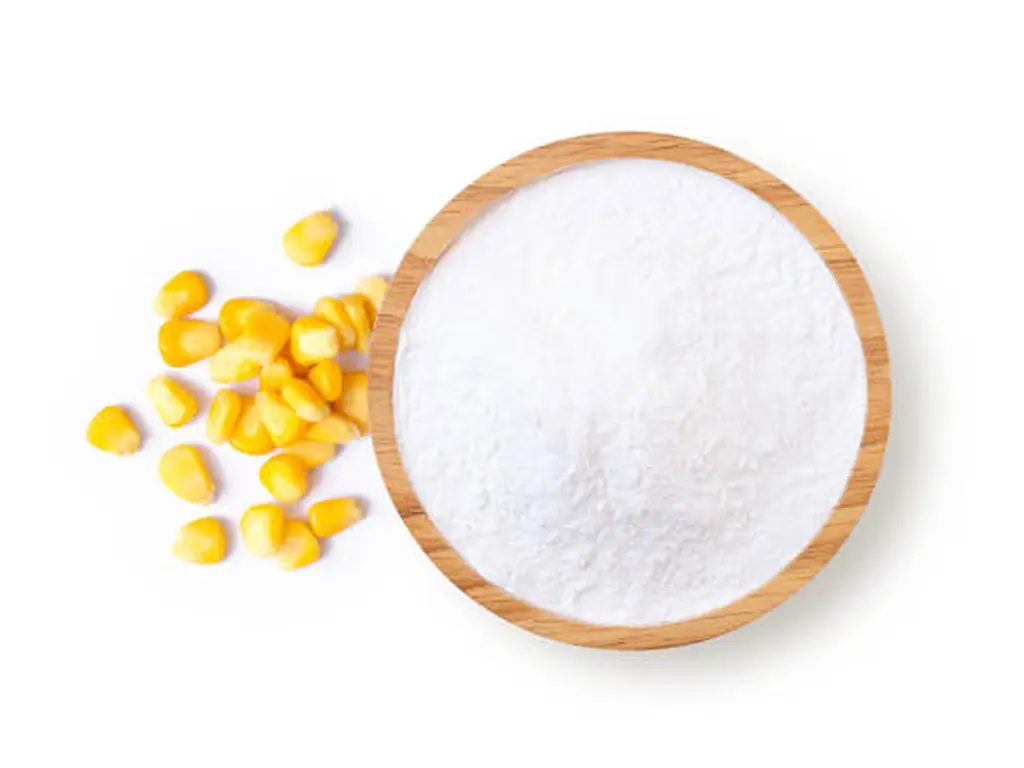
Soluble corn fiber (SCF) is a digestion-resistant carbohydrate made from corn starch. On ingredient labels it usually appears as resistant dextrin or resistant maltodextrin. When the same process starts from tapioca starch, the market calls it soluble tapioca fiber. In Southeast Asia, it is often labeled as “digestion-resistant dextrin.” Same molecule family, three regional names.
Three clarifications, because the SERP is full of crossings:
- It is not “corn fiber” in the sense of corn husk or bran. That is an insoluble fiber from a different part of the plant.
- It is not corn syrup, which is fully digestible glucose syrup.
- It is not the corn on your plate. Search engines mix all of these into the same results. Roughly a quarter of the “people also ask” questions around this keyword are actually about eating corn, not about this ingredient.
The suspicion that matters is this one: is resistant dextrin just maltodextrin with better marketing? The honest answer is that they come from the same starch, and the difference is chemical, not rhetorical. Regular maltodextrin is built mostly from α-1,4 bonds that your digestive enzymes cut easily. In the head-to-head trial we will look at in a moment, a maltodextrin drink produced a glucose curve statistically indistinguishable from pure glucose (p = 0.57). Resistant dextrin is produced by rearranging those bonds into a mix that human enzymes largely cannot hydrolyze. Same raw material, different fate in the small intestine, and that difference is the entire glycemic story.
| Carbohydrate | What happens in the small intestine | Blood sugar consequence |
|---|---|---|
| Glucose, regular maltodextrin | fully digested by amylase and brush-border enzymes | curve close to pure glucose (p = 0.57 between them) |
| Slow-digesting carbs such as isomaltulose | digested, but slowly | lower, flatter curve |
| IMO (isomaltooligosaccharide) | partially resistant, roughly 85% digested | a real, fast glucose rise |
| High-resistance family: SCF/resistant dextrin, polydextrose, inulin, FOS | mostly escapes small-intestine digestion, reaches the colon | minimal direct glucose response |
| Sugar alcohols (erythritol, xylitol, maltitol) | a separate family, not fermented like fiber | low-to-moderate response with their own tolerance limits |
That table is the map for everything else. Polydextrose, a close cousin in the high-resistance family, carries its own published glycemic profile, relevant if you are choosing between fibers (see the breakdown of the polydextrose glycemic index). And if the naming question above is the one you came for, there is a dedicated comparison of resistant dextrin powder versus regular maltodextrin powder.
What the Human Evidence Actually Shows
“Not spike blood sugar” is a claim anyone can print. Here is what controlled trials actually measured.
The head-to-head: SCF versus maltodextrin
A randomized crossover trial in Singapore put the two side by side in real food (Tan et al., 2020). Twenty-two healthy Chinese men ate test meals and drinks in which 50% of total carbohydrate was replaced with either SCF or maltodextrin. The SCF was a commercial powder carrying 91% fiber on a dry basis, so this was a realistic high-purity ingredient, not a lab curiosity.
The results were not subtle. The maltodextrin beverage pushed postprandial glucose about 20% higher and insulin about 40% higher than the otherwise identical SCF beverage. Blood glucose after the SCF drinks also returned to baseline faster, meaning less time spent elevated, not just a lower peak. Replacing half the carbs with SCF lowered both the glucose and the insulin burden of the meal.
SCF alone versus placebo: the fermentation test
The second trial asked a cleaner question: what does SCF do all by itself? (Lowery et al., 2018). Nine healthy adults took 25 g of SCF syrup, 25 g of IMO syrup, or a placebo in a double-blind crossover design, with blood drawn for three hours.
SCF tracked the placebo almost exactly: no meaningful rise in blood glucose, no meaningful rise in insulin. The breath-hydrogen readings told the second half of the story, climbing roughly fourfold, which means the fiber arrived in the large intestine intact and was fermented there. That is what a true fiber does. The IMO comparison group is the cautionary tale. Glucose climbed nearly 50 mg/dL and insulin jumped fivefold at 30 minutes, with no breath-hydrogen change. IMO is largely digested, about 85% per the studies the authors cite. A fiber claim on a label is a physiological claim, and IMO fails it in vivo.
What these trials cannot prove
Before you carry “does not raise blood sugar” onto a label, note what the evidence does not say. Both trials were small (9 and 22 completers) and acute: they measured one meal or one bolus, not months of consumption. Populations were specific, healthy young adults in Singapore and the United States, not diabetics. Both also disclosed industry ties. The SCF test material was a commercial ingredient from a major fiber producer. The fermentation trial’s lab work was paid from a keto brand’s project funds. An independent string of evidence points the same way (maize-based fibers all produced lower glycemic and insulinemic responses than control in Kendall et al., 2008). The fair summary: consistent, mechanistically well-explained, and not unlimited.
When Soluble Corn Fiber Does Move Blood Sugar
Now hold that conclusion next to the forum threads where people test “keto” bars with a CGM and watch their glucose climb anyway. Both things are real, and the gap between them is not mysterious. The published GI figures disagree (10 in one database, ~25 on one keto brand’s page) for the same reason. Four variables decide whether a given soluble corn fiber moves your blood sugar.
Residual sugars: same name, different ingredient
One formulator’s public account is worth more than a page of theory (SwitchSweets, 2025). Sampling a cheaper SCF from a new supplier, they opened the COA and found 8 grams of sugar in it. The source was leftover corn syrup that the supplier’s process had never fully removed. The label name was identical to the premium fiber they had been buying. The ingredient was not.
This single failure explains most of the contradictions in this niche. It is why one brand’s products test flat on a CGM while another’s spike. It is why keto communities blacklist “soluble fiber” as a class. And it is why the same ingredient name can describe materials that behave nothing alike. It also reframes the supplier question. The thing to ask is not “what is your price per ton.” It is “what does your sugar line read.”
Dose and tolerance
Even a genuinely resistant fiber stops being invisible if you eat enough of it. Like other fermentable fibers, SCF that reaches the colon feeds gut bacteria. A large single dose can produce gas, bloating, or loose stools within hours in people who jumped straight in. Individual tolerance varies widely, which is exactly what the self-testing threads on r/keto and the diabetes subreddits keep rediscovering. Practical guidance: start low, step up gradually over days, and treat any serving suggestion as a starting point rather than a promise. This is a comfort boundary, not a glycemic one.
The finished product is not the ingredient
The third variable is the one that sinks label claims. A nutrition bar containing SCF also contains protein, fat, other carbohydrates, and often a syrup binder. Any fast carbohydrate in that matrix will drive the glucose curve, no matter how resistant the fiber is. Fiber cannot cancel maltodextrin elsewhere in the formula. This is why regulators and serious brands insist that a “low GI” claim belongs to the finished product, tested in vivo under ISO 26642 by a third-party lab. Estimating a product’s GI from one ingredient line is exactly the shortcut that ends in a takedown post. It is also a second reason the published GI numbers for “soluble corn fiber” disagree: different studies used different grades, methods, and carriers.
| Failure condition | What is happening | Real-world signal | Check you can run |
|---|---|---|---|
| Residual sugars in the ingredient | sugar-removal step skipped or shortened in processing | CGM spikes on a “keto” product; sugar line on the COA | ask for the COA’s mono-/di-saccharide line before discussing price |
| Single large dose | fermentable load exceeds personal tolerance | bloating or loose stool within hours | start low and step up gradually; test your own response |
| Fast carbs elsewhere in the formula | fiber cannot cancel digestible carbohydrates in the same product | finished-product GI far above ingredient GI | third-party in vivo GI test on the finished product (ISO 26642) |
| Individual variation | same food, different metabolic response | self-test threads disagree with each other | treat every “no spike” claim as testable, not guaranteed |
Making the Claim Survive: Specs and Verification
Everything above compresses into a verification chain you can send to a supplier today.
Three of those steps deserve a sentence each. Commercial SCF is sold at different fiber contents, commonly around 70% and above 90% on a dry basis. The price gap between grades is largely the cost of removing everything that is not fiber. That is precisely the fraction that carries glycemic risk. The COA’s fine print is where grades differ and headlines hide. Read the sugar line and the moisture and pH rows, not just the total fiber figure. And on process, the question to ask is short: does the flow include chromatographic separation and ion exchange after the dextrinization reaction? Those are the steps that pull residual sugars out, and a supplier who runs them will say so in one sentence.
Two regulatory footnotes, stated precisely. In the United States, resistant maltodextrin/dextrin sits in the group of non-digestible carbohydrates that FDA recognizes as dietary fiber under enforcement discretion while rulemaking continues. That is “recognized,” not “finally approved,” and your claim wording should not outrun it. And if you compare labels across markets, remember the arithmetic differs. US panels count fiber inside total carbohydrate; EU Regulation 1169/2011 declares it separately. The same bar can print different carbohydrate numbers on two continents without either being wrong.
What This Means When You Stock the Ingredient
If you distribute or specify ingredients into keto, diabetic-friendly, or low-sugar products, the blood-sugar question is not a nutrition detail. It is the most testable promise in the category. Your downstream brands are read by customers wearing CGMs. A single viral self-test against a fiber that was sold as pure but was not can cost a product line its community. The failure cases above were all procurement failures before they were public-relations failures.
That reframes the buying decision. You are not buying a GI number, because the number is the least stable fact on the sheet. You are buying the ingredient’s uniformity. The four-point audit below is the operational version of everything this article has argued.
One honesty note belongs here: IMO has a real job in this portfolio. It fits sugar-free confectionery and products where a modest glycemic contribution is acceptable. Pretending otherwise would be the same overreach as calling it a fiber. Matching each carbohydrate to the application it fits is worth more to your credibility than any single-ingredient story.
At SAIGAO Ingredients, this audit describes how we expect to be evaluated. Our resistant dextrin line runs in corn and tapioca bases, at 70% and ≥90% fiber (dry basis), in powder and syrup forms. The sheet we put against that checklist is the 90% corn resistant dextrin powder specification. It states ≥90.0% total fiber on a dry basis, plus moisture, pH, and contaminant rows rather than a summary. Fiber content, form, and packaging are parameters we customize to your line. And we ship spec sheets, COAs, and free samples within limits, so your lab, not our brochure, settles the blood-sugar question. If you want a second pair of eyes on any supplier’s COA before you commit, ours is the conversation we have every day.
References
- International Organization for Standardization. “ISO 26642:2010 — Food Products — Determination of the Glycaemic Index (GI) and Recommendation for Food Classification.” 2010. iso.org
- U.S. Food and Drug Administration. “Questions and Answers on Dietary Fiber: Definition and Recommended Intakes — Non-Digestible Carbohydrates Under Enforcement Discretion.” fda.gov
- Tan, W.S.K., et al. “The Role of Soluble Corn Fiber on Glycemic and Insulin Response.” Nutrients, 2020. pmc.ncbi.nlm.nih.gov
- Kendall, C.W.C., et al. “Effect of Novel Maize-Based Dietary Fibers on Postprandial Glycemia and Insulinemia.” Journal of the American College of Nutrition, 2008. pubmed.ncbi.nlm.nih.gov
- Lowery, R.P., et al. “The Effects of Soluble Corn Fibre and Isomaltooligosaccharides on Blood Glucose, Insulin, Digestion and Fermentation in Healthy Young Males and Females.” Journal of Insulin Resistance, 2018. journalofmetabolichealth.org
- IngrediCheck. “Soluble Corn Fiber in Protein Bars: Carbs and Label Claims.” 2026. ingredicheck.app
- Perfect Keto. “Soluble Corn Fiber: Corn Fiber Facts and Is It Keto?” perfectketo.com
- Logi Food Coach. “Glycemic Index of Soluble Corn Fiber: 10 (Low).” logifoodcoach.com
- SwitchSweets. “Does Soluble Fiber Spike Blood Sugar?” 2025. switchsweets.com


 English
 Russian
 Spanish
 French
 Arabic