
Scan the ingredient list on a bag of keto chocolate chips or a protein bar, and you may find “non-GMO resistant dextrin” printed there. Two questions follow. Is resistant dextrin just maltodextrin in disguise? And what does the non-GMO part actually certify? Search results give shaky answers to both. This article answers both, then goes a level deeper than most pages bother with: how anyone can actually verify that claim before wiring money for a tonne of it.
What Resistant Dextrin Is (and the “Made From Husks” Myth)
Resistant dextrin is a soluble dietary fiber manufactured from starch, most commonly corn or tapioca starch. Producers first cook the starch under controlled heat and acidity; that step is called dextrinization. Enzymatic treatment then rearranges the glucose chains into new linkages. Human digestive enzymes in the small intestine cannot break these down, so the fiber travels to the colon largely intact. Gut bacteria ferment it there, which is why it behaves as a prebiotic. It also counts as dietary fiber on US nutrition labels; FDA treats resistant maltodextrin/dextrin under enforcement discretion while its fiber rulemaking continues.
Because the names sound alike, resistant dextrin gets mistaken for maltodextrin constantly.
Maltodextrin
Engineered to digest fast; behaves close to glucose in the bloodstream.
Resistant dextrin
Engineered to resist digestion; glycemic impact stays low.
Same family, opposite metabolic behavior. That contrast is why no-sugar-added chocolate and keto-bar brands like the ingredient. It adds bulk and declared fiber with mild sweetness; supplier specification sheets typically list the powder at roughly 60% of sucrose’s sweetness. It survives heat processing, and it dissolves cleanly into beverages, binders and syrups.
Now, the myth. One of the top-ranking pages for this exact search states the claim bluntly. It is the ingredient FAQ of a popular keto-chocolate brand, and it says resistant dextrin is “made out of vegetable husks” or “corn husk fiber.” Social-media answers repeat the phrase. The industry’s own materials disagree. The Prebiotic Association describes resistant dextrin as produced from corn, wheat or other edible starch through heating and enzymatic treatment. Every supplier specification sheet checked for this article says the same. The distinction matters more than it seems. If resistant dextrin really came from husks, the “non-GMO” prefix would be decorative. It means something precisely because the ingredient comes from starch, and corn is one of the most heavily genetically modified crops on earth. That opens the real question: what is the non-GMO label actually promising?
What “Non-GMO” Actually Certifies on a Refined Ingredient
Start with the regulatory logic chain. Under the US National Bioengineered Food Disclosure Standard (NBFDS), mandatory disclosure of bioengineered food has applied since January 2022. The rule does not attach, however, when modified genetic material is not detectable in the final food. A maker can demonstrate that in two ways: records of the refinement process, or testing. A dextrin is refined far enough that no DNA or detectable protein survives. So dextrin made from conventional GM starch currently sits outside mandatory “bioengineered” labeling. The EU works on similar ground. Regulation (EC) No 1829/2003 ties GM labeling to detectable genetic material or resulting protein. Accidental presence gets a 0.9% ceiling. Highly refined starch derivatives therefore generally fall outside mandatory GM labeling there too.
Here is the twist almost nobody mentions: that US logic is now legally fragile. In Natural Grocers v. Rollins (decided October 31, 2025), the Ninth Circuit held that USDA erred when it excluded refined foods from the bioengineered-food definition on non-detectability grounds. The court’s reasoning: detection methods vary in their limits of detection, so “we cannot detect it” cannot legally equal “it is not there.” The case was remanded. USDA expects to finalize a revised definition by the end of 2026. Both parties’ filings point to the same outcome: the exclusion gets vacated prospectively on January 1, 2028. Until then the current framework stays in force. The direction, however, is set: carve-outs built on what a test cannot see are losing ground.
Which leads to the honest definition. “Non-GMO” on a refined ingredient is not a compliance artifact. No regulator is forcing it onto the label. It is a voluntary market claim about something the finished powder itself cannot show. So what exactly is a buyer paying for?
The Claim Lives in the Starch, Not in the Finished Powder
THE DETECTION PARADOX
A finished resistant dextrin powder contains no detectable DNA. You can run every assay in the book and never prove, or disprove, where its starch came from. The claim is about the upstream supply chain, or it is about nothing.
Why corn makes the claim worth having
Roughly nine in ten US corn acres are planted to genetically engineered varieties, according to USDA Economic Research Service data. Conventional grain handling commingles harvests at every step. “Non-GMO corn starch” therefore asserts a managed chain: non-GM seed documentation, segregated planting, dedicated storage and transport. That machinery costs money. That is exactly why the claim differentiates one supplier from another.
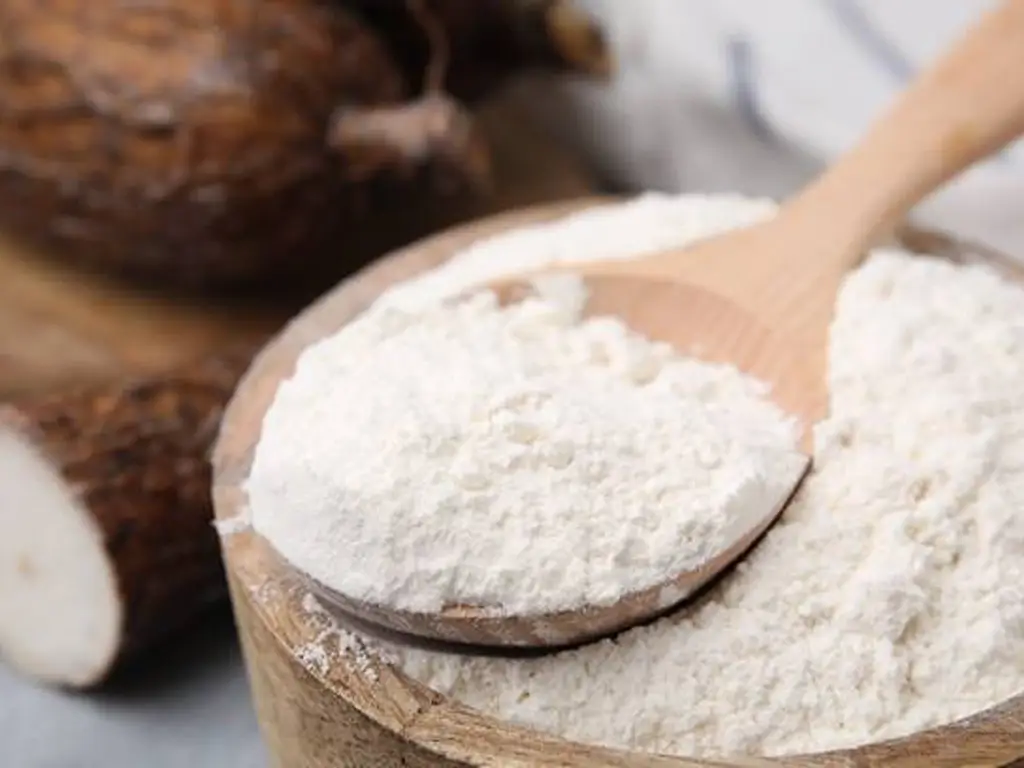
Tapioca: lower risk, same paperwork
Cassava, the source of tapioca, is not a commercial GM crop in the regions that supply the world’s tapioca starch. The first field approvals, Kenya’s virus-resistant cassava, sit outside those supply chains. Lower risk is not zero paperwork. Commingling can still happen in depots and shipping, so a non-GMO claim for tapioca-based resistant dextrin still needs origin documentation. Source choice also decides your own label language. “Soluble corn fiber” versus “soluble tapioca fiber” is a declaration your finished product will carry. The raw-material decision and the marketing decision are the same decision.
One more idea from that 0.9% figure is worth keeping. Commodity chains can hold “zero” GM content the way they can hold zero dust: it does not survive contact with reality. That is why verification conventions talk about thresholds for accidental presence, not purity. When a supplier promises “zero GMO” in absolute terms, they are promising something no bulk supply chain can document. When they describe what they do at goods-in and how lots are kept separate, they are describing something auditable. Train your ear to hear the difference.
Identity preservation: what the claim actually buys
Identity preservation (IP) is the operating system of non-GMO supply chains: documented seed lots, isolated planting, segregated harvest, storage and shipment, dedicated processing runs, traceable lot numbers end to end. Large ingredient houses formalize this into certified programs. Ingredion’s TRUETRACE program, for example, publicly commits to source material containing less than 0.9% GM DNA from adventitious presence. When a buyer pays for a genuinely non-GMO refined ingredient, that machinery is the thing being bought.
How a Non-GMO Claim Is Actually Verified: the Four-Level Evidence Stack
Verification is not binary. Claims arrive backed by four escalating levels of evidence. Knowing which level a supplier sits at tells you most of what you need before the first phone call.
Level 1: the bare claim
A badge on a product page. An adjective in a quotation. This proves nothing on its own, and the tell is easy to spot: nothing is ever named. No document, no number, no certificate. Most of the “non-GMO resistant dextrin” pages on the open web live at this level, including ones ranking on page one. There is an economics behind that. A claim is free; a document trail costs money every batch, forever. So the badge spreads, and the paperwork stays rare. Rarity is exactly what makes it informative.
Level 2: the batch paper trail
Per-batch documents: a certificate of analysis, a batch report, a certificate of origin, an analysis report. Plus the factory’s incoming-inspection records (supplier screening and acceptance sampling at the raw-material gate). This level proves that the lot you are buying has a documented lineage back through production. It cannot, by itself, prove seed-level identity. The red flag to watch: a single annual declaration offered instead of per-batch documents. Non-GMO sourcing policies live or die at goods-in, batch after batch.
Level 3: identity-preserved certification
A third-party audited IP system, built on the 0.9% adventitious-presence convention the industry inherited from EU practice. This level proves the supply chain is actively managed to keep GM material out, audited by someone other than the seller. What it cannot do is replace the rest of your specification work. Microbiological limits, heavy metals, fiber content by the declared AOAC method are separate jobs with separate certificates.
Level 4: third-party seals, and PCR in the right place
The Non-GMO Project’s verification is sourcing-based by design. Participants must source major, minor and most micro high-risk inputs from non-GMO sources. Refined ingredients therefore get verified upstream, not by hunting for DNA in the output. Polymerase chain reaction (PCR) testing is the workhorse of GM detection. It belongs at raw-material intake, at the starch factory gate, where the DNA still exists to be found. The red flag at this level is a supplier brandishing a “GMO-free” finished-product test report as their proof. That is a certificate for the wrong measurement: the powder has no detectable DNA regardless of what the starch was.
THE EVIDENCE STACK
What each level of proof can, and cannot, tell you
| Level | What you receive | What it can prove | What it cannot prove | Red flag |
|---|---|---|---|---|
| 1. Bare claim | Website badge, quotation adjective | Nothing | Nothing | No document is ever named |
| 2. Batch paper trail | Per-batch COA, batch report, certificate of origin, incoming-inspection records | This lot has a documented production lineage | Seed-level identity | One annual declaration instead of per-batch documents |
| 3. IP certification | Third-party audited identity-preserved supply chain (0.9% adventitious convention) | The chain is actively managed and externally audited | Nothing about other spec parameters (micro, metals, fiber method) | Certification without a verifiable number |
| 4. Seal + PCR at intake | Recognized seal program; verified sourcing; PCR at raw-material gate | Sourcing is verified upstream by a third party | Your finished product’s own certified status | Finished-product “GMO-free” report offered as proof |
Two behaviors should end a conversation early. One: certifications that carry no number you can verify. Two: health-claim conflation, the pitch that “GMO corn is harmful, so our fiber is healthier.” That is not a sourcing claim. It is a consumer myth (a widely upvoted Reddit answer repeats it) dressed as supplier science. And note what the stack is not: it is not all-or-nothing. Level 2 complete plus Level 3 certification is procurement-grade for most programs. Level 4 matters when your retail channel requires the seal. The actionable question to any supplier is simply: which levels can you document today?
Sourcing Implications: What to Demand Before You Buy
Fiber content and price get commoditized fast. Any qualified plant will quote a 70% or 90% fiber grade, in powder or syrup, and the quotes will cluster. Identity evidence does not commoditize. It cannot be improvised after the fact: a traceability system has either been running for years or it does not exist. That is where the value sits.
Before the purchase order
- Per-batch COA, batch report and certificate of origin, for the sample AND for the first bulk lot
- A named IP or non-GMO certification with a number you can verify
- A written incoming-inspection policy that states where PCR testing happens
- Documents that stay consistent from sample evaluation through first bulk shipment
If you distribute ingredients, your downstream brands will ask these questions eventually. Complete documents are an endorsement you can hand over, not an apology you have to make. If you formulate for a brand, treat the sample-to-bulk path as the audit itself. The paperwork that arrives with the first bulk shipment is the inspection event, not a formality after it. And settle the source (corn versus tapioca) before comparing prices, because the source decides your own label declaration.
While you are at it, learn the difference between two papers that get confused. A specification sheet says what the product should be. A certificate of analysis says what this batch actually is, from this plant, on this date. For a sourcing claim, only the second one, tied to your lot number, is evidence.
A price advantage that arrives with missing documents is not a discount. It is risk someone handed you unpaid. When two quotes match on content and price, the evidence stack is the tiebreaker.
The Bottom Line
Resistant dextrin is a starch-derived, digestion-resistant soluble fiber: not a husk product, and not maltodextrin in disguise. Its non-GMO prefix is a voluntary claim about the upstream supply chain. Label law does not force it, and testing the powder cannot settle it. Verify it the only way it can be verified: through the documents the supply chain produces, batch after batch.
Request the Non-GMO Documentation Package
SAIGAO’s resistant dextrin line is produced from 100% non-GMO corn and tapioca raw materials from screened suppliers, with inspection at incoming batch level and full traceability. Every shipment leaves with its batch report, certificate of origin and analysis report; international inquiries answered within 12 hours.
Ask for the DocumentsReferences
- eCFR. “7 CFR Part 66 — National Bioengineered Food Disclosure Standard.” Current. ecfr.gov
- USDA AMS. “BE Frequently Asked Questions.” usda.gov
- Justia Law. “Natural Grocers v. Rollins, No. 22-16770 (9th Cir. Oct 31, 2025).” justia.com
- Wiley Rein LLP. “UPDATE: USDA Bioengineered Food Disclosure Rulemaking Timeline Takes Shape.” June 2026. wiley.law
- EUR-Lex. “Regulation (EC) No 1829/2003 on genetically modified food and feed.” 2003. europa.eu
- USDA Economic Research Service. “Adoption of Genetically Engineered Crops in the United States: Recent Trends in GE Adoption.” usda.gov
- Non-GMO Project. “The NBFDS: What Non-GMO Project Participants Need to Know.” nongmoproject.org
- Prebiotic Association. “Prebiotic Type Spotlight: Resistant Dextrin.” prebioticassociation.org
- ChocZero. “ChocZero Uses Prebiotic Fiber Called Resistant Dextrin Which Is Not Maltodextrin.” choczero.com
- Reddit r/AskReddit. “What is Non-GMO Resistant Dextrin? Is this just Maltodextrin with a fancy disguise?” 2024. reddit.com

 English
 Russian
 Spanish
 French
 Arabic