
What Xylitol Actually Is (and What Else It’s Called)
Xylitol is a sugar alcohol, part of a chemical family called polyols. It is not sugar, and it is not the kind of alcohol that comes in a bottle. It is a sweet compound that plants make in trace amounts and that your own metabolism produces in milligrams every day. What made it commercially interesting is a short list of properties: it tastes about as sweet as table sugar, it carries roughly 2.4 calories per gram against sugar’s 4 (Healthline), and its glycemic index sits near 7 while sugar’s runs 60 to 70.
Then there is the naming problem, which is the reason many people go searching in the first place. The same molecule reaches you under several different names, depending on who labeled it and when.
One Molecule, Many Names
| Name on the label | What it tells you |
|---|---|
| Xylitol | The standard regulatory and ingredient-list name in the US and most markets |
| Birch sugar / birch bark extract | Consumer-facing names borrowed from the raw material; common on European natural products |
| Wood sugar | A legacy name: the compound was first isolated from wood, and ‘xylitol’ derives from ‘xylose,’ the Greek-rooted word for wood sugar |
| E967 | The EU food-additive number, used on European ingredient lists |
| Xylit / Xylite | Shorthand spellings used in some brands and older literature |
Three near-misses are worth ruling out, because they show up in the same searches: xylose is a separate, fermentable sugar used as the intermediate in xylitol production; xylan is the plant fiber the xylose comes from; and xylooligosaccharide (XOS) is a prebiotic fiber that shares the prefix but is a different ingredient entirely. The “alcohol” in sugar alcohol refers to the molecule’s hydroxyl chemistry, not to ethanol, which is why sugar alcohols are fine for people avoiding alcohol. Regulators settled on this molecule long ago: the FDA has permitted xylitol in food since 1963 (IFIC, 2019), and in Europe it trades as E967.
Where You Already Meet It — and What Goes Wrong
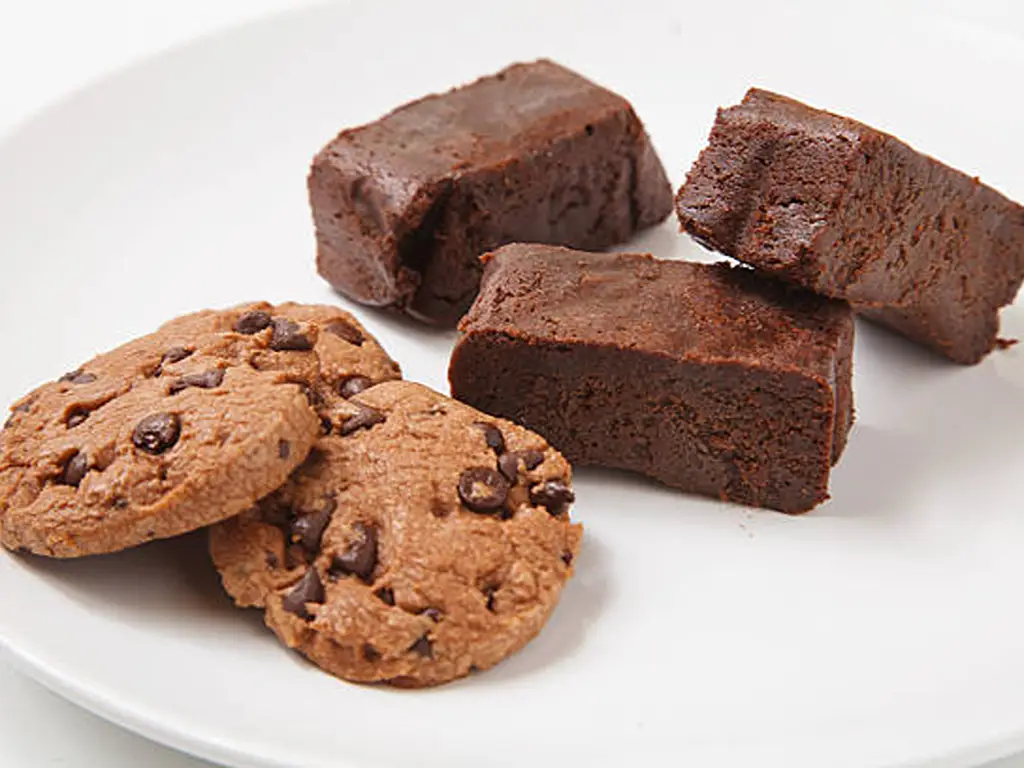
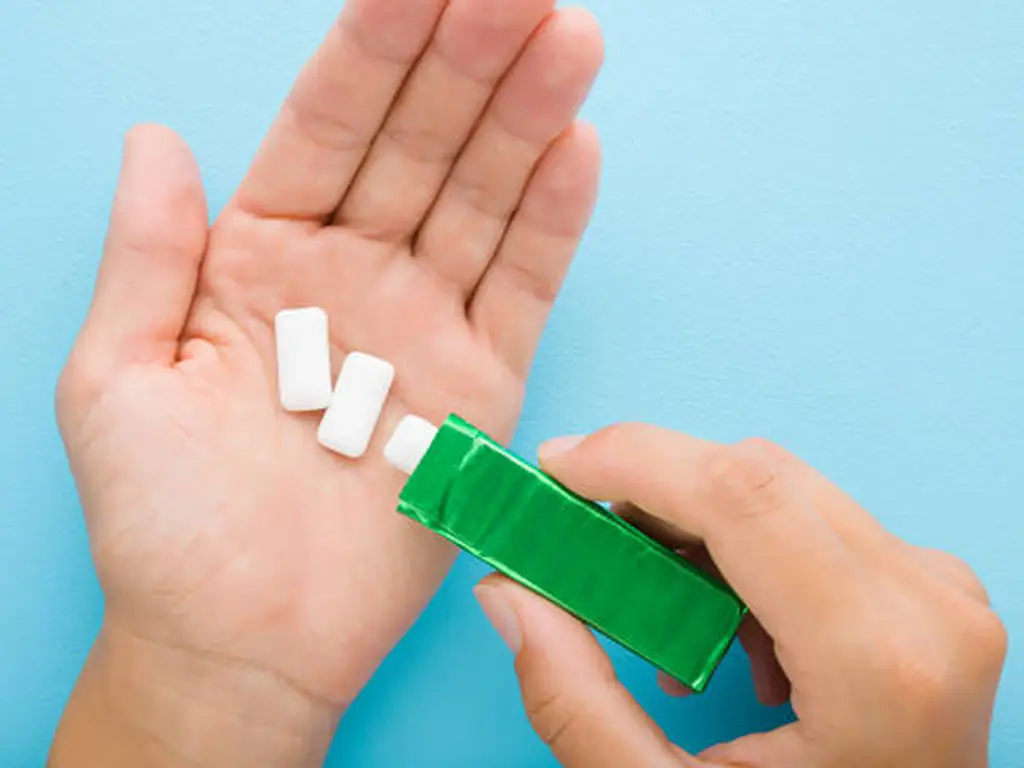
Most people meet xylitol without noticing. It sweetens the sugar-free gum sold at every pharmacy counter, the mints next to it, diabetic-friendly candies, an occasional peanut butter or nut spread, packaged baked goods marketed as low sugar, cough syrups, chewable vitamins, and a long list of toothpastes and mouthwashes. Gum is the flagship application for a reason that previews the rest of this article. Xylitol tastes as sweet as sugar, dissolves with a slight cooling effect, and does not feed the bacteria that cause cavities.
The questions that actually bring people to this topic are less about what it is and more about what goes wrong. Four situations cover most of them, and each has a sensible first move.
Digestive upset
Gas, bloating or loose stool after a large serving; cut the amount down and step intake up gradually
Dental use
Chewing gum or mints after meals; consistent small daily exposures beat one large dose
A dog ate it
Contact a veterinarian immediately; do not wait for symptoms to appear
The 2024 headline
A study linked high blood xylitol to platelet clotting; check the evidence section below before rewriting your shopping list
The digestive stories are real and well documented in user communities: people who jump straight to large servings of xylitol-sweetened foods describe bloating and urgent bathroom trips, while those who ramp up slowly generally report the effect fading within days (Healthline). The same molecule is far less forgiving in dogs. As little as 0.1 grams per kilogram of body weight can trigger a dangerous insulin release in a dog, meaning a single piece of xylitol gum can sicken a 3-kilogram Chihuahua (Healthline); the FDA maintains a standing consumer alert listing the products besides gum that carry the ingredient, including baked goods, candy, mints, and chewable vitamins (FDA, 2025).
If a dog has eaten anything that might contain xylitol, treat it as an emergency: contact a vet or pet poison hotline immediately. Signs (vomiting, weakness, collapse) can appear within hours, but waiting for them costs treatment time.
Why one molecule is gentle with humans and lethal to dogs, why it earns a place in toothpaste, and what actually happens to it after you swallow: those questions have one shared answer, and it starts with where the stuff comes from.
Where It Comes From, and What Your Body Does With It
Where it comes from
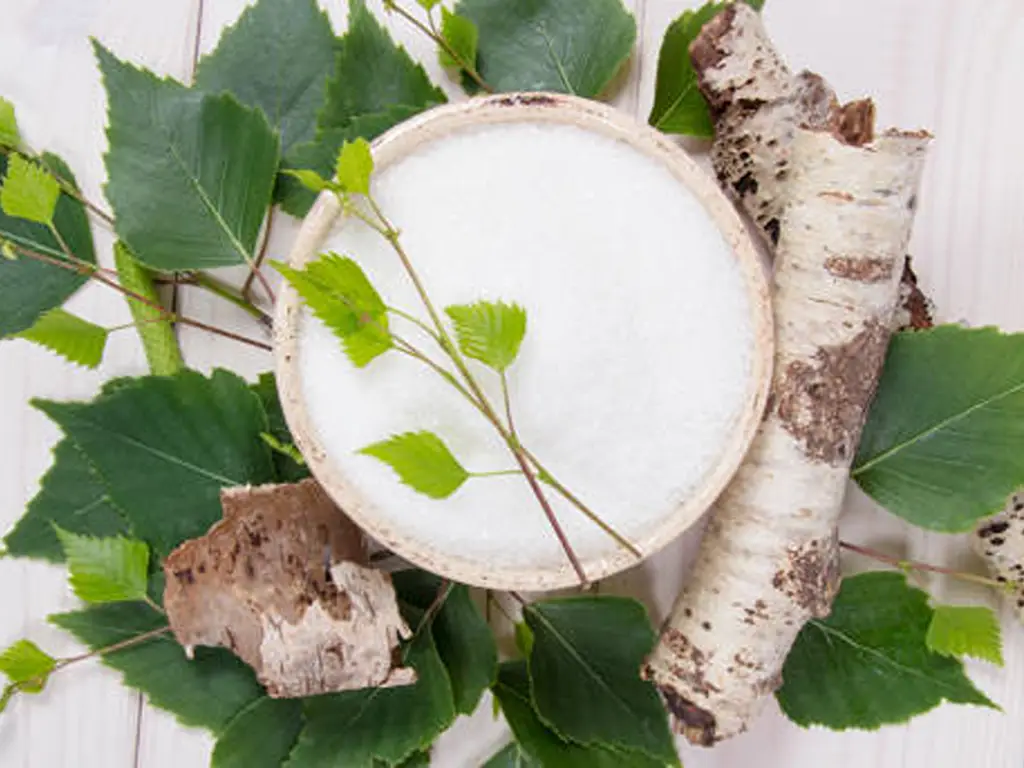
Xylitol occurs naturally in strawberries, raspberries, mushrooms, cauliflower and other produce, and the human body makes small amounts of it during normal metabolism (Healthline). Neither source can supply a food industry. The natural quantities are too small to extract economically, which is why every commercial xylitol on the market is manufactured, even when the marketing emphasizes the word natural.
From plant fiber to finished crystal
Corn cobs (dominant route) or birch wood (traditional European and North American route) supply xylan, a hemicellulose fiber
Xylan is broken down into xylose, the five-carbon ‘wood sugar’
Xylose is hydrogenated, converting the fermentable sugar into the non-fermentable sugar alcohol
Purified xylitol is crystallized to pharmacopoeia or food grade, powder or crystals
The two feedstock routes matter more than marketing usually admits. Birch was the original route and remains the one the names on labels remember. Corn cobs are the cost-driven route behind most of today’s supply, which is a large part of why production has concentrated in China’s corn-belt provinces; trade data mirrors that concentration, with the xylitol gum trade alone tracking dozens of exporters against a similar count of importers worldwide (Tridge, 2026). For a compound with a 1963 FDA approval date, the supply chain underneath it is remarkably young and still consolidating.
What your body does with it
Five stations explain every xylitol headline you have read, from cavity claims to the 2024 cardiology study.
Station 1, the mouth. Cavity-causing bacteria such as Streptococcus mutans cannot ferment xylitol the way they ferment sugar. They absorb it, gain nothing from it, and lose the ability to process ordinary sugar; regular exposure through gum or mints is what makes dentistry’s endorsement stick (IFIC, 2019).
Station 2, the small intestine. Xylitol is absorbed slowly and only partially, so it barely moves blood glucose or insulin (Healthline). That is the entire basis of its “diabetes-friendly” reputation.
Station 3, the large intestine. Whatever the small intestine did not absorb reaches the colon, where bacteria ferment it and draw in water. Gas, bloating and loose stools live here; so does the tolerance curve, because the gut adapts with gradual exposure.
Station 4, the bloodstream. In 2024, researchers reported that people with elevated blood xylitol showed heightened platelet reactivity, a clotting risk marker. In a small experiment, healthy volunteers drank a xylitol-sweetened drink containing 30 grams, and their platelets became more clot-prone for four to six hours, normalizing by the next day (Cleveland Clinic, 2024). This happens in the same absorbed fraction that gives xylitol its blood-sugar neutrality: same chemistry, different consequence.
Station 5, the dog. A dog’s body mistakes xylitol for glucose and releases a massive insulin surge, crashing blood sugar and sometimes the liver (FDA, 2025). One molecule, two species, opposite outcomes.
The Limits: How Much, Where It Fails, What’s Still Uncertain
Ask how much xylitol is too much and you will collect three different answers, because three different rulers exist. The International Food Information Council notes that 20 to 70 grams per day has been suggested as well tolerated while conceding there is no formal recommendation (IFIC, 2019). Dental research works with its own threshold of at least 5 to 6 grams, three exposures per day, for oral-health effects (IFIC, 2019). And older clinical literature records daily intakes of 50 to 60 grams consumed without pathological symptoms (Mäkinen, PMC, 2016). The numbers do not contradict so much as they measure different things, which is exactly why “start low, increase gradually” remains the only universally safe instruction.
Beyond dose, xylitol fails in specific, predictable places, and knowing them is the difference between a successful substitution and a wasted batch.
Where Xylitol Holds and Where It Fails
| Scenario | Holds when | Fails when |
|---|---|---|
| Daily tolerance | Intake ramps up gradually; servings stay modest (tens of grams, not hundreds) | Large single servings or a sudden jump in sugar-free product consumption |
| Home baking | Sweetness swaps 1:1 for sugar in cookies, cakes and sauces | Yeast breads (xylitol does not ferment, so the loaf will not rise); refrigerated syrups, jams and sauces (it crystallizes); chilled desserts (the cooling sensation intensifies) |
| Beverages | Light sweetening in hot drinks within tolerance doses | Heavy use in cold beverages: cooling effect and dose concentration both scale up |
| Health evidence | Adult dental benefits well documented; blood-sugar neutrality established | Children’s cavity-prevention evidence is mixed (AAPD acknowledges inconsistency); the 2024 clotting findings are a warning signal, not a settled verdict |
That last row deserves its own sentence. The 2024 research is real, published, and worth taking seriously, and it is also early: observational associations plus small controlled exposures, with causation not established and everyday dental-product use considered unaffected (Cleveland Clinic, 2024). People managing cardiovascular risk have a reasonable, evidence-based reason to moderate xylitol the way they moderate everything else; nobody needs to purge their pantry over it.
Reading a Xylitol Spec: From Grocery Bag to Purchase Order
Everything above explains a practical fact: two products both labeled xylitol can behave differently in your kitchen or your factory. The differences trace back to the spec sheet, and the spec sheet reads differently depending on which side of the counter you stand on.
At the grocery level, three checks cover most needs. Read whether the ingredient list says xylitol or hides it under a vague “sugar alcohol” line, since labels are only required to declare sugar alcohols when a claim is made, and they are not required to say which one. Match the form to the job: crystals for sprinkle-and-dissolve uses, powder for blending. And treat certification marks (non-GMO, kosher, halal) as verifiable claims rather than decoration.
The Same Product in Two Languages: Everyday Phenomenon vs Spec Line
| Spec line | Typical range | What it predicts in the product |
|---|---|---|
| Standard | USP / BP / FCC | The batch was verified against a recognized pharmacopoeia method |
| Assay (xylitol content) | 98.5–101.0% | Sweetness strength stays consistent batch to batch |
| Water | ≤ 0.5% | Caking, free flow and shelf life in humid climates |
| Melting point | 92–96 °C | The cooling sensation on the tongue and behavior under heat |
| Other polyols | ≤ 1.0% | Hidden carryover that can nudge tolerance complaints |
| Reducing sugars | ≤ 0.2% | Browning tendency and moisture pickup in storage |
The same spec line that a quality manager reads as a release criterion is the one a baker reads as “why did my frosting crystallize.” Melting point is the cooling effect, water content is the caking, residual polyols are the digestion complaints. If you buy xylitol by the bag or by the ton, two verification habits are worth more than any brand comparison: ask for a per-batch COA rather than a static spec sheet, and ask which feedstock route the material comes from, because birch-route and corn-route materials can differ in trace profile and price logic.
What This Means for Buyers
For a home baker, all of this settles into a habit: check the name on the label, ramp up the dose, keep the bag away from the dog. For people buying xylitol as an ingredient, the practical shift is in the questions worth asking. As end brands respond to the 2024 research, procurement conversations are drifting from price-per-ton toward specification: assay range, residual polyols, moisture, feedstock route, batch stability data. Sweetness is an industry constant here; every supplier’s xylitol tastes the same at 1:1. The differentiating variable is how completely a supplier can document everything else.
If you are evaluating suppliers for a formulation or a distribution program, Saigao’s team responds to international inquiries within 12 hours and provides specification sheets, COAs and compliance documentation with samples available within limits; you can request the specification sheet and a COA directly.
Request the Xylitol Spec Sheet and COA
USP/BP/FCC-grade xylitol with per-batch COAs, free samples within the standard limit, and a 12-hour response to international inquiries.
Get the Spec SheetReferences
- International Food Information Council. “What is Xylitol?” 2019. ific.org
- Cleveland Clinic. “Eating Foods With Xylitol Can Be a Risk to Your Heart.” 2024. clevelandclinic.org
- U.S. Food and Drug Administration. “Paws Off Xylitol; It’s Dangerous for Dogs.” 2025. fda.gov
- Healthline. “Xylitol: Everything You Need to Know.” n.d. healthline.com
- Mäkinen, K.K. “Gastrointestinal Disturbances Associated with the Consumption of Sugar Alcohols with Special Consideration of Xylitol.” 2016. nih.gov
- Tridge. “Xylitol Chewing Gum Suppliers, Trade & Prices.” 2026. tridge.com
 English
 Russian
 Spanish
 French
 Arabic