
Search “why is allulose banned” and you’ll find pages confidently explaining the ban. The problem: there isn’t one. Not in the United States, and not, strictly speaking, anywhere else either. What exists is a rumor, a supermarket policy, and a regulatory queue, all wearing the same word. Here is how to take that word apart.
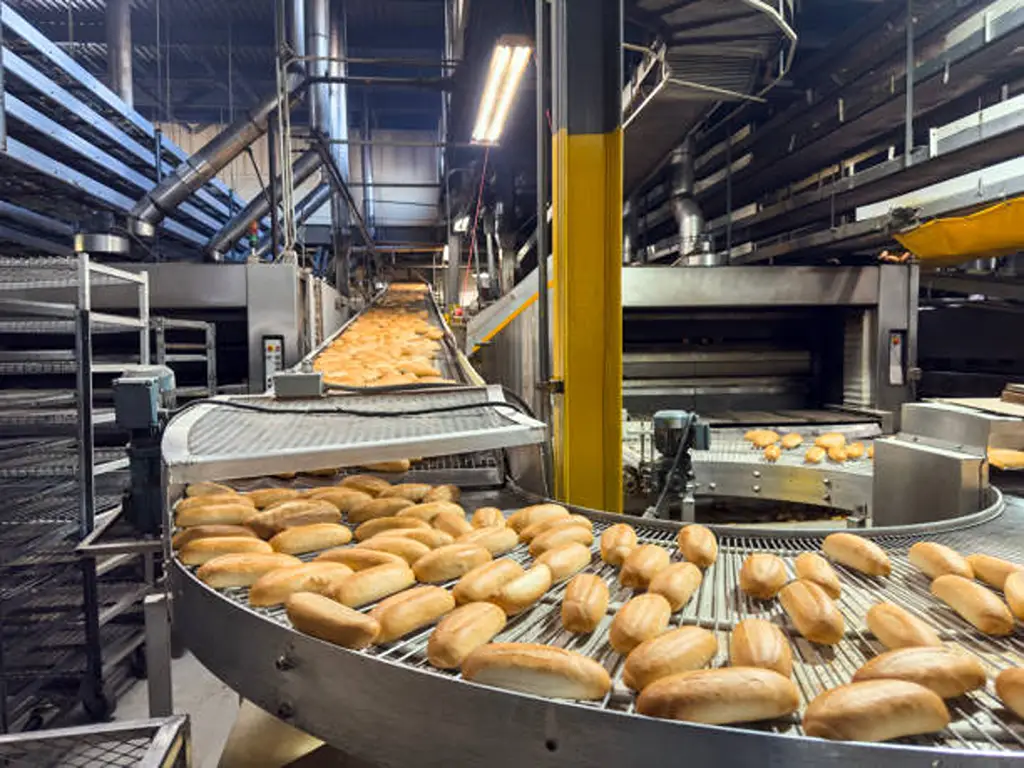
Nobody Banned Allulose — Three Different Things Get Called “a Ban”
Start with the strongest case against the premise. The U.S. FDA has issued “no questions” letters on multiple GRAS notices for allulose (D-allulose): GRN 400 in 2012, GRN 498 in 2014, GRN 693 in 2017, and GRN 1029 in August 2023 (U.S. FDA GRAS Notice Inventory, 2012–2023). Its labeling guidance goes further: since the final October 2020 guidance, the agency exercises enforcement discretion to let manufacturers exclude allulose from “Total Sugars” and “Added Sugars” and count it at 0.4 kcal/g (U.S. FDA, 2020). A banned ingredient does not get its own calorie rule.
So where does the word come from? Three separate mechanisms, each with its own logic:
The rumor
Products vanish from one store or one country; by the second retelling, “discontinued” becomes “banned.” Content farms keep the headline because the search term has volume, and rival sweetener sellers have little incentive to correct it.
The shelf
Whole Foods Market bans 300+ ingredients by store policy. Allulose is named on that list. This is real, but it is a purchasing standard, not a government ruling.
The queue
The EU, UK and Canada haven’t authorized allulose as a food, so it can’t be sold there yet. “Not authorized” and “banned” are different legal states with different exits.
The three mechanisms differ in more than definition: who decides, what evidence moves them, and how each one ends. That’s the map for the rest of this article.
Inside Whole Foods’ Ban: A Shelf Policy, Not a Science Finding
Whole Foods Market’s own Food Ingredient Quality Standards page states that the chain bans 300+ ingredients from all food it sells, “including hydrogenated fats, high-fructose corn syrup and sweeteners such as aspartame, sucralose and saccharin” (Whole Foods Market). Allulose is on the sweetener list by name, alongside acesulfame-K, advantame, aspartame-acesulfame salt, cyclamates, neohesperidine dihydrochalcone, neotame, saccharin, sucralose and tagatose.
What the page never says is that allulose is harmful. The rationale it does give: “When we review ingredients, we consider the interconnected effects of the way that food is processed and regulated by authorities in the U.S., EU, Canada and beyond.” That is a framework built on processing methods, regulatory status in other markets, and customer expectations. And it catches several ingredients in the same sweep. The same master list bans HFCS, EDTA, synthetic colors, and two other reduced-calorie sweeteners: polydextrose and tagatose. When one policy catches a whole cluster of sweeteners, you are reading a procurement philosophy, not a toxicology conclusion.
The list’s own disclaimer
Whole Foods notes the list “is intended for our shoppers” and “doesn’t include all Whole Foods Market requirements and ingredient restrictions.” Formulating for that shelf means meeting a longer private spec sheet, not just this public list.
The commercial cost is real, though. By mid-2022, keto shoppers had noticed that Enlightened products on Whole Foods shelves swapped allulose for xylitol: “allulose is not an approved ingredient at Whole Foods so they have a different recipe for their products there” (Reddit r/keto, 2022). Three years later, shoppers were still describing allulose’s status at the chain as “a grey area… not officially banned either” (Reddit r/StopEatingSeedOils, 2025). That is evidence the policy’s actual logic still isn’t landing. For any brand eyeing that channel: shelf access is decided ingredient-by-ingredient, channel-by-channel, on a separate track from government approval.
Europe Didn’t Ban Allulose. It Is Still Waiting in Line
How the Novel Food Queue Works
Under Regulation (EU) 2015/2283, any food not eaten to a significant degree in the EU before 15 May 1997 counts as a “novel food.” It cannot be placed on the market until a company files a full safety dossier and an authorisation follows (EUR-Lex, 2015). Allulose, commercialized only in the 2010s, fails the 1997 calendar test, so its default status is “not yet authorised.” That is a starting position, not a verdict. Chia seeds sat in the same queue until 2009, with uses widened in 2013 (EUR-Lex, 2009). Steviol glycosides waited until 2011 (EUR-Lex, 2011).
The practical consequence is real, and worth saying plainly. Until authorisation, allulose cannot legally be sold as a food in the EU. Products formulated with it must reformulate for that market. “Not banned” does not mean “sellable.”
The Petiva File: What EFSA Actually Said in 2025
In May 2025, the “banned” camp got its headline: EFSA’s nutrition panel concluded that “the safety of the NF D-allulose cannot be established” (EFSA Journal, 2025). Most coverage stopped at that sentence. The file behind it reads very differently:
Petiva Europe SA files for D-allulose (trade name “Honeytose,” made by enzymatic conversion of fructose via D-psicose 3-epimerase).
Applicant submits one round of supplementary data.
EFSA requests more: residual enzyme/DNA tests (ELISA, slot-blot) on three batches, five-batch compositional data, OECD-standard genotoxicity, human data.
EFSA repeats the request.
Silence, on both sides.
Opinion adopted: “safety cannot be established.”
Read the whole opinion and notice what is absent: no toxicity finding, no carcinogenicity signal, no organ effect. EFSA did not conclude that allulose is unsafe. It concluded that one applicant stopped answering. The same document records, as background fact, that the FDA “did not question” three allulose GRAS notices.
One unfinished file. Two data requests, two years of silence. That is the entire substance of Europe’s “allulose ban.”
The queue is also shaping retail behavior in the U.S. One bakery founder described a buyer refusing his allulose-sweetened product outright, and diagnosed why: “Most people just follow some indicator and in most cases, it’s following what the EU has approved or not approved” (LinkedIn, 2026). EU queue position is being used as a proxy safety signal in commercial negotiations. Worth knowing, because the signal is paperwork, not a verdict.
Who Else Is in the Queue — and How Long These Queues Take
Petiva’s file closed without a safety conclusion. Applications linked to CJ CheilJedang, Samyang and Tate & Lyle remained in the EU queue through 2026; two of the three are among the world’s largest sweetener makers (European Commission). The UK, which runs its own post-Brexit process, has application RP-1130 from Savanna Ingredients GmbH sitting at “risk assessment in progress” (UK FSA). Canada has no completed novel-food safety assessment for D-allulose (Health Canada, checked mid-2025). Its working status is that of a natural health product ingredient, not a general-purpose food ingredient. Online purchases face no practical barrier.
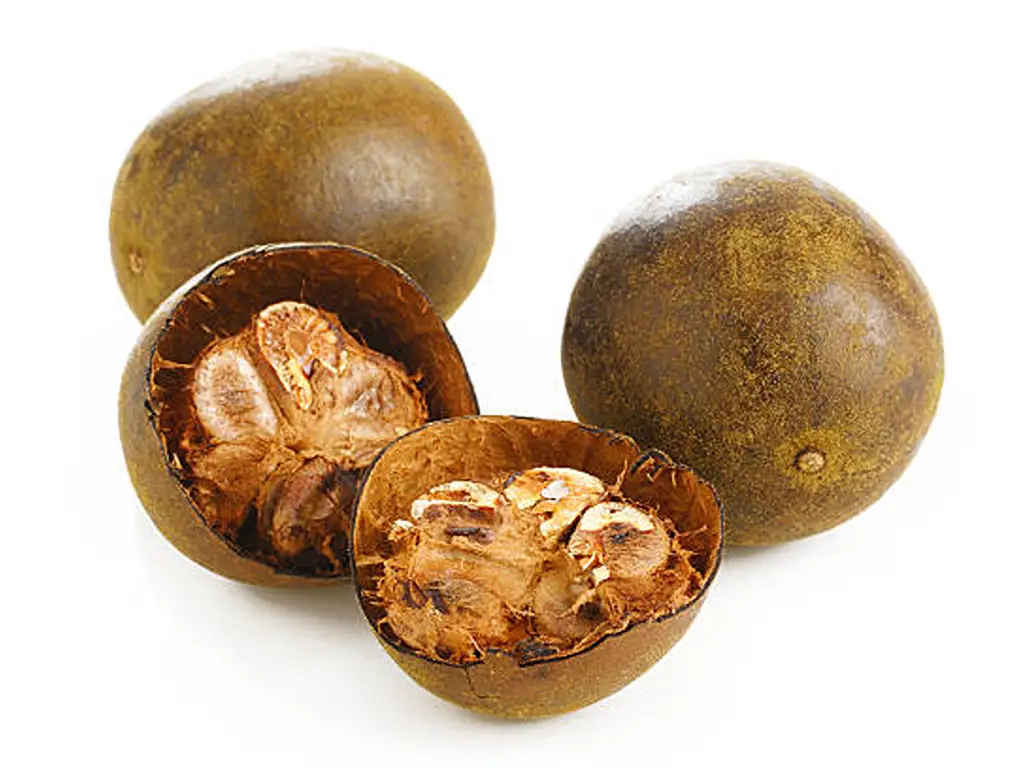
History says these queues do move: chia took a 2009 decision with expansion in 2013; stevia cleared in 2011. And the identical novel-food logic produced the opposite outcome in Australia and New Zealand, where FSANZ approved D-allulose in 2024: approval report in August, variation gazetted in October (FSANZ, 2024). One founder has recounted waiting roughly eight years for monk fruit to clear North American and European approvals. That is his account, not an official record, but the direction matches the docket history.
Two boundaries apply. No one can promise a regulatory timeline. And a queue is not a guaranteed yes: files can fail for completeness reasons as easily as for scientific ones, as Petiva demonstrated.
Where Allulose Stands in 2026: A Jurisdiction-by-Jurisdiction Map
For anyone formulating or sourcing, the useful output is not the debate. It is the map. Status below was checked against primary sources in September 2026; regulatory states change, so re-verify at decision time.
| Jurisdiction | Government status | Practical meaning | Label / energy rule |
|---|---|---|---|
| United States | Not banned; multiple GRAS no-question letters (2012–2023) | Fully usable in foods and beverages | Excluded from Total & Added Sugars at 0.4 kcal/g, by enforcement discretion pending rulemaking |
| China | Approved as new food raw material (NHC announcement No. 4 of 2025, published July 2025) | Usable; spec ≥98 g/100 g | ≈1.67 kJ/g; recommended intake ≤20 g/day; not recommended for infants, pregnant or lactating women |
| Japan / South Korea / Mexico | Approved (Japan and Korea 10+ years in commerce) | Mature markets | Local labeling rules |
| Australia & NZ | Novel food approved (FSANZ A1247, 2024) | Usable since late 2024 | Energy factor 2 kJ/g |
| European Union | Not authorised; one file closed 2025, three applications in progress | Cannot be sold as food in-bloc until authorised | No label regime yet |
| United Kingdom | Application RP-1130 in risk assessment | Not yet authorised | Separate FSA process |
| Canada | No completed food assessment | Natural health product ingredient only; not a general food ingredient | — |
DataSource: FDA, NHC (China), FSANZ, European Commission, UK FSA, Health Canada
The Energy Coefficient Is Not a Global Constant
Note the third column’s quiet trap: the same gram of allulose is declared at 0.4 kcal/g in the U.S. (≈1.67 kJ/g), ≈1.67 kJ/g in China, and 2 kJ/g in Australia and New Zealand. Three regulators, three factors. None wrong, none transferable. A formulation scaled across markets will legally carry different declared calories in Chicago, Jinan and Sydney. Compliance teams that discover this at label review pay for it in rework; better to budget for it at recipe stage.
Approved ≠ Unlimited: The Tolerance Ceiling
Approval answers “may it be sold,” not “how much should I eat.” The most-cited gastrointestinal tolerance trial stepped doses up weekly in 30 healthy young adults. No severe symptoms appeared up to 0.4 g/kg body weight in a single sitting, about 24 g for a 60 kg adult. Severe diarrhea appeared at 0.5 g/kg. The authors set a practical daily ceiling of 0.9 g/kg, about 54 g (Han et al., Nutrients, 2018). Caveats: a young, healthy cohort, and test materials supplied by a manufacturer. Read it as a floor for caution, not a license. China’s approval frames it more conservatively: a recommended maximum of 20 g/day, with use not recommended for infants, pregnant or lactating women (NHC Announcement No. 4 of 2025).
If You Buy, Sell, or Formulate with Allulose
Distributors, importers and formulators are the ones who actually field the “isn’t this banned?” question. For them, the map turns into three working rules.
First, manage access as a grid of jurisdiction × channel, never a single yes/no. Government queues move on application progress: the EU file now has better-resourced applicants in line, which makes it an observation-list item, not a permanent blank. Shelf policies like Whole Foods’ are independent, per-channel, per-ingredient decisions that can block an FDA-blessed ingredient tomorrow. Approved markets each carry their own label arithmetic.
Second, turn the word into a talk track. When a buyer echoes the rumor, the mechanism explanation (rumor, shelf policy, or queue) reframes the conversation from “is this ingredient tainted?” to “what’s its status in my market and my channel?” That exchange displays competence in a way no discount can.
Third, weigh documentation capability as heavily as price. Each market needs its own evidence pack: full specification sheet, batch-level COA, traceability documents, non-GMO declaration. A supplier who can’t produce those per destination market transfers the compliance burden straight onto you. At Saigao, we run a dedicated allulose production workshop and publish full specifications for both forms, allulose crystal and syrup specifications included (crystal ≥98.5% D-allulose on dry basis; syrup ≥95.0%). We customize across the eight specification axes we publish, from purity and pH to particle size and packaging. Batch COAs and non-GMO traceability documentation are available per order. In unauthorized markets, no supplier can ship legally. Any supplier who claims otherwise is a compliance risk. Walk away.
Allulose market-entry self-check
- Which of my target markets have government authorization, and which are queue-watch items?
- Does any target retail channel run its own banned-ingredient list that names allulose?
- Does my label arithmetic use the right energy factor per market (0.4 kcal/g vs ≈1.67 vs 2 kJ/g)?
- Can my supplier deliver spec sheet + batch COA + traceability + non-GMO docs for every destination market?
The Bottom Line
“Banned” survives because three different mechanisms, a rumor, a shelf policy, and a regulatory queue, share one word. The rumor has no author, the shelf policy is a procurement choice, and the queue is moving paperwork. Whoever can take the word apart in a buyer conversation is holding a card the rumor can’t beat. If you’re mapping allulose across your markets, talk to our team: the status tables above are exactly the homework we do every day.
Get Allulose Spec Sheets & Compliance Documents
D-allulose crystal (≥98.5%) & syrup (≥95.0%) spec sheets, batch COAs and non-GMO traceability documents. 12-hour response for international inquiries. Bulk MOQ from 1 ton.
Request Spec Sheets & COAsReferences
- EFSA NDA Panel. “Safety of D-allulose as a novel food pursuant to Regulation (EU) 2015/2283.” EFSA Journal 23(6): e9468, 2025. nih.gov
- European Commission. “Summary of applications and notifications under Regulation (EU) 2015/2283.” europa.eu
- UK Food Standards Agency. “RP-1130: Allulose (novel food) — Regulated Product Application.” food.gov.uk
- U.S. Food and Drug Administration. “Guidance for Industry: The Declaration of Allulose and Calories from Allulose on Nutrition and Supplement Facts Labels.” 2020. fda.gov
- U.S. Food and Drug Administration. “GRAS Notice Inventory — GRN No. 400 (D-psicose).” 2012. fda.gov
- Whole Foods Market. “Food Ingredient Quality Standards.” wholefoodsmarket.com
- National Health Commission of the PRC. “Announcement No. 4 of 2025 on 20 ‘Three New Foods’ Including D-Allulose.” 2025. nhc.gov.cn
- Food Standards Australia New Zealand. “Application A1247 — D-allulose as a novel food.” 2024. foodstandards.gov.au
- Han, Y., Choi, B.R., Kim, S.Y., et al. “Gastrointestinal Tolerance of D-Allulose in Healthy and Young Adults: A Non-Randomized Controlled Trial.” Nutrients 10(12): 2010, 2018. mdpi.com
- Health Canada. “Completed safety assessments of novel foods.” canada.ca
- EUR-Lex. “Regulation (EU) 2015/2283 on novel foods.” 2015. europa.eu
- EUR-Lex. “Commission Decision 2009/827/EC authorising chia seed (Salvia hispanica) as novel food ingredient.” 2009. europa.eu
- EUR-Lex. “Commission Regulation (EU) No 1131/2011 amending Annex II to Regulation (EC) No 1333/2008 with regard to steviol glycosides.” 2011. europa.eu
- Reddit r/keto. “PSA: Enlightened products at Whole Foods contain xylitol instead of allulose.” 2022. reddit.com
- Reddit r/StopEatingSeedOils. “Allulose status at Whole Foods (comment thread).” 2025. reddit.com
- Quiaoit, K. “I told a buyer that our donuts are sweetened with allulose.” LinkedIn, 2026. linkedin.com
 English
 Russian
 Spanish
 French
 Arabic