
Polydextrose Glycemic Index: Why This Fiber Scores Just 4–7 on the GI Scale
If you formulate reduced-sugar or high-fiber foods, you have probably asked a version of this question: What is the glycemic index of polydextrose — and can I trust it in a diabetic-friendly product?
The short answer is that polydextrose delivers a glycemic index (GI) of 4–7 on the glucose = 100 scale, making it one of the lowest-GI carbohydrate-based ingredients available to formulators. But the number alone does not tell the full story. Behind that 4–7 sits clinical evidence from two independent human studies, a metabolic mechanism rooted in enzyme-resistant molecular architecture, and a growing body of formulation data that shows exactly where polydextrose outperforms alternatives like inulin, FOS, and resistant dextrin. Most importantly, knowing the GI value is only the starting point — the real payoff comes when you know how to deploy that number into a label claim your buyers trust.
Polydextrose and Glycemic Index: Two Concepts Every Formulator Should Know
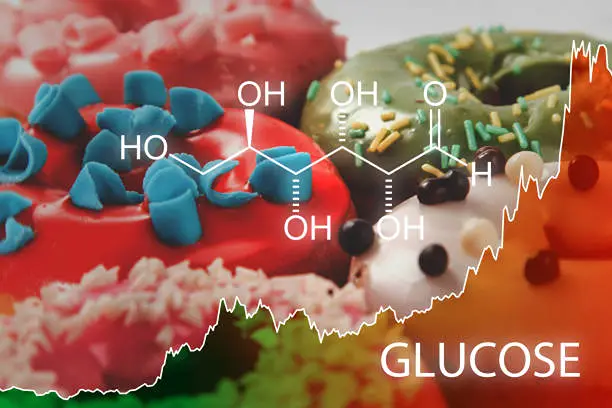
Polydextrose is a synthetic, highly branched glucose polymer with an average degree of polymerization of 12. Despite being built from glucose — the same sugar that defines the 100-point GI scale — polydextrose behaves nothing like glucose in the human body. The U.S. Food and Drug Administration classifies it as a soluble dietary fiber (FDA, 2016), and it contributes only 1 kcal per gram, a 75% reduction compared to the 4 kcal/g delivered by standard digestible carbohydrates.
Glycemic index, as defined by the ISO 26642:2010 standard, measures how quickly a carbohydrate-containing food raises blood glucose relative to a reference (pure glucose = 100). Foods scoring ≤ 55 are classified as low-GI; those at ≥ 70 are high-GI. On this scale, polydextrose lands at just 4–7, functionally negligible in its glycemic impact.
Why does a food formulator care about the GI of a fiber ingredient? Because when you remove sugar or maltodextrin from a formulation, the ingredient you use to fill that physical and functional gap must not reintroduce the blood-sugar problem you set out to solve. Polydextrose is one of very few bulking agents that checks both boxes: it replaces the body, mouthfeel, and water-binding functionality of sugar without triggering a glycemic response.
The Glycemic Index of Polydextrose: What the Numbers Say
The glycemic index of polydextrose — consistently reported at 4–7 across industry and scientific sources — places it nearly 60 GI units below table sugar (GI ~65) and roughly 80–90 units below maltodextrin (GI 85–100).
Clinical Evidence Behind the GI Value
The claim that polydextrose has a GI of 4–7 is not extrapolated from its chemical structure. It is grounded in human clinical data.
The landmark study by Jie et al. (2000), published in the American Journal of Clinical Nutrition, enrolled 120 Chinese participants and measured the glycemic response to 12 g of polydextrose co-ingested with 50 g of glucose. The result: the glycemic index dropped to 89 compared to 100 for glucose alone, an approximately 11% reduction, while participants also reported significant improvements in bowel function with no adverse gastrointestinal effects (Jie et al., Am J Clin Nutr, 2000).
A second key study by Murakami et al. (2004) used a glucose tolerance test design to measure the effect of 14 g of polydextrose on postprandial blood glucose. When co-administered with 50 g of glucose, the area under the plasma glucose curve (AUC) decreased by 28%. When the same 14 g of polydextrose was consumed with bread, the glucose AUC fell by 35% (Murakami et al., J Jpn Assoc Dietary Fiber Res, 2004).
Two independent studies, two different populations, two different carbohydrate vehicles — and both converge on the same finding: polydextrose meaningfully blunts the postprandial glucose response of the foods it accompanies.
Putting the GI Value in Context
A GI of 4–7 is not merely “low.” It sits at the extreme low end of the glycemic spectrum for any carbohydrate-derived ingredient. The commonly referenced low-GI threshold of ≤ 55 leaves a gap of nearly 50 GI units between polydextrose and the ceiling of what qualifies as “low glycemic.” In practical formulation terms, this means polydextrose gives you enormous glycemic headroom: you can replace high-GI ingredients without nudging the finished product anywhere near the low-GI boundary.
Why Polydextrose Scores an Ultra-Low GI: The Metabolic Mechanism Behind the Numbers
The GI value of polydextrose is not a quirk. It is a direct consequence of molecular architecture. Polydextrose is roughly 90% glucose by composition, yet almost none of that glucose ever reaches the bloodstream as free sugar. The reason lies in how the glucose units are linked together.
Resistant to Digestion: The Enzyme Lockout
Human carbohydrate digestion relies on a specific set of enzymes — primarily α-amylase and brush-border disaccharidases — that target α-1,4 glycosidic bonds, the standard linkage found in starch, maltodextrin, and sucrose. Polydextrose, however, is synthesized through a thermal polymerization process that creates a highly branched, randomly bonded structure rich in α-1,6 and β-glycosidic linkages, chemical bonds that human digestive enzymes simply cannot hydrolyze.
The result is an enzyme lockout: polydextrose passes through the stomach and small intestine structurally intact. No glucose is liberated. No glucose enters the portal circulation. No insulin response is triggered. This is the same physiological principle that underlies dietary fiber, and it explains why maltodextrin (built almost entirely from α-1,4 bonds) has a GI of 85–100 while polydextrose, with the same elemental building blocks, scores just 4–7.
Colonic Fermentation: The Second Act
The metabolic story of polydextrose does not end in the small intestine. The roughly 40% of ingested polydextrose that reaches the colon undergoes partial fermentation by gut microbiota — predominantly Bifidobacterium and Lactobacillus species. This fermentation produces short-chain fatty acids (SCFAs): butyrate, acetate, and propionate.
These SCFAs are absorbed and metabolized by the host, contributing polydextrose’s modest caloric value of 1 kcal/g. This is the only source of calories from this ingredient. The remaining ~60% of polydextrose is excreted intact in the feces, contributing to fecal bulk and reduced colonic transit time.
Notably, continuous-culture fermentation studies have detected Bifidobacterium infantis as a strain specifically enriched by polydextrose fermentation — a prebiotic signature that distinguishes it from other soluble fibers. This dual action — zero small-intestine glucose release plus selective colonic fermentation — is what makes polydextrose simultaneously a low-GI bulking agent, a soluble fiber, and a prebiotic.
Gastrointestinal tolerance is another practical advantage: clinical data peg the median tolerable daily intake at approximately 25 g, with tolerance confirmed in studies up to 90 g/day. That window is significantly wider than inulin (typically ≤ 15 g/day) or fructooligosaccharides (≤ 10–15 g/day).
Polydextrose vs. Other Low-GI Ingredients: A Formulator’s Comparison
A GI of 4–7 is impressive, but formulators do not choose ingredients in a vacuum — they choose between alternatives. The table below compares polydextrose against the most common low-GI ingredients across the dimensions that matter in product development: not just GI, but caloric load, fiber contribution, processing robustness, and gastrointestinal tolerance.
| Ingredient | GI | kcal/g | Dietary Fiber | Heat Stability | Acid Stability | Daily Tolerance | Key Limitation |
|---|---|---|---|---|---|---|---|
| Polydextrose | 4–7 | 1 | ~90% | ≤ 200°C | pH 2–7 | 25–90 g | Moderate prebiotic potency |
| Resistant Dextrin | Very low | 2 | ~85% | ≤ 180°C | pH 2–7 | 40–60 g | Higher calorie; weaker bulking |
| Inulin | Very low | 1.5 | ~90% | ≤ 160°C | Degrades < pH 4 | 10–20 g | Gas/bloating; poor acid stability |
| FOS | Very low | 1.5 | ~95% | ≤ 140°C | Degrades < pH 4 | 10–15 g | Worst processing stability |
| Erythritol | 0 | 0.2 | 0% | ≤ 180°C | Stable | 0.5–1 g/kg BW | Not a fiber; osmotic diarrhea risk |
| Allulose | Very low | 0.4 | 0% | ≤ 180°C | Stable | 0.4–0.9 g/kg BW | Not a fiber; higher cost |
| Maltodextrin | 85–100 | 4 | 0% | ≤ 200°C | Stable | N/A | High GI; not a fiber |
The comparison surfaces a pattern that raw GI numbers alone miss. Inulin and FOS are stronger prebiotics at low doses but fail under heat and acid, ruling them out for baked goods, acidic beverages, and most confectionery. Erythritol and allulose deliver zero or near-zero GI with excellent sweetness profiles but contribute no dietary fiber, so they cannot support fiber-content claims. Resistant dextrin is the closest functional competitor but carries twice the caloric load and weaker bulking and humectant properties.
For the formulator who needs one ingredient to simultaneously replace sugar’s bulk, contribute soluble fiber, survive processing conditions, and keep the glycemic load negligible, polydextrose is, in most cases, the strongest single-line-item solution.

Practical Formulation: Using Polydextrose for Low-GI Product Development
Knowing that polydextrose has a GI of 4–7 is useful. Knowing how to deploy it in a real formulation is what turns that number into a product claim. The guiding principle: polydextrose functions in a formula not as a sweetener (it is essentially non-sweet), but as a functional carrier. It fills the physical, textural, and water-management roles that sugar and maltodextrin vacate when you remove them.
Recommended Usage Levels by Application
Usage levels vary by product category and target claim. The ranges below reflect industry practice for polydextrose powder (≥ 90% fiber, AOAC 2011.25 method):
| Application | Recommended Level (% of finished product) | Primary Functional Role |
|---|---|---|
| Beverages (functional / meal replacement) | 0.5–3% | Body and fiber fortification without added sweetness |
| Bakery (bread, cakes, cookies) | 3–8% | Humectancy, Maillard browning participation, bulk replacement |
| Dairy & frozen desserts (yogurt, ice cream) | 2–5% | Freezing-point depression, fat-mimetic creaminess |
| Confectionery (sugar-free gummies, chocolate) | 5–15% | Bulking agent, anti-crystallization, chew texture |
| Nutrition bars & meal replacements | 5–12% | Low-hygroscopicity binder, fiber enrichment |
| Sauces, dressings & spreads | 1–3% | Viscosity build, body, and mouthfeel |
These figures are starting points. The optimal level for any given product depends on the target fiber claim, the desired finished-product GI, the interplay with other ingredients (particularly proteins and high-intensity sweeteners), and the specific polydextrose grade selected.
Formulation Tips for Optimal Results
Powder vs. syrup — choose based on your production line. Polydextrose powder (≥ 90% fiber, ~97% solids) saves 15–20% on international freight by eliminating water weight and is ideal for dry-blend applications like bakery mixes and nutrition bars. Polydextrose syrup (≥ 70% solids, ≥ 75% fiber on a dry basis) eliminates the dissolution step in liquid processing, recovering roughly 30–45 minutes of batch time per production run for beverages, dairy, and confectionery.
Add to the water phase early. Polydextrose is highly water-soluble and disperses readily in cold or hot water. Adding it early in the batching sequence — before viscosity-building hydrocolloids or proteins — ensures full hydration and prevents lump formation.
Pair with a high-intensity sweetener. Polydextrose provides bulk, mouthfeel, and humectancy — not sweetness. In sugar-reduced formulations, it must be paired with a sweetness system: erythritol or allulose for bulk sweetness, or steviol glycosides / monk fruit extract for high-potency sweetening. The polydextrose handles the physical architecture; the sweetener handles the taste.
Do not estimate finished-product GI from ingredient GI. A product’s final glycemic index depends on the full food matrix — protein, fat, acidity, and fiber all modulate the glucose response. The only defensible path to a “low-GI” label claim is an in vivo GI test per ISO 26642:2010, conducted by an accredited third-party laboratory on the finished product.
Choosing the right polydextrose grade for a specific application is not trivial. Different product categories demand different viscosity profiles, pH tolerances, fiber contents, DE values, and particle forms. Using a generic grade where a tailored specification is needed can lead to texture defects, solubility failures, or missed fiber targets. Leading manufacturers now offer over 200 polydextrose product models with customizable parameters — including viscosity, pH, fiber content, DE value, water activity, and powder-versus-granule form — backed by dedicated R&D teams capable of running joint formulation trials in both directions. If your current supplier provides a one-spec-fits-all option, it may be worth exploring polydextrose specification options that align more precisely with your product’s requirements.
Making the Label Claim: Low-GI, Diabetic-Friendly, and Beyond
Polydextrose carries three functional identities — soluble dietary fiber, low-GI ingredient, and low-calorie bulking agent — and each one supports a distinct set of nutrient content claims across major regulatory jurisdictions. The table below summarizes the claims polydextrose can substantiate, the regulatory frameworks that govern them, and the conditions that must be met.
| Claim Type | Key Market | Regulatory Reference | How Polydextrose Supports It |
|---|---|---|---|
| “Low Glycemic Index” / “Low GI” | Global | ISO 26642:2010 (finished product testing) | Ingredient GI 4–7 + verified finished-product GI ≤ 55 |
| “Diabetic-Friendly” / “Suitable for Diabetics” | US, Southeast Asia | FDA soluble dietary fiber recognition | Insulin-independent metabolism; negligible blood glucose impact |
| “Good Source of Fiber” | US | FDA 21 CFR 101.54 | ≥ 2.5 g fiber per serving (polydextrose = ~90% fiber) |
| “Excellent Source of Fiber” | US | FDA 21 CFR 101.54 | ≥ 5 g fiber per serving |
| “No Added Sugar” | US, EU | FDA 21 CFR 101.60 / EU 1924/2006 | Polydextrose contains no mono- or disaccharides |
| “Sugar Free” | US | FDA 21 CFR 101.60 | < 0.5 g sugar per serving (achievable with polydextrose + HIS) |
| “Reduced Calorie” | Global | Codex CAC/GL 23-1997 | 1 kcal/g vs. 4 kcal/g for standard carbohydrate (75% reduction) |
| “Tooth-Friendly” / “Non-Cariogenic” | EU | EU 1924/2006 | Not fermented by oral bacteria; no acid production |
A word of caution: label-claim compliance is always jurisdiction-specific and product-specific. The table above describes what polydextrose as an ingredient makes possible, not what any given finished product automatically achieves. Always confirm claim eligibility with a local regulatory consultant before finalizing packaging.
The Bottom Line
Polydextrose delivers a glycemic index of 4–7, a value validated by independent clinical research, explained by its enzyme-resistant molecular structure, and consistently reproduced across product grades and suppliers. Compared to maltodextrin (GI 85–100) and sucrose (GI 65), the glycemic advantage is not incremental. It is categorical.
For formulators building reduced-sugar, high-fiber, or diabetic-friendly products, polydextrose functions as more than a low-GI number on a spec sheet. It replaces sugar’s bulk. It contributes soluble dietary fiber. It survives the heat of baking and the acidity of beverages. It binds water in bars and builds viscosity in sauces. And it does all of this while provoking almost no glycemic response.
The question that started this article — what is the glycemic index of polydextrose? — has a clear answer. The better question, the one that separates a formulation that works from one that only looks good on paper, is: what grade, at what level, in what matrix, verified by what test? That is where the GI number stops being a data point and starts being a product strategy.
References
- Jie, Z. et al. “Studies on the effects of polydextrose intake on physiologic functions in Chinese people.” American Journal of Clinical Nutrition, 2000. https://www.sciencedirect.com/science/article/pii/S0002916523069125
- Murakami, T. et al. “Effects of Polydextrose on the Levels of Plasma Glucose and Serum Insulin Concentrations in Human Glucose Tolerance Test.” Journal of Japanese Association for Dietary Fiber Research, 2004. https://www.jstage.jst.go.jp/article/jjdf2004/8/2/8_2_105/_article
- U.S. Food and Drug Administration. “Review of the Scientific Evidence on the Physiological Effects of Non-Digestible Carbohydrates.” 2016. https://www.fda.gov/media/101853/download
- ISO 26642:2010. “Food products — Determination of the glycaemic index (GI) and recommendation for food classification.” International Organization for Standardization.
- Otsuka Pharmaceutical Co., Ltd. “Polydextrose — About Fiber.” https://www.otsuka.co.jp/en/health-and-illness/fiber/about/type/polydextrose/
- SAIGAO Ingredients — Products. https://www.saigaoingredients.com/products/
- SAIGAO Ingredients — Contact. https://www.saigaoingredients.com/contact/
- SAIGAO Ingredients — Home. https://www.saigaoingredients.com/
 English
  Russian
  Spanish
  French
  Arabic