
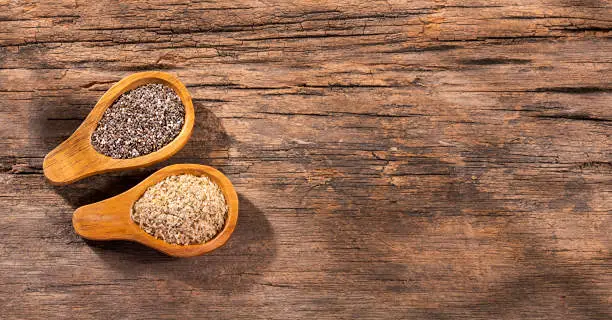
Polydextrose vs Psyllium: Which Fiber Fits Your Food Product? — The Formulator’s Comparison Guide
If you are developing a high-fiber food product, you have almost certainly shortlisted two ingredients: polydextrose and psyllium husk. Both are soluble fibers. Both add bulk. Both appear in nutrition panels as dietary fiber. But from a formulator’s perspective, they could hardly be more different. Choosing the wrong one for your application can mean a slimy beverage, a crumbly gluten-free loaf, or a label that fails your target market’s clean-label expectations.
This guide compares polydextrose and psyllium husk across the dimensions that matter to food manufacturers: functional properties, physiological effects, application-by-application suitability, and the business realities of cost, supply chain, and labeling. By the end, you will have a practical selection framework — not just a list of differences, but a decision logic you can apply to your next product brief.
What Are Polydextrose and Psyllium? Source, Production & Chemical Identity
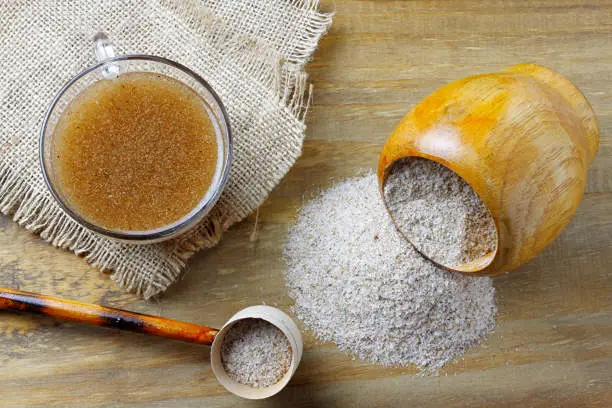
Before comparing performance, it is worth understanding what these two ingredients actually are, because their origins explain almost everything about how they behave in a formula.
Polydextrose is a synthetic glucose polymer (average degree of polymerization ~12), manufactured by thermal polymerization of glucose with sorbitol as a plasticizer and a small amount of citric acid as a catalyst. It is classified as a soluble dietary fiber and appears on ingredient declarations as “polydextrose” or, in the EU, under the E-number E1200. Its molecular structure, a randomly branched and non-digestible polysaccharide, is what gives it low viscosity, high water solubility, and moderate fermentability in the colon. Polydextrose typically contains approximately 80–85% dietary fiber on a dry-weight basis and contributes about 1 kcal/g.
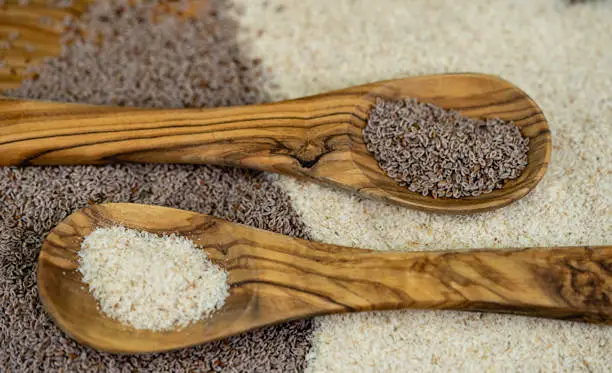
Psyllium husk is the outer coating of Plantago ovata seeds, a crop grown predominantly in India. Its primary polysaccharide is arabinoxylan, a hemicellulose backbone with arabinose side chains, which accounts for roughly 70% of the husk as soluble fiber. Unlike polydextrose, psyllium is classified as a natural, minimally processed ingredient with no E-number in EU markets. The FDA recognizes psyllium husk as eligible for a coronary heart disease risk reduction health claim (21 CFR 101.81) when consumed at 7 g or more per day as part of a diet low in saturated fat and cholesterol.
In short: polydextrose is the laboratory-designed universal building block. Psyllium husk is nature’s water-absorbing sponge. That single distinction propagates through every application decision that follows.
Functional Properties Head-to-Head: Solubility, Viscosity, Fermentability & Tolerance
Before diving into specific properties, understand this: polydextrose and psyllium differ fundamentally in how they interact with water. That single difference cascades into every application decision below. Polydextrose dissolves into a clear, low-viscosity solution. Psyllium absorbs water and forms a viscous, opaque gel. This is not a nuance. It is the axis on which most formulation choices turn.
Solubility, Viscosity & Sensory Behavior
| Property | Polydextrose | Psyllium Husk |
|---|---|---|
| Solubility | High — forms a clear, low-viscosity solution even at 10% concentration | High — but forms an opaque, thickening gel starting at concentrations as low as 0.5% |
| Viscosity | Low — behaves like water in most formulations | High — 1% concentration produces a reversible gel; increases exponentially with concentration |
| Mouthfeel contribution | Mild sweetness, adds body and bulk without altering texture | Gelling, thickening, and at higher doses, a slippery mouthfeel that can be perceived as unpleasant in beverages |
| Processing stability | Stable across pH 3.0–7.0, hot-fill, cold-fill, and retort processes | Gel strength decreases in highly acidic conditions (pH < 4.0); susceptible to phase separation |
| Appearance impact | Transparent, colorless — invisible in clear beverages | Opaque, may affect product color and clarity |
For the formulator, the practical takeaway is straightforward: if your product must remain clear and free-flowing (a functional water, a sports drink, or a clear protein shot), psyllium is effectively ruled out. Polydextrose is the only option that preserves visual and textural neutrality at meaningful fiber inclusion rates.
Fermentability, Digestive Tolerance & Gut Behavior
| Property | Polydextrose | Psyllium Husk |
|---|---|---|
| Fermentability | Low to medium — slowly fermented in the colon, primarily producing acetate and butyrate | Very low — one of the least fermentable dietary fibers available; largely passes through the colon intact |
| Tolerated daily dose | 30–50 g/day (laxation threshold); most individuals tolerate 10–20 g without discomfort | 5–10 g/day recommended; exceeding 15 g/day significantly increases gas and bloating reports |
| Gas production tendency | Moderate — fermentation produces some gas, but the slow rate mitigates acute bloating | Low — minimal fermentation means minimal gas, but the mechanical bulk itself can cause discomfort at high doses |
| Prebiotic activity | Weak to moderate — has been shown to increase Bifidobacterium abundance in clinical trials | Weak — minimal interaction with gut microbiota; primary mechanism of action is mechanical, not biological |
Polydextrose’s high tolerance ceiling is an underappreciated formulation advantage. If you are designing a product that needs to deliver a high single-serving fiber dose (a 15–20 g fiber shot, for example), polydextrose is one of the few fibers that can carry that load without triggering digestive complaints at scale. Psyllium, by contrast, is mechanically effective at low doses but has a narrow comfort window.
Think of it this way: psyllium is a physical sponge: it swells with water and passes through largely unchanged, providing mechanical bulk. Polydextrose is more like a slow-burning log: gradually fermented by gut bacteria, releasing short-chain fatty acids over time without a sudden gas spike.
Physiological Effects & Clinical Evidence: What the Science Says
The health claims you can make about your finished product depend heavily on which fiber you choose. Here, the evidence base diverges sharply.
| Health Dimension | Polydextrose | Psyllium Husk | Clinical Evidence Strength | Winner |
|---|---|---|---|---|
| Constipation relief / regularity | Mixed evidence — some studies show improved stool consistency and shortened transit time at 8–12 g/day, but a 4-week RCT found no significant improvement vs. placebo | Strong, consistent evidence — multiple RCTs confirm improved stool frequency (~3 more bowel movements/week), consistency, and reduced straining at 10–20 g/day | Psyllium has substantially stronger evidence | Psyllium |
| Blood cholesterol reduction | Unlikely — no meaningful effect observed across multiple studies | Well-documented — FDA-authorized health claim (21 CFR 101.81); meta-analyses confirm LDL reduction of 5–10% at 7–10 g/day | Psyllium is the only fiber in this comparison with an FDA health claim for cholesterol | Psyllium |
| Postprandial blood glucose regulation | Minimal — does not significantly slow gastric emptying or glucose absorption | Effective — viscous gel formation slows gastric emptying and reduces postprandial glucose excursions | Psyllium has the stronger evidence base | Psyllium |
| Prebiotic / gut microbiota modulation | Moderate — a 2023 double-blind RCT (250 adults with functional constipation, 4 weeks, published in Gut Microbes) demonstrated significantly increased Bifidobacterium abundance vs. placebo at weeks 2 and 4 | Weak — the same 2023 RCT found psyllium was associated with increased Anaerostipes, a butyrate producer correlated with bowel movement frequency improvement, but the prebiotic selectivity is far less pronounced than for polydextrose or inulin | Polydextrose has the edge on microbiome-specific outcomes | Polydextrose |
| Satiety / weight management | Mild — bulking contributes to gastric distension but no strong independent satiety signal | Moderate — gel-forming property creates pronounced mechanical fullness; widely used in meal-replacement formulations | Psyllium has a more intuitive and better-documented satiety mechanism | Psyllium |
| Mineral absorption | No significant interference reported | Can reduce absorption of certain minerals (calcium, iron, zinc) if consumed simultaneously — a consideration for fortified products | Context-dependent; psyllium requires timing consideration in fortified formulations | Polydextrose (safety margin) |
The overall picture: if your product’s value proposition centers on heart health, glycemic control, or digestive regularity, psyllium gives you the strongest claim support — including an FDA-authorized health claim that polydextrose simply cannot match. If your positioning is more about gut microbiome nourishment or you are formulating a high-fiber product where mineral bioavailability matters, polydextrose offers advantages that psyllium does not.
Application-by-Application: Which Fiber Fits Your Product Category?
The “best” fiber does not exist in the abstract. It depends entirely on what you are making. Use this section to map your product category to the right choice.
The decision logic is simple: first look at your product’s physical form (liquid / semi-solid / solid), then consider the core processing requirement (clarity / texture / heat stability), and finally check your label strategy (clean-label / E-number tolerance / health claim ambitions). Here is how that logic plays out across the major food manufacturing categories.
Beverages, Dairy Alternatives & Liquid Applications
If your product is a liquid, polydextrose wins in the vast majority of cases. The reason is simple: clarity and low viscosity are non-negotiable for most beverage formats.
- Functional beverages & flavored waters: Polydextrose is the only viable option — it dissolves to a crystal-clear solution that does not alter mouthfeel. Psyllium turns a clear drink into an opaque, thickening gel within minutes.
- Protein shakes & meal-replacement drinks: Polydextrose adds fiber without changing texture. If your shake is already positioned as “thick and creamy,” a low dose of psyllium (under 1%) can contribute to that texture — but this is the exception, not the rule.
- Yogurt & fermented dairy: Polydextrose does not interfere with fermentation cultures or alter the set texture of yogurt. Psyllium can create graininess during fermentation and may separate during shelf life.
- Juice-based drinks: Polydextrose preserves clarity and does not react with fruit acids (stable at pH 3.0–4.0). Psyllium loses gel strength in acidic conditions and can produce phase separation.
The exception worth noting: if you are developing a fiber-enriched smoothie explicitly positioned as “thick and satiating,” psyllium or a polydextrose-psyllium blend can be a deliberate texture choice rather than a defect.
Bakery, Bars, Confectionery & Semi-Solid Applications
Semi-solid products are where the two fibers diverge most interestingly — and where the choice becomes genuinely product-specific.
- Sugar-reduced cakes, cookies & muffins: Polydextrose compensates for the bulk lost when sugar is removed, contributing body and mild sweetness without gritty mouthfeel. It can replace 50–100% of sucrose volume depending on the formulation.
- Gluten-free bread & wraps: This is psyllium’s most irreplaceable application. At 2–5% of flour weight, psyllium husk forms a hydrocolloid network that mimics gluten — providing dough elasticity, gas retention during proofing, and crumb structure. Exceeding 8% produces an unpleasantly dense, rubbery loaf. No other clean-label fiber replicates this function as effectively.
- Energy bars & protein bars: The choice depends on positioning. A high-fiber, low-sugar, neutral-tasting bar → polydextrose. A chewy, moist bar with clean-label appeal → psyllium. Many bar formulators use both: polydextrose for the fiber claim and bulk, psyllium (1–2%) for chewiness and moisture retention.
- Gummies & jellies: Polydextrose — it remains transparent and does not compete with the gelling agent (pectin, gelatin, or agar). Psyllium creates cloudiness and interferes with set.
- Sauces, dressings & condiments: Polydextrose — adds body without altering flow or gloss. Psyllium produces a slick, sometimes slimy mouthfeel in liquid condiments.
Plant-Based Meat, Savory & Emerging Applications
The plant-based sector is driving new demand for both fibers — in different roles.
- Plant-based meat alternatives: Psyllium husk is the breakout ingredient here. At 1–3% inclusion, it binds water, reduces cooking loss, and contributes a juicy mouthfeel that mimics animal fat. This is currently one of the fastest-growing applications for psyllium in industrial food manufacturing.
- Extruded snacks & crisps: Polydextrose improves crispness and expansion in extruded products. In one comparative study, polydextrose produced a maximum sound peak of 101.4 dB vs. 104 dB for psyllium in puffed corn snacks — lower values indicate crisper, more desirable texture.
- Soups, broths & gravies: Polydextrose adds body without changing viscosity. Psyllium thickens but can leave a slick mouthfeel.
- Ready meals & frozen entrees: Polydextrose — superior freeze-thaw stability and reheat performance without texture degradation.
Clean-Label, Cost & Supply: The Business Side of Fiber Selection
Technical performance is only half the decision. Three business considerations often override a formulator’s first choice.
Label strategy. In the EU, polydextrose carries the E-number E1200 — a non-starter for brands pursuing clean-label positioning. Psyllium husk, as a minimally processed botanical ingredient, aligns with natural and clean-label consumer expectations. That said, North American consumers have shown greater acceptance of polydextrose, particularly in functional and better-for-you categories where the ingredient is listed by name rather than by E-number. Your target market’s regulatory environment and consumer culture should drive this decision, not a blanket assumption.
Cost structure. Industrial-grade polydextrose trades at approximately $2.60–3.50/kg in bulk from Chinese manufacturers. Psyllium husk pricing is more volatile — tied to the Indian monsoon season and annual harvest yields in Rajasthan and Gujarat, which together produce roughly 85% of the global supply. For a procurement team planning 12–18 months ahead, polydextrose offers more predictable budgeting. Typical B2B minimum order quantities for polydextrose range from 200–1,000 kg, making it accessible for both pilot-scale trials and full production runs.
Supply chain resilience. China’s Shandong province hosts a mature cluster of polydextrose manufacturers operating GMP-compliant production lines with ISO, BRC, FDA, and HALAL certifications. This geographic concentration creates efficiencies in logistics (export via Qingdao, Shanghai, and Ningbo ports) but also represents a single-region dependency. Psyllium’s Indian supply base faces different risks: monsoon variability, geopolitical factors affecting export policy, and less standardized quality documentation. For manufacturers seeking multi-source supply assurance, polydextrose’s more industrialized production base offers an advantage — particularly when working with suppliers that provide per-batch certificates of analysis and offer customizable specifications for viscosity, fiber content, pH, water activity, and particle form to match specific formulation requirements.
The takeaway: If predictable pricing, multi-certification documentation, and customizable technical specifications matter as much as the per-kilo cost, the polydextrose supply chain offers structural advantages worth weighing alongside the purely technical comparison.
Making the Right Choice: A Practical Selection Framework
By now you have the data. What remains is putting it together in a way that maps to the product brief sitting on your desk.
The Formulator’s Decision Checklist
Run through these six questions in order. The answer to each points directly to one fiber or the other.
- Does your product need to be clear and transparent? → Polydextrose. Psyllium cannot deliver clarity at any concentration.
- Are you making gluten-free bread, wraps, or baked goods that need structure? → Psyllium husk. No other clean-label fiber replicates the gluten-mimicking gel network as effectively.
- Do you need a high single-serving fiber dose (15 g or more per serving) without digestive complaints? → Polydextrose. Its 30–50 g/day tolerance window gives you formulation headroom that psyllium’s 5–10 g/day range cannot offer.
- Does your brand require a natural, clean-label positioning with no E-numbers? → Psyllium husk. Polydextrose’s E1200 designation is a liability in clean-label markets, particularly in Europe.
- Do you plan to make a cholesterol-lowering or blood-glucose-management health claim? → Psyllium husk. The FDA health claim (21 CFR 101.81) is an asset no other fiber in this comparison can match.
- Are you formulating across multiple product categories and need one universal fiber solution? → Polydextrose. Its neutral sensory profile and broad processing stability make it the more versatile single-fiber choice.
When Blending Wins — The Dual-Fiber Strategy
You do not, however, have to choose just one. An increasing number of commercial formulations use both fibers together — polydextrose for bulk, fiber content, and mild prebiotic activity; psyllium for targeted texture, moisture control, and front-label natural-fiber recognition.
Consider a high-fiber protein bar: polydextrose provides the fiber baseline (10–12 g per bar) and compensates for sugar-reduction bulk loss, while a small amount of psyllium (1–2%) delivers chewiness and moisture retention that polydextrose alone cannot achieve. A typical starting ratio is 3:1 to 5:1 polydextrose to psyllium, adjusted based on the target texture. Several international ingredient distributors now offer pre-blended fiber systems built on exactly this logic.
The trade-off is operational complexity: blending two fibers means managing two SKUs, two supplier relationships, and two sets of quality documentation. For smaller production runs, the simplicity of a single-fiber solution often outweighs the marginal performance gain of a blend. But for products where texture, fiber content, and label appeal must all hit simultaneously, the dual-fiber approach is worth the extra supply chain overhead.
Whatever fiber strategy you choose, one principle holds: the supplier you work with matters at least as much as the specification sheet. Consistent batch-to-batch quality, responsive technical support during formulation trials, and the ability to customize particle size or fiber content to your exact process requirements — these factors often determine whether a formulation succeeds at production scale, not just in the lab.
References
- Van Wankum Ingredients. “Dietary Fibers Take the Spotlight With Polydextrose and Psyllium Husk as Market Favorites.” 2025–2026. https://vw-ingredients.com/none/dietary-fibers-take-the-spotlight-with-polydextrose-and-psyllium-husk-as-market-favorites
- Bio-Starch. “Inulin Vs Other Dietary Fibers: An Evidence-Based Comparison For Formulators And Health-Conscious Consumers.” 2025. https://www.bio-starch.com/news/organic-inulin-powder-vs-other-fibers-what-makes-it-unique/
- Gut Microbes. “Effects of dietary fibers or probiotics on functional constipation symptoms and roles of gut microbiota: a double-blinded randomized placebo trial.” 2023. https://pubmed.ncbi.nlm.nih.gov/37078654/
- U.S. Food and Drug Administration. “Health Claim: Soluble Fiber from Certain Foods and Risk of Coronary Heart Disease.” 21 CFR 101.81. https://www.ecfr.gov/current/title-21/chapter-I/subchapter-B/part-101/subpart-E/section-101.81
- Saigao Group. “Products — Food Ingredients & Dietary Fibers.” https://www.saigaoingredients.com/products/
- Saigao Group. “Contact.” https://www.saigaoingredients.com/contact/
- Saigao Group. Homepage. https://www.saigaoingredients.com/
 English
  Russian
  Spanish
  French
  Arabic