
Searching where to buy polydextrose turns up a strange result. A dozen companies all call themselves “your polydextrose supplier,” and none explains how they actually differ. They do differ, enormously, and the difference is not the molecule. This guide maps the five types of polydextrose suppliers, then shows what the 10–20× price gap between channels is actually made of. It ends with the verification workflow that keeps a good price from becoming an expensive purchase.
The short answer
What You’re Actually Buying When You Source Polydextrose
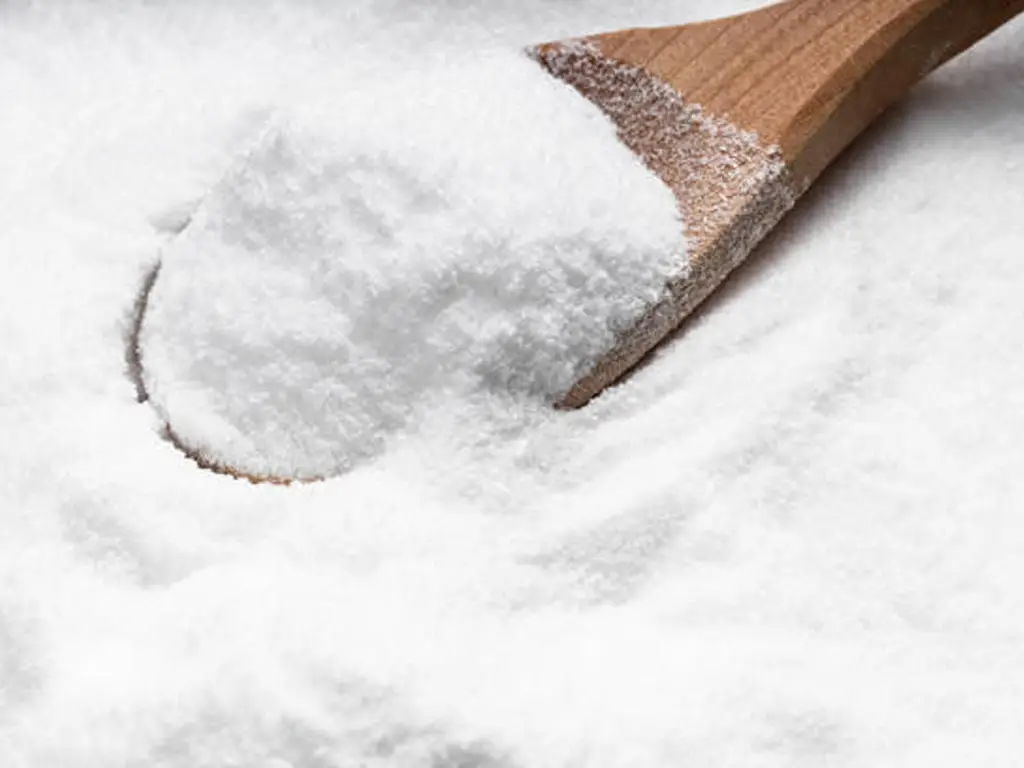
Polydextrose (E 1200) is a randomly bonded glucose polymer, made by thermally polymerizing glucose with roughly 10% sorbitol and a trace of citric acid. Food formulators use it as a soluble fiber, a bulking agent, and a partial sugar replacer across beverages, bakery, confectionery, dairy, and supplements. Health Canada describes its taste as not sweet but slightly tart, which is why it usually pairs with a high-intensity sweetener rather than replacing sugar alone (Health Canada, 2017).
The sourcing-relevant fact is this: polydextrose is a commodity ingredient in the precise sense. No single company owns the molecule, the production route is well established, and factories across China, India, South Korea, Europe, and the Americas all make it. Market researchers size the category at roughly $302 million in 2023, growing toward $453 million by 2032, about 4.5% a year (IMARC Group, 2025). When a molecule is that widely produced, “choosing a supplier” is really choosing a channel and a specification discipline, not choosing a secret formula.
One regulatory note that separates careful buyers from casual ones. In the United States, polydextrose is one of eight isolated or synthetic fibers the FDA accepted for the dietary fiber declaration in 2018. That acceptance operates under enforcement discretion while rulemaking continues, so any page claiming the FDA has “approved” these fibers is flattening a real distinction (FDA, 2018). If you are importing for the US market, ask suppliers how they state fiber content on the label, and check the answer against your own market’s rules.
If you are a home baker or a student looking for a 300-gram tub, jump ahead to the first supplier type below. For everyone buying by the kilo or the tonne, the five types that follow are the actual landscape.
The Five Types of Polydextrose Suppliers and What Each One Is Actually Selling
Every polydextrose seller fits one of five business models. Each model sells you something slightly different, and each fails in a different way. Reading the five in order also answers where to buy polydextrose at any given scale, because the channels sort cleanly by purchase size.
Retail Small-Pack Sellers
These are marketplaces and specialty baking or ingredient shops selling sealed tubs from 100 grams to a few pounds, sometimes up to a 50 lb commercial bag. The strength is pure availability: no business license, no minimum order, no negotiation. One UK food-science student described the channel gap precisely in a sourcing thread (r/foodscience, 2026). Retail polydextrose ran about £9 for a 300 g tub, while the major industrial fiber brands were effectively unavailable outside industry sales.
Retail small-pack sellers
Traders and B2B Marketplaces
These sellers do not make polydextrose; they intermediate it. Their strength is the lowest entry price in the market. Public listings from Chinese suppliers cluster around $0.80–1.50 per kilogram at a 1,000 kg minimum order (Made-in-China, 2026), which is the floor of the entire channel spectrum. The trade-off is accountability: the spec sheet you receive may originate with an unnamed upstream factory, and when a batch behaves oddly, nobody in the chain owns the chemistry.
Traders and B2B marketplaces
Distributors and Importers
Distributors buy from factories in bulk, hold local stock, and resell with service attached. Their pitch is visible across their own sourcing guides, and it rests on three things. Documentation gets handled for you, multiple brands sit side by side, and logistics end at your warehouse door. For a factory buyer, that is real value. You get a local address for returns, certificates assembled to your market’s requirements, and a second sourcing option when your primary line is tight. Procurement guides written from the distribution side make the corresponding argument honestly: the cheapest kilogram is rarely the cheapest ingredient once production losses and delays are counted (MT Royal, 2026).
Distributors and importers
Ingredient Manufacturers Selling Factory-Direct
These are the companies that actually run the polymerization reactors. In polydextrose, the manufacturing center of gravity is Shandong Province, China, where cluster-scale plants produce the ingredient alongside the sibling fibers and polyols. The advantages are structural. You get the lowest first-cost at production volumes, and you get direct answers to technical questions from the people who run the process. You can also customize across the axes the industry recognizes: viscosity, purity, pH, water activity, particle form, DE value, fiber content, and packaging. Published Chinese-national-standard specs (GB 25541-2010) set the reference frame: polydextrose content ≥90.0% on a dry, ash-free basis, with limits on residual glucose and sorbitol, 5-HMF, ash, and lead. The remaining question is fit. A plant built for tonne-scale campaigns is not the smoothest channel for a 2 kg sample request. And batch discipline varies by producer, which is exactly what your verification workflow must test.
Ingredient manufacturers (factory-direct)
Multinational Ingredient Brands
The global ingredient majors sell polydextrose under trademarked product lines backed by the deepest compliance apparatus in the market. Their offer includes global audit trails, regional technical centers, and specifications trusted by the largest food groups. Market-roundup lists of “top polydextrose manufacturers” are mostly this tier, mixed with the factories above. Read such lists with care, though. One widely cited industry roundup lists twelve companies of which at least four have no visible polydextrose business at all (IMARC Group, 2025). The list includes a construction firm and an in-vitro diagnostics supplier. Copying a list is not diligence; matching a channel to your situation is.
Multinational ingredient brands
The five types are not a ranking. They are five different businesses, and your purchase sits in exactly one of the rows below.
Match your buying situation to the channel
| Your situation | Best-fit channel type | Confirm before ordering |
|---|---|---|
| Gram-to-kilo sampling for R&D or home use | Retail or specialty small-pack sellers | Food-grade status and a written spec sheet |
| 1–25 kg commercial batches | B2B marketplaces and traders, or a distributor when documents matter | The factory of origin and whose specification applies |
| Tonne-scale production supply | Factory-direct manufacturers | Batch-consistency evidence, the documentation pack, and stock depth |
| Building a regional distribution business | A factory-direct partnership, backed by a distributor channel as insurance | Capacity evidence, exclusivity terms, and certification coverage |
What the Price Gap Is Actually Made Of
Ask three channels for a polydextrose price and you will wonder whether they are selling the same product. They are. The spread is the service.
The number that explains every quote
10–20×
retail price over ex-factory price, for the same molecule
The gap buys the service wrap around the polydextrose, not a different polydextrose.
Four price tiers and what each one actually buys
| Channel | Typical public price band | What the gap buys |
|---|---|---|
| Retail small-pack | ≈$15/kg (2.2 lb tubs on major marketplaces) | Convenience, zero MOQ, parcel delivery |
| Regional distributor | ≈$3/kg (25 kg bags, Indian public listing) | Local stock, split quantities, paperwork handled |
| Factory-direct / marketplace bulk | $0.80–1.50/kg at 1,000 kg MOQ (Made-in-China, 2026) | The material itself plus export documentation |
| Multinational brand, direct | Inquiry only, highest tier | Batch consistency and global compliance files |
Three conclusions follow from the table. First, a low quote is not automatically a low cost: rework, repeated trials, and a stopped line will eat a per-kilo discount faster than any negotiation won it. Second, the reverse also holds, so do not read a high price as a quality guarantee; the factory tier contains both the best and the worst batches in this market. Third, your volume picks your tier. Paying retail prices for production volumes is overspending. And buying ex-factory for kilo-scale sampling is a false economy once freight, paperwork, and minimums are counted.
Powder or Syrup: The Sourcing Difference
Application guidance for the two commercial forms is everywhere, so here we stay on the buying side, where the differences are less publicized. Powder is a dry, free-flowing solid that ships at ambient conditions and sits in warehouse stock. It also carries the longer shelf life of the two forms, commonly around three years versus about two for syrups (confirm per product). Syrup ships as a viscous liquid at 70% or higher solids, which means more weight and packaging per unit of fiber. It is also far more likely to be produced to order rather than held in stock.
Powder vs syrup: what changes on the buying side
| Buying factor | Powder | Syrup |
|---|---|---|
| Availability | Usually a stocked standard item | Typically made to order against your PO |
| Lead time | Often about a week when in stock | Custom production commonly runs 20–30 days |
| Freight | Dry bulk, lower cost per kilo of fiber | Viscous liquid, more weight and packaging per unit of fiber |
| Shelf life | Commonly around 3 years | Commonly around 2 years |
| Verify before ordering | Mesh size, flowability, caking tendency | Solids content in writing (not just Brix), plus acid stability data |
The syrup row deserves one extra sentence of respect. Concentration labeling is where syrup buyers get burned. Formulators have publicly described being thrown off by a “50 Brix” polydextrose syrup that did not mean what they assumed (Instagram formulator Q&A, 2026). Solids percentage, Brix, and viscosity are related but not interchangeable. Ask the supplier to state minimum solids content on the specification sheet in writing, and request acid-stability data if your application is a beverage.
On standards, match the dialect to your destination market. Chinese-standard material is specified against GB 25541-2010, while buyers shipping into the US, UK, and EU will usually compare against FCC, USP, BP, or EP monographs. They are different acceptance languages for the same molecule, not different grades of molecule. Tell the supplier your destination market first and request the corresponding specification version, with a batch certificate of analysis against that version.
From Sample to Production: A Verification Workflow That Catches Problems Early
Whatever channel you choose, the same three-step workflow protects you, and industry procurement guides catalog the same recurring failures in buyers who skip it (MT Royal, 2026).
Step 1: Sample and Pilot Validation
Industry practice is generous here: most suppliers provide samples within a stated quantity limit at no charge, with freight at the buyer’s cost. Use two rounds rather than one. Take a small laboratory sample, on the order of 100 to 500 grams, to verify the specification numbers. Then take one to two full bags into a pilot batch of your actual product. Dissolution speed, viscosity behavior, and finished-product stability in your matrix are the tests that matter, and none of them can be read off a certificate.
Step 2: MOQ and Lead-Time Reality Check
Bulk programs commonly start around one tonne, and that minimum is a feature only if it matches your consumption rate. A minimum that exceeds your burn rate is inventory aging in a warehouse wearing your company’s name. Lead times split by form and stock: stocked powder can ship in about a week, while custom specifications commonly run 20 to 30 days. Ask what the supplier actually holds in stock before you compare unit prices. A price that arrives in three weeks is not the same purchase as a price that arrives in three days.
Step 3: Batch Verification and the Documentation Pack
The most common testing failure is also the simplest: buyers validate the first shipment and then stop. Production conditions, raw material lots, and seasons drift, so verify incoming batches on a risk-based schedule instead of once. The same is true of paperwork. Collect the full documentation pack before you approve the purchase order, not after the goods arrive. The pack means the specification sheet, a batch certificate of analysis, Halal and Kosher certificates where your market needs them, non-GMO documentation, certificate of origin, and the heavy-metal test report. Writing response-time expectations into the contract is also normal practice; some manufacturers publicly commit to answering international inquiries within 12 hours, which is a reasonable benchmark to demand.
Five buying mistakes this workflow prevents
The Distributor’s Margin Playbook: Where Profit Actually Comes From
If you buy polydextrose to resell it, the structure documented above has one more consequence, and it is the commercial heart of this guide. In a commodity ingredient with transparent multi-factory pricing, there is no brand premium to carry. Your margin is a service margin: splitting tonne lots into your customers’ quantities, holding local stock, assembling the paperwork, extending credit, and answering the phone in their time zone. That is what the price table is actually paying you for, and it is why the playbook reads as follows.
Stock the powder, not the syrup. Powder holds longer, ships as normal dry freight, and is the form most of your customers will reorder. Treat one factory-direct relationship as your price anchor and keep a distributor channel as insurance. Your customers’ downtime is far more expensive than the extra cents on an emergency order. And when you qualify the factory itself, weight the three checks that commodity status makes decisive. Batch-consistency evidence, not the best sample you were ever sent. A complete documentation pack for your destination markets. And genuine stock depth, rather than a promise of a production slot.
We hold our own lines to exactly this checklist. At SAIGAO, polydextrose powder is a stock item that typically ships within about 7 days. Syrup (70%+ solids) and custom specifications are scheduled against your order, usually 20 to 30 days. Both run on lines that operate year-round, within a group capacity of 100,000 tonnes per year across all products. The full parameter ranges are published on our polydextrose powder specification (GB25541-2010) and polydextrose syrup (≥70% solids) pages. Every international inquiry receives a reply within 12 hours. And if an authoritative third-party inspection ever confirmed a quality issue on our side, contract terms would cover compensation, return, or exchange.
Ready to put a factory-direct option through the verification workflow above? SAIGAO provides samples within the standard limit (freight at your cost), together with batch certificates of analysis and Halal, Kosher, and non-GMO documentation. You can request a polydextrose sample and spec sheet to start your own verification.
Run the Verification on Us
Polydextrose powder and syrup specifications under GB25541-2010, samples within the standard limit, and factory-direct stock programs for buyers in 50+ countries served.
Request Sample and Spec SheetReferences
- U.S. Food and Drug Administration. “Guidance for Industry: The Declaration of Certain Isolated or Synthetic Non-Digestible Carbohydrates (Dietary Fibers) on Nutrition and Supplement Facts Labels: Scientific Evaluation.” 2018. fda.gov
- Health Canada. “Sugar Alcohols (Polyols) and Polydextrose Used as Sweeteners in Foods.” 2017. canada.ca
- IMARC Group. “Top 12 Polydextrose Manufacturer in the World.” 2025. imarcgroup.com
- Made-in-China. “Polydextrose Products Search and Price Listings.” 2026. made-in-china.com
- IndiaMART. “Polydextrose Food Grade Powder Listing, Ahmedabad.” 2026. indiamart.com
- Amazon. “Pure Polydextrose Powder, Vegan Gluten-Free OU Kosher Certified.” 2026. amazon.com
- Reddit r/foodscience. “Sourcing of Polydextrose.” 2026. reddit.com
- Instagram. “Polydextrose Syrup Brix Q&A (Formulator Reel).” 2026. instagram.com

 English
 Russian
 Spanish
 French
 Arabic