
A jar of honey does five jobs in a recipe. It sweetens, it browns, it holds moisture, it glues a granola bar together, and it gives a glaze its shine. Allulose can take over some of those jobs better than almost any other low-calorie sweetener, and some of them not at all. That gap is what this article is about, job by job. The answer to “which one should I use” changes completely depending on which job you are hiring for.
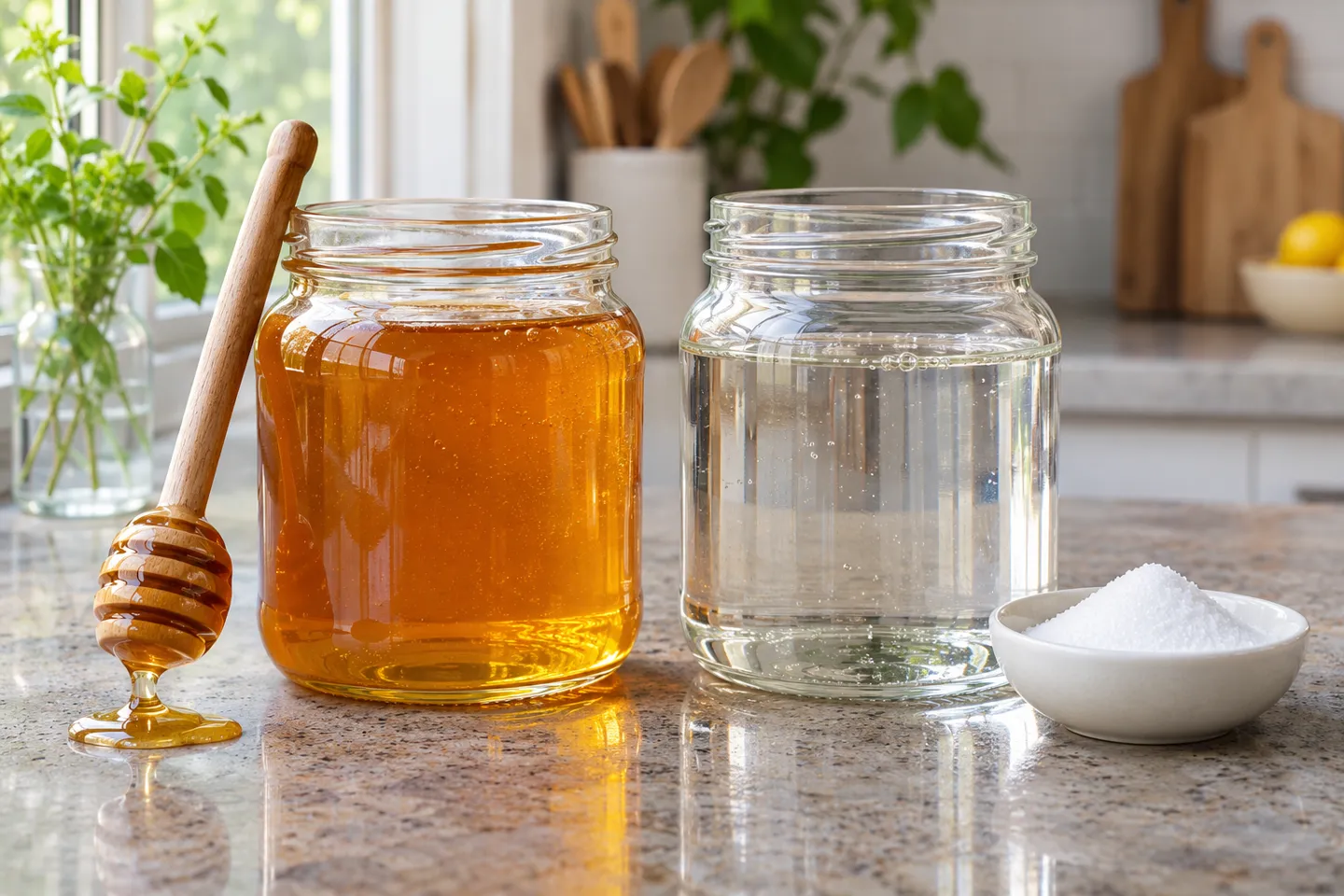
The Straight Answer: What Changes When You Swap Honey for Allulose
Both are sweet. That is where the simple part ends.
Allulose is a rare sugar: it exists naturally in small amounts in figs, raisins and jackfruit, and the allulose you buy is produced by converting fructose with enzymes. It passes through the body largely unmetabolized, so it delivers about 0.2 kcal per gram. Honey carries roughly 3 kcal per gram (Cleveland Clinic, 2024). Honey is the invert-sugar syrup bees make from flower nectar, and it raises blood glucose like any other sugar.
| Allulose | Honey | |
|---|---|---|
| Calories | 0,2 kcal/g | ~3 kcal/g |
| Impact glycémique | None (GI ≈ 0) | GI 50-60 |
| Douceur | 70% of sugar | ~25% sweeter than sugar |
| Keto / diabetic fit | Oui | Non |
| Le goût | Clean, sugar-like, no cooling or bitterness | Floral, complex, varies by source |
| Tolérance digestive | Bloating possible at large single servings | Well tolerated as a food |
| Idéal pour | Cutting sugar and calories in drinks, baking, sauces | Flavor-first use where calories are acceptable |
For someone pouring a sweetener into coffee, blending smoothies, or managing blood glucose, allulose wins on metabolism and honey wins on flavor. If that table answered your question, you can stop here.
But notice what the table is actually measuring: sweetness and metabolic response. It says nothing about why a honey-glazed ham looks right, why a granola bar holds together, or why a honey-sweetened cake stays soft on day three. Those are physical jobs, and they are where swaps start failing.
The table above covers sweetness and metabolism, which is one of five jobs honey does. The rest of this article walks through the other four: browning, moisture, binding, and glazing.
Getting Sweetness Right: Ratios, Taste and Browning
If you have decided to swap, three adjustments decide whether the result works.
Step 1: get the ratio honest. Allulose delivers about 70% of sucrose’s sweetness, while honey runs about 25% sweeter than sucrose. So a spoon-for-spoon swap from honey leaves the recipe under-sweetened twice over. You need roughly 1.8 times the volume of allulose to match honey’s sweetness. Even then the flavor profile will be cleaner and flatter, because honey carries floral and caramel notes that allulose does not have. Where the missing sweetness matters, bakers commonly add a high-intensity or cooling-matched partner; erythritol blends are the usual choice, though erythritol brings its own cooling sensation that allulose avoids.
Ratio check
Target sweetness ÷ 0.7 = allulose amount.
If honey flavor matters, decide whether you can accept losing it, because no ratio recovers it.
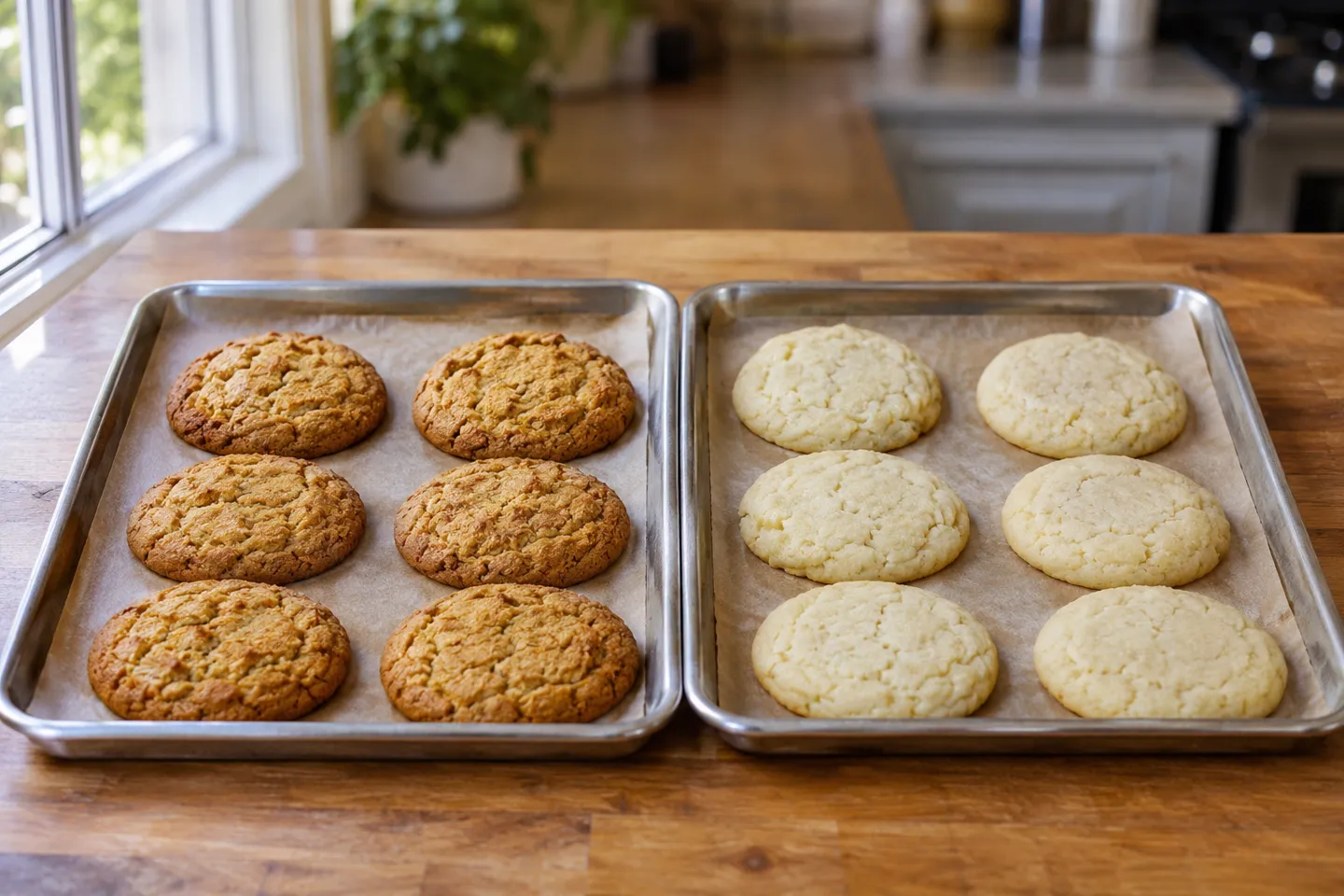
Step 2: pull the browning back. This is the adjustment almost nobody expects. Allulose browns faster than sucrose, reaching Maillard and caramelization color at lower temperatures, so a bake that goes into the oven at your usual temperature and time comes out darker than intended, sometimes past golden into bitter. Pull the temperature down or shorten the bake, and check color early. The same reactivity becomes an advantage in glazes, where faster browning means faster finish, and a problem in cakes, where the outside overcolors before the center sets.
Same recipe, same oven, same time: allulose versions come out darker. Reduce temperature or bake time and judge by color, not by clock.
Step 3: expect a lighter body. Allulose leaves no cooling effect and no aftertaste, which is why it tastes closer to sugar than sugar alcohols do. What it cannot reproduce is honey’s body: honey carries roughly 17 to 18% water held in a viscous syrup, and allulose syrups run thinner and hold less moisture in the crumb. Cakes and soft cookies made with allulose alone tend toward a drier bite. This is the first hint of a bigger problem, and it is the subject of the next section: the jobs honey does that sweetness cannot replace.
Where Honey Does Real Work: Binding, Moisture and Body
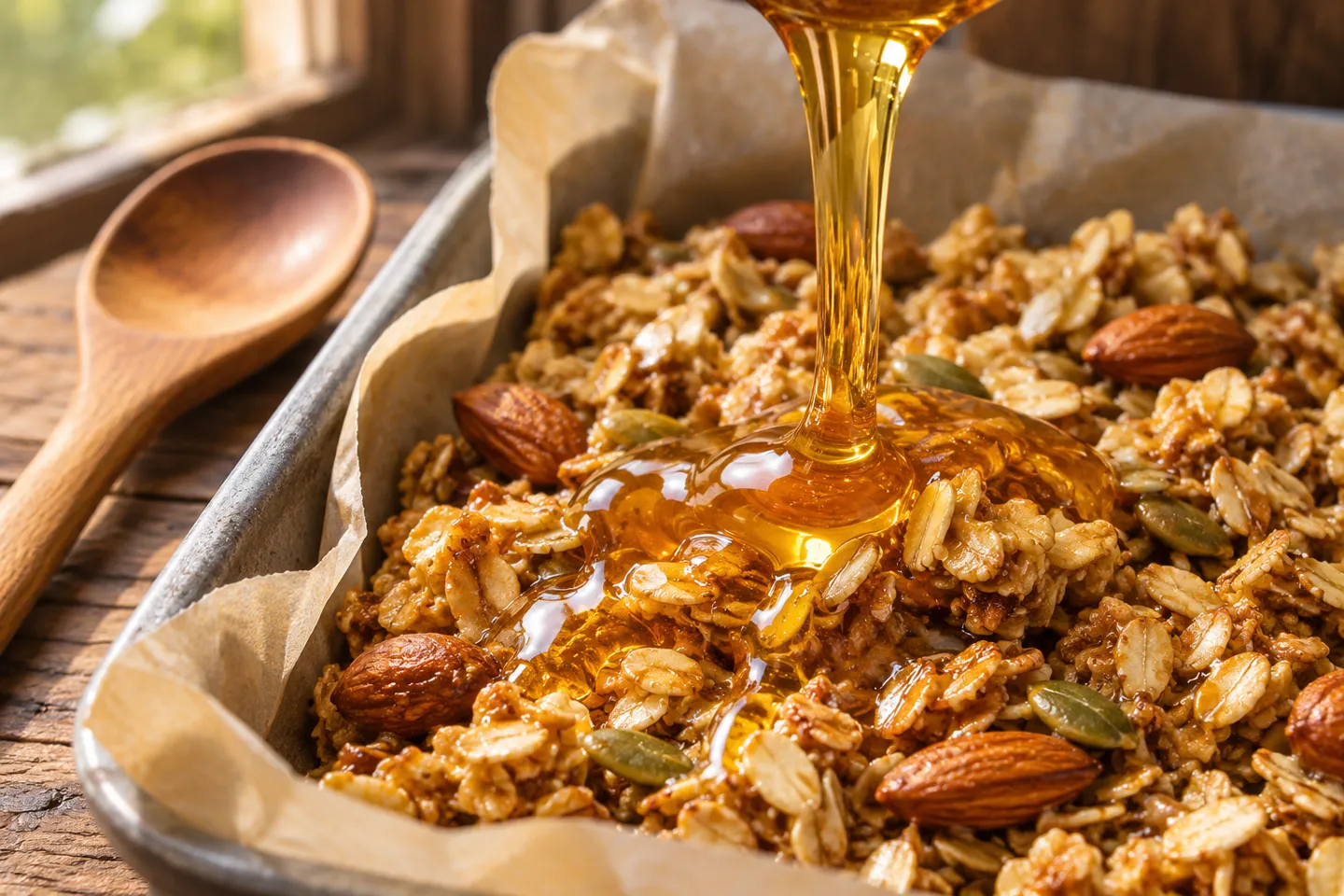
Stop thinking of honey as a flavor for a moment and look at what it does structurally. In a granola bar, honey is the glue: its high solids and viscous syrup coat every oat and seed, then sets firm as it cools. In a cake, it is the humectant that keeps the crumb soft for days. In a syrup or sauce, its thickness is the body.
The binding gap
80%solids in a honey-style syrup
vs
70%typical allulose syrup solids
The ten-point solids gap is why an allulose-only bar never firms.
What binds instead: soluble fibers (resistant dextrin, polydextrose) and oligosaccharides (IMO), the system sugar-free bar makers spec.
Binding: Why the Bar Falls Apart
No honey means no binding, and the failure is immediate. Replace honey with allulose syrup alone, and you get exactly what one home cook described after trying a low-sugar binding swap for homemade bars: they crumble apart when you try to cut them (r/AskCulinary, 2025). Allulose syrup simply does not have the solids content or the setting behavior; a honey-style syrup runs around 80% solids while allulose syrups typically sit near 70%, and the difference shows up as a bar that never firms. The fix is not more syrup. The fix is a partner that contributes solids and structure. Sugar-free bar manufacturers use soluble fibers such as resistant dextrin or polydextrose, plus oligosaccharides like isomalto-oligosaccharide, as their binding systems. These add bulk and set firm while staying low-glycemic. Formulators in the trade press say it plainly: sugar is the hardest sweetener to replace because of all of its gold-standard properties (Baking Business, 2022), and binding is where that bites hardest.
Without honey’s binding, the bar falls apart. That one sentence is the whole replacement project in miniature: judge honey by its jobs, then staff each job.
Moisture: Why the Crumb Dries Out
Honey is a humectant. It holds water against evaporation, which is why honey cakes stay soft on day three while many sugar-free versions go stale in a day. Allulose holds less moisture, so the practical move is either pairing it with fibers, which carry their own water-holding capacity, or adjusting the liquid in the formula.
Honey’s physical jobs and how allulose covers them
| Job | How honey does it | L'allulose seule | What to add |
|---|---|---|---|
| Binding granola bars | High-solids syrup sets on cooling | Bar crumbles | Soluble fiber + oligosaccharide binding system |
| Keeping bakes soft | Humectant holds water | Dries faster | Fiber partner or extra liquid |
| Body in sauces | Viscous syrup | Thinner mouthfeel | Thickener such as xanthan gum or reduced water |
| Browning and shine | Caramel notes | Browns faster | Adjust time and temperature |
Body: The Viscosity Gap
Thinner syrup means thinner sauce. Where honey gives a glaze its cling, allulose syrup slides; a small addition of a hydrocolloid such as xanthan gum restores viscosity without adding sugar. None of this means allulose fails. It means every one of these physical jobs needs a decision, not a substitution. Without honey’s binding, the bar falls apart, and that one sentence is the whole replacement project in miniature: judge honey by its jobs, then staff each job.
If the job honey did in your product was structural, our team specs the binding and moisture partners alongside the allulose, not just the sweetener.
Start a specification reviewGlaze, Shelf Life and the Lines You Cannot Cross
Glaze and Shine
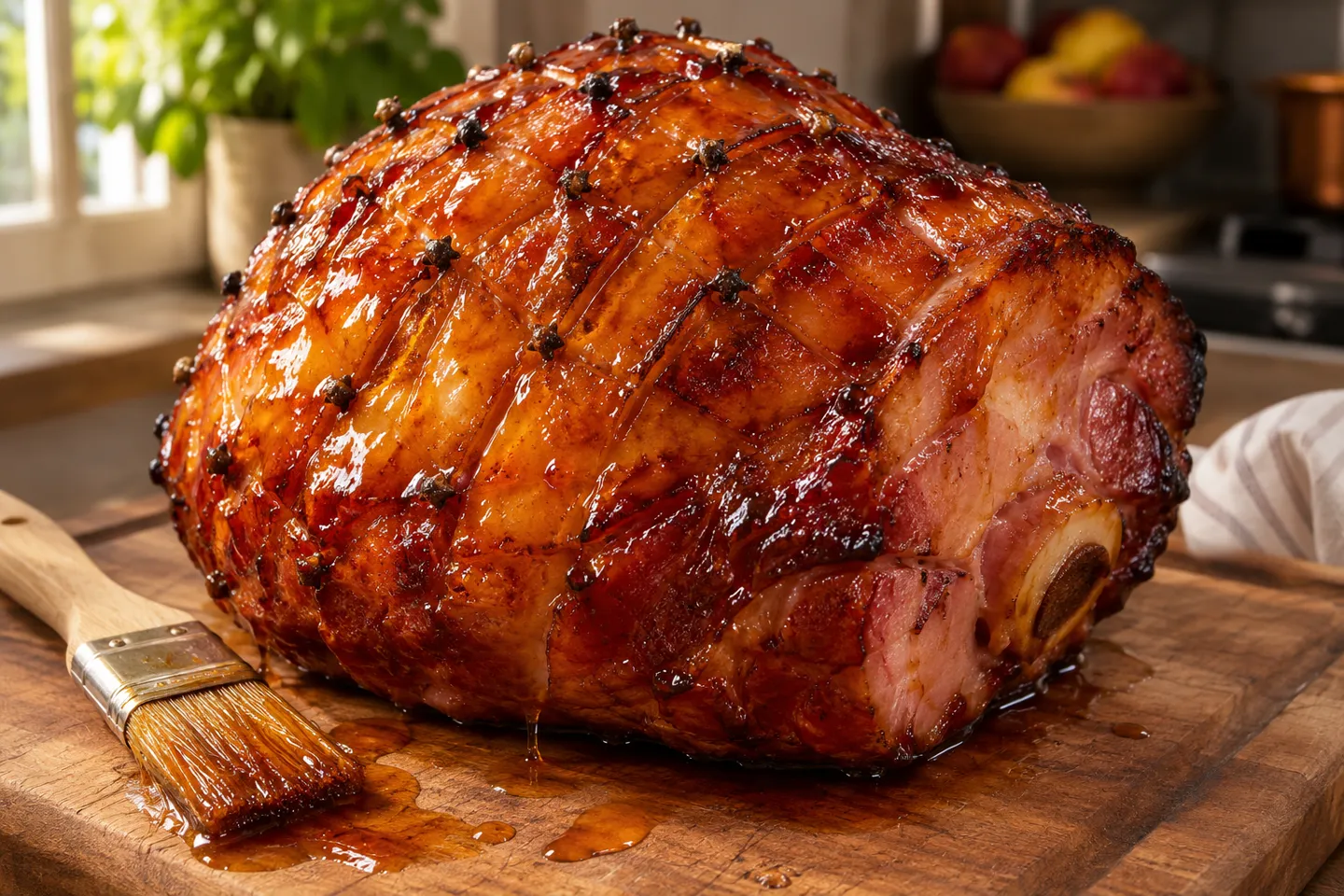
On jerky, ham and pastries, honey glaze does three things at once: it carries sweetness, it browns into an appetizing lacquer, and its viscosity makes it cling. Allulose takes over the sweetness and even browns faster, which shortens glazing time in the oven. What it does not bring is cling, so thin glazes run off before they set; builders restore cling with a viscosity adjustment, or layer a low-hygroscopicity sugar alcohol such as isomalt into coatings that need to stay dry and crisp. Keto cooks attempting honey-glazed dishes run into this immediately, which is why the question keeps reappearing in recipe forums (r/ketorecipes, 2022).
Preservation: Recalculate, Do Not Assume
Honey keeps itself and everything around it. At around 80% solids and a water activity near 0.5 to 0.6, it is too dry for microbes to grow, which is why honey-sweetened sauces and marinades resist spoilage. Allulose syrup at roughly 70% solids does not reach that barrier, so a straight swap raises water activity and shortens shelf life. Any product that leaned on honey for stability needs its preservation and pH plan recalculated from scratch, not adjusted at the margin.
The Lines You Cannot Cross
Two boundaries are regulatory and one is biological, and all three are cheaper to know before formulation than after.
The three lines, at a glance
Geography: GRAS in the US; not authorized in the EU. The 2025 EFSA safety opinion has not become market authorization. Two markets, two recipes.
Dose: about 0.4 g per kg of body weight in a single sitting. A teaspoon in coffee never gets near it; a large bottled drink can.
Preservation: a swap raises water activity. Shelf-life and pH plans need recalculation, not margin adjustment.
First, geography. In the United States, allulose is GRAS and the FDA’s guidance lets it be excluded from the Total Sugars and Added Sugars declarations, counted at 0.4 kcal/g (FDA, 2019; IDFA, 2019). In the European Union it is still not an authorized novel food: EFSA published a positive safety assessment for D-allulose in 2025 (EFSA Journal, 2025), but market authorization has not followed, and a product sold in the EU cannot contain it yet. A snack brand reformulating for US shelves and EU shelves is running two different recipes, and discovering this after production is the expensive version.
Second, dose. Allulose is gentle on blood glucose but not on digestion at volume. The commonly cited comfort limit is around 0.4 g per kilogram of body weight in a single sitting, above which bloating and laxative effects show up (Cleveland Clinic, 2024). A teaspoon in a coffee never gets near it. A large bottle of allulose-sweetened iced tea can.
Third, preservation, as above: a swap that raises water activity can quietly undo a shelf-life plan.
Where the honey-to-allulose swap holds and where it breaks
| Product category | Honey’s main job | Allulose takeover | What to add or change | Where it fails |
|---|---|---|---|---|
| Boissons | Douceur | Full | Erythritol partner for sweetness balance | High-serve sizes hit digestive limit |
| Bakery (cakes, cookies) | Sweetness + moisture + browning | Partiel | Fiber for moisture, earlier color check | Overcolor before set |
| Sauces and marinades | Sweetness + preservation | Partiel | Recalculate water activity and pH | Shelf life shortens if skipped |
| Confiserie | Texture and setting | Partiel | Binding system redesign | Center softening |
| Bars and granola | Binding | Faible | Full binding system (fiber + oligosaccharide) | Crumbles without it |
| Glazed meats | Glaze, shine, preservation | Partiel | Viscosity adjustment, shorter glaze time | Cling and shelf life need work |
The Formulator’s Checklist: What to Specify Before You Switch
Once the recipe decisions are made, the supply decisions are just as concrete. Buying allulose is not like buying honey, where the product is whatever the season produced; it is a manufactured ingredient with specifiable parameters, and the parameters are where quality is won or lost.
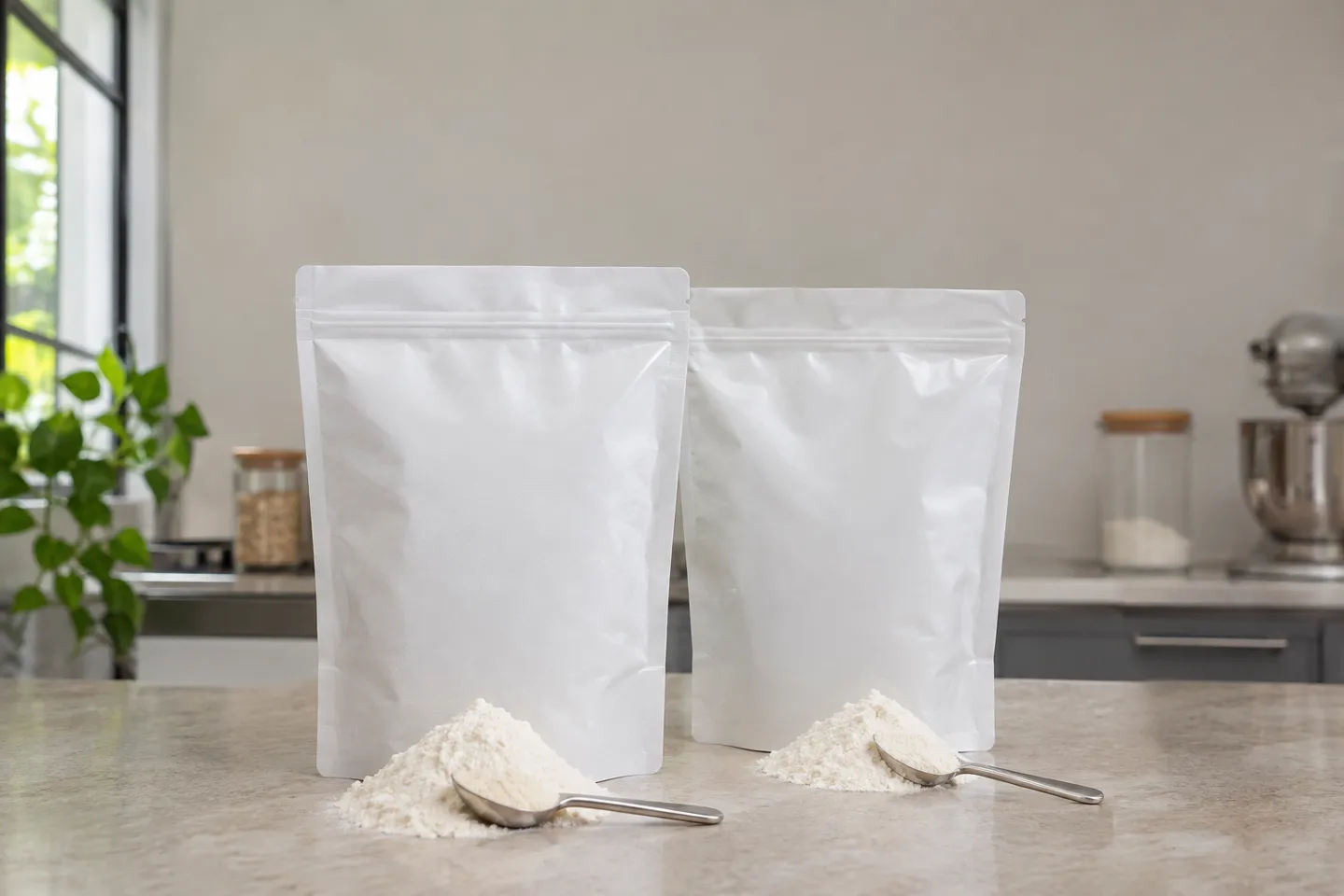
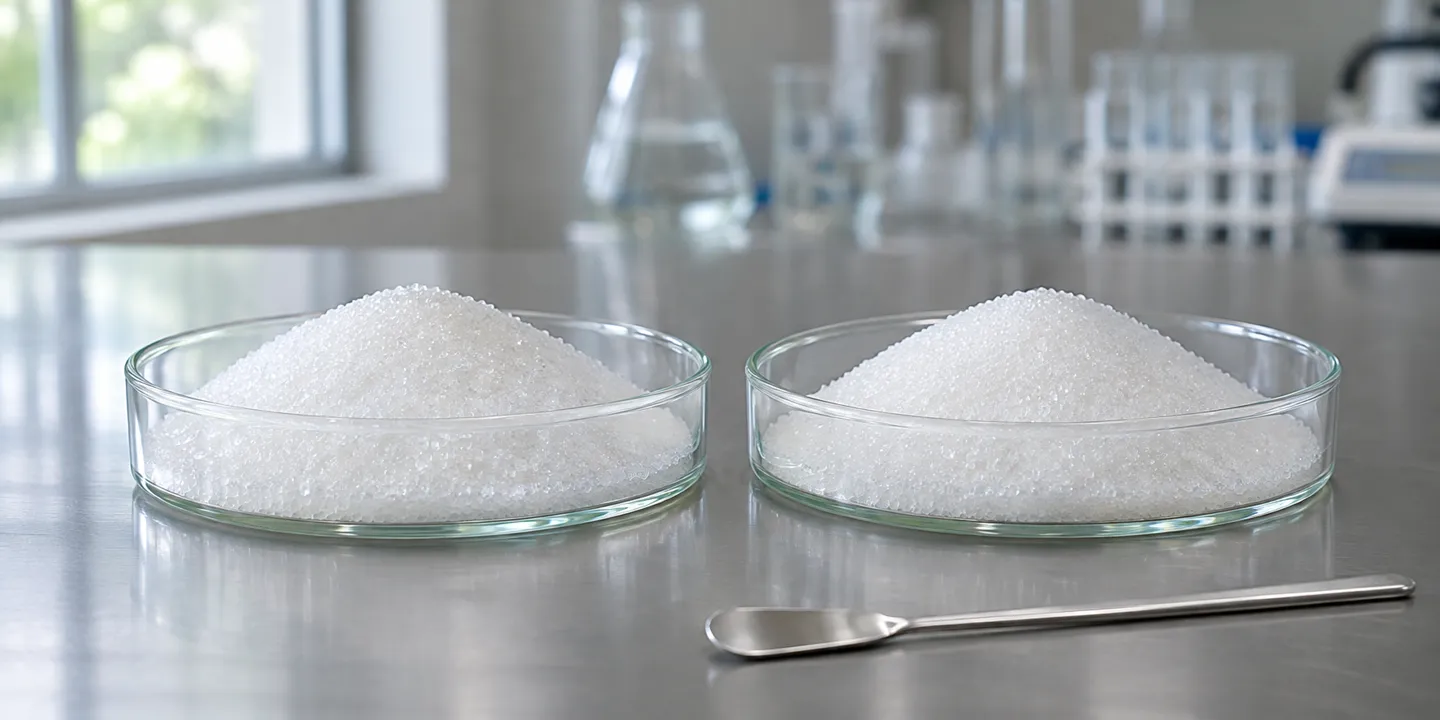
Start with form. Allulose comes as crystalline powder and as syrup. The syrup’s solids concentration belongs in the spec sheet, because a 70% syrup and a 75% syrup are not interchangeable in a glaze line. Then the assay sheet: purity, moisture, pH, color, heavy-metal limits, with a certificate of analysis for every batch, not just the first one. Where the recipe needs a custom balance, sweetness partners, viscosity, particle size and packaging are all specifiable rather than negotiable.
On the commercial side, pin down minimum order quantities and what a trial path looks like: small sample for lab testing, pilot quantity for a production trial, then volume. Lead times differ between stock and custom grades, and certifications are checkable rather than claimed: non-GMO origin, allergen and religious certifications, and the factory’s quality system all belong on the list. The failure mode this checklist prevents is quiet: batch drift, where color, viscosity or solids creep between shipments and the finished product drifts with them.
Before you commit
Form and solids concentration
Assay + per-batch COA
Custom dimensions in writing
Sample-to-pilot-to-volume path
MOQ and lead time
Verifiable certifications
Reading This as a Product Line Decision
Zoom out, and the comparison reorganizes itself. In a distributor’s or manufacturer’s portfolio, honey and allulose are not competing products fighting for one slot. They answer different requests. A buyer asking for honey is asking for flavor and tradition at a calorie price. A buyer asking about allulose is asking whether a low-calorie sweetener can actually do the job that honey or sugar was doing in their product. As the sections above show, the answer is almost never a single-bag answer.
The requests that convert into real orders are the system requests. They combine a syrup for sweetness and browning, a fiber or oligosaccharide for binding and moisture, a viscosity fix where cling matters, and solids and assay specs that hold batch to batch. Stocking and quoting those as one package is what turns “can you replace our honey” from a price inquiry into a specification conversation. And there is a supply-side argument that keeps surfacing. Honey is an agricultural product whose price and availability swing with seasons and colony health. Its supply chain also carries a well-documented adulteration problem. The FDA found about 10% of imported samples violative in its recent testing (FDA, 2026), and the World Beekeeping Awards suspended its honey prize over fraud concerns (The Guardian, 2024). A manufactured ingredient with year-round capacity and per-batch consistency reads, in that light, less like an alternative and more like insurance.
That is the position SAIGAO has built its allulose program around. Crystal and syrup forms come with specifiable solids, custom viscosity and packaging. Stock grades ship in about a week and custom grades in about three to four, with per-batch COA behind it. Our allulose syrup and crystal specification sheets are on our product page if you want to compare them against your current honey spec line by line.
Put a specified allulose up against your honey spec
Solids, viscosity, packaging and certifications are all specifiable. Tell us which honey job you are replacing, and the quote comes back as a system, not a bag.
Request samples and spec sheetsRéférences
- Cleveland Clinic. “ L'allulose : qu'est-ce que c'est et quels sont ses effets secondaires ? ” 2024. health.clevelandclinic.org
- U.S. Food and Drug Administration. “The Declaration of Allulose and Calories from Allulose on Nutrition and Supplement Facts Labels: Guidance for Industry.” 2020. fda.gov
- International Dairy Foods Association. “FDA Allows New Sweetener to Be Excluded from Sugar Declarations.” 2019. idfa.org
- EFSA Panel on Nutrition, Novel Foods and Food Allergens. “Safety of D-allulose as a Novel Food Pursuant to Regulation (EU) 2015/2283.” EFSA Journal. 2025. pmc.ncbi.nlm.nih.gov
- Baking Business. “Replacing Sweeteners Creates Formulation Challenges.” 2022. bakingbusiness.com
- Reddit r/AskCulinary. “Looking for a Sugarless Replacement for Sticky Binding.” 2025. reddit.com
- Reddit r/ketorecipes. “What Is a Good Substitute for Honey Used as Glaze?” 2022. reddit.com
- U.S. Food and Drug Administration. “FDA Releases FY25 Sampling Results for Economically Motivated Adulteration in Honey.” 2026. fda.gov
- The Guardian. “Beekeepers Halt Honey Awards over Fraud Concerns.” 2024. The Guardian
 English
 Russian
 Spanish
 French
 Arabic