
What Allulose and Agave Actually Are
Two batches of cookies come out of the same oven. The one sweetened with allulose turns deep golden in twenty minutes and has to come out early. The one made with agave syrup stays pale and comes out soft in the middle. Neither batch failed because of a bad recipe. The two sweeteners simply do different jobs, and almost every difference people argue about online (taste, health, cost, label claims) traces back to that one fact.
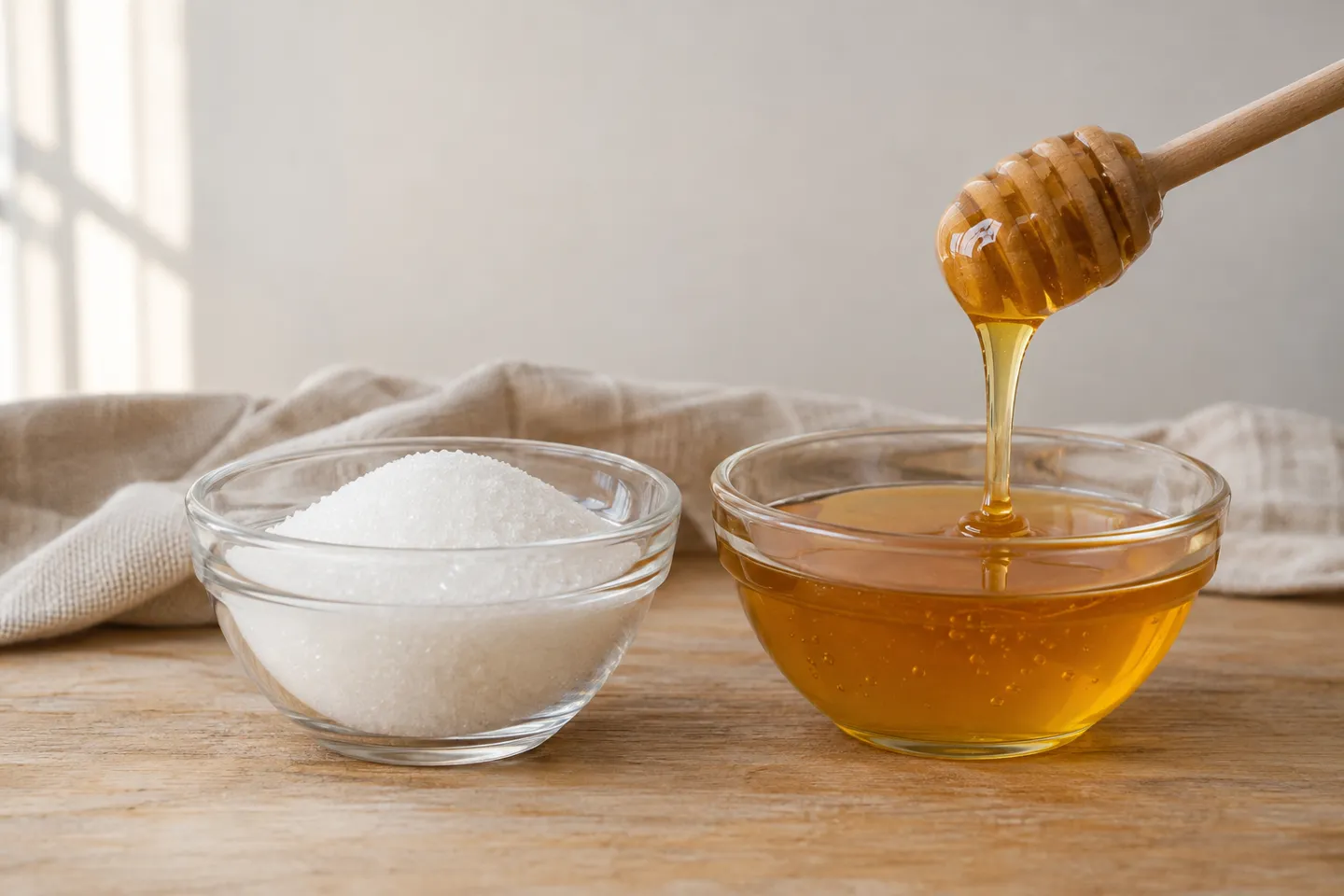
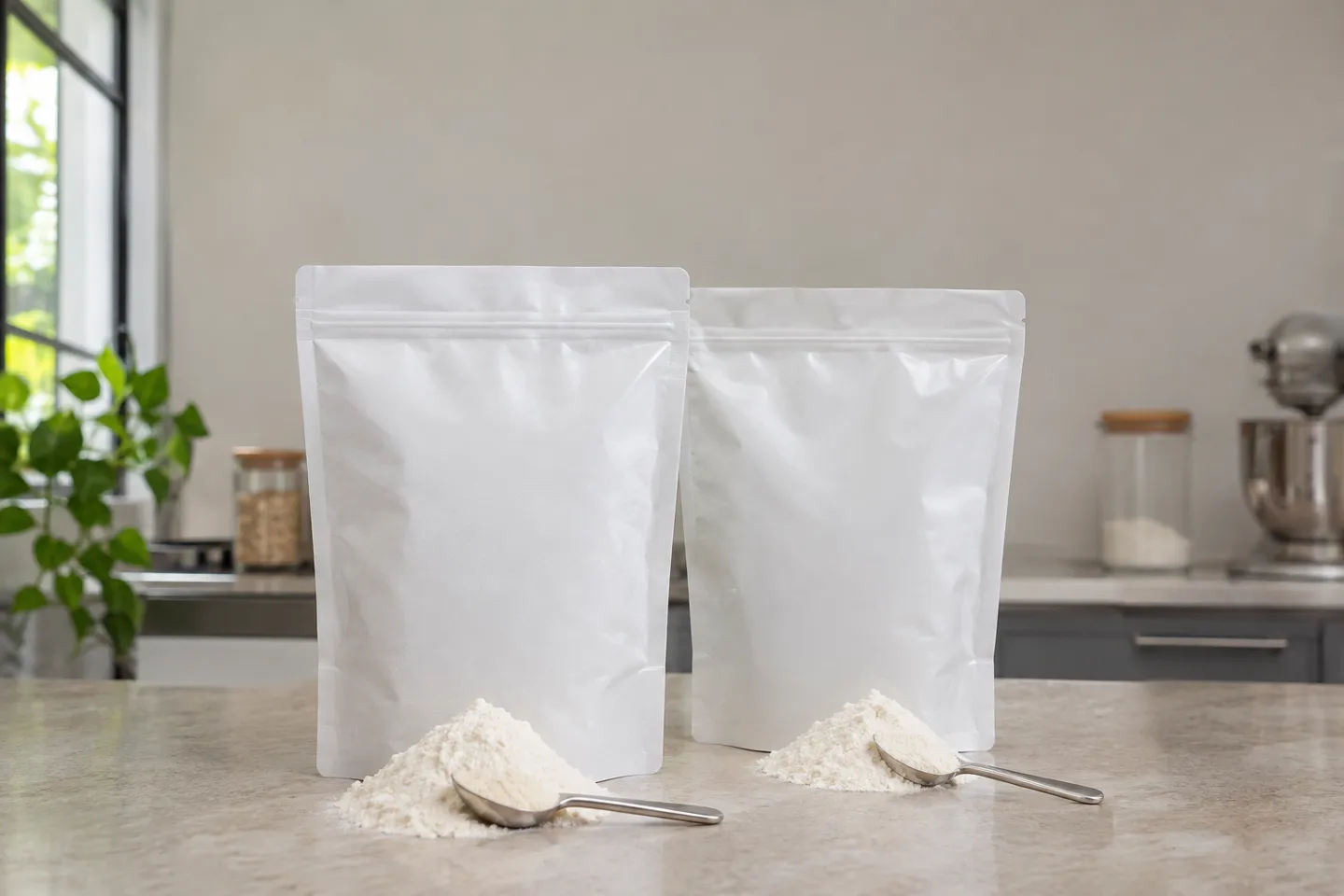
Allulose is a rare sugar. Chemists call it D-allulose, and older papers sometimes use the name psicose. It exists naturally in tiny amounts in foods like figs, raisins and wheat, but those traces are far too small to extract economically. Commercial allulose is therefore made from corn glucose through an enzymatic conversion process. One clarification worth making up front: allulose is not made from agave. The two names show up in the same searches, but they come from completely different raw materials.
Agave syrup is the sap story. Producers harvest blue agave (Agave tequilana) and salmiana plants, which take five to seven years to mature, then mill the piñas, the plant’s fibrous core. From there the juice is filtered, its fructans are thermally hydrolyzed at around 80°C for hours, and the liquid is vacuum-evaporated into syrup. Retailers sell it under two names, agave nectar and agave syrup, and they are the same product.
So this is not a comparison between two brands of one ingredient. It is a comparison between two different sweetening systems: a rarely-used sugar the body mostly ignores, and a fructose-heavy syrup built from a slow-growing desert plant. Every practical difference below, from why your ice cream texture changes to what you can legally print on a label, grows out of that distinction.
The Numbers That Actually Matter
Allulose vs Agave: The Numbers Side by Side
| Attribute | Alulosa | Agave Syrup |
|---|---|---|
| Dulzor frente a sacarosa | about 70% | about 1.4 to 1.5x sweeter |
| Calorías | 0.4 kcal/g under FDA enforcement discretion | about 310 kcal per 100 g |
| Blood glucose response | near zero, it is largely not metabolized | low GI of 10 to 27, driven by fructose metabolism |
| Fructose load | none, it is a rare sugar | roughly 80% of solids, study ranges about 71.9% to 92.1% |
| Forma física | crystalline powder, granules and syrup | syrup only |
| Tratamiento de las etiquetas en EE. UU. | excluded from Total Sugars and Added Sugars (FDA, 2020) | counts fully as added sugar |
| Market availability | US approved, EU and UK novel food authorization pending | no restrictions in major markets |
Source: U.S. FDA guidance 2020; Saraiva et al. IJERPH 2022.
Those numbers only become useful once you know what they are for. Sweetness, for example, is a dosing number. Allulose at 70% sweetness means you need roughly 1.3 times the weight of sugar to match a recipe’s sweetness. That dosing gap is why blending it with a high-intensity sweetener is so common in commercial formulas. Agave at 1.4 to 1.5 times means you use less of it, but each gram still carries full sugar calories, and about 80% of its solids content is fructose.
The glycemic rows deserve special care because they get misread constantly. Agave’s low glycemic index number is real, but the mechanism matters. Glucose barely rises because fructose is processed almost entirely by the liver, the same metabolic route high-fructose corn syrup takes. Allulose’s near-zero response comes from a different place entirely: the body absorbs it but largely does not metabolize it. That is also why the FDA accepted 0.4 kcal/g on labels instead of the 4 kcal/g standard factor. (Administración de Alimentos y Medicamentos de Estados Unidos, 2020) Two true numbers, two completely different mechanisms, and neither one tells you how the ingredient will behave in your oven or your freezer. That is the next layer.
What Changes in the Product When You Swap
Sucrose is never just sweetness in a recipe. Sugar holds down several jobs at once: it sweetens, it browns, it locks moisture, it depresses the freezing point of anything frozen. Most failed substitutions happen because one ingredient was hired to replace all of those jobs with only one skill. That is the single most useful thing to remember in this comparison. Agave cannot say the same, which is not a criticism, it is just what the molecule is.
Sugar holds down several jobs at once. Allulose is one of the very few substitutes that can take over sweetness, browning and freezing-point depression together.
Baking: Browning, Structure and the Pale Cookie Problem
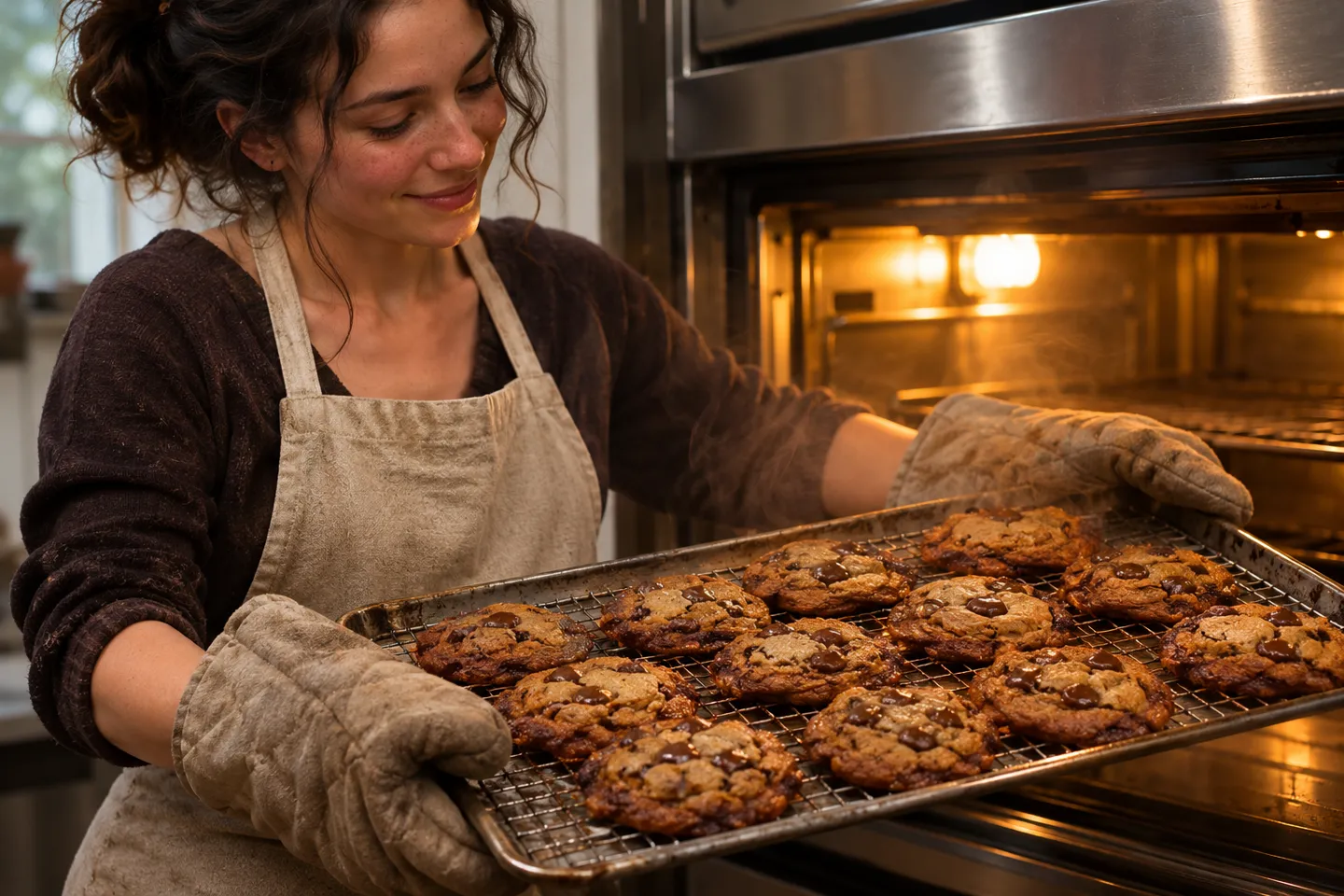
Browning is a chemical job. Sucrose participates in caramelization and the Maillard reaction, and allulose does too. The difference surprises first-time users: allulose browns earlier and faster than sucrose, which is why commercial allulose baking guides almost always tell you to drop the oven temperature. The pale-cookie failure at the top of this article is what happens when a liquid fructose syrup is asked to do that job. Agave brings moisture and sweetness, but its browning behavior in a dough differs, and its water content changes the flour-to-liquid balance, so cookies spread soft and pale instead of setting.
Peer-reviewed baking work backs a middle path: muffin studies found partial-hydrolysis agave syrup substitutes well at up to 75% sucrose replacement, while full replacement degraded texture and acceptability. (Saraiva et al., IJERPH, 2022) Formulators working with allulose have even broader documented headroom. One published patent family covers sweetened bakery products with allulose at roughly 8% to 45% by weight. (WO2015075473A1, 2015)
Frozen Desserts: Freezing Point Is a Job, Not a Bonus
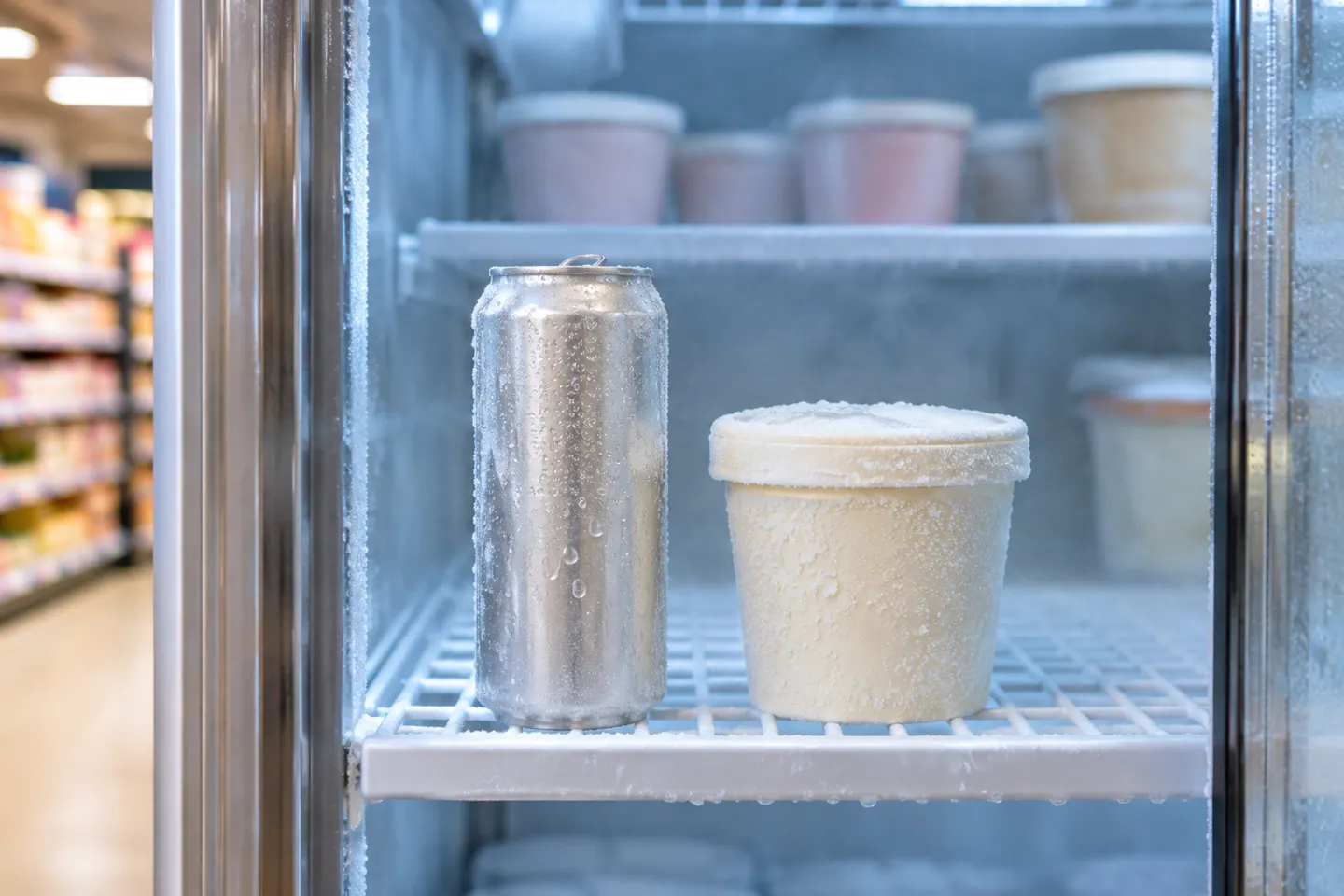
Frozen texture is controlled by freezing-point depression. Dissolved sugar molecules physically lower the freezing point of water, and that is the difference between a scoopable pint and an ice brick. Allulose performs this job well. Its molecular weight is about 163 g/mol, roughly half of sucrose’s 342, so gram for gram it depresses the freezing point about twice as much. Home ice-cream makers document exactly what happens when the wrong sweetener takes this job. In one long discussion on frozen-dessert recipes, users describe batches that set “hard as a rock” or stayed “soupy like a melted Wendy’s frosty.” The outcome depended on which substitute they used and how much. Allulose is repeatedly named as the option that keeps texture intact. (r/ninjacreami, 2024)
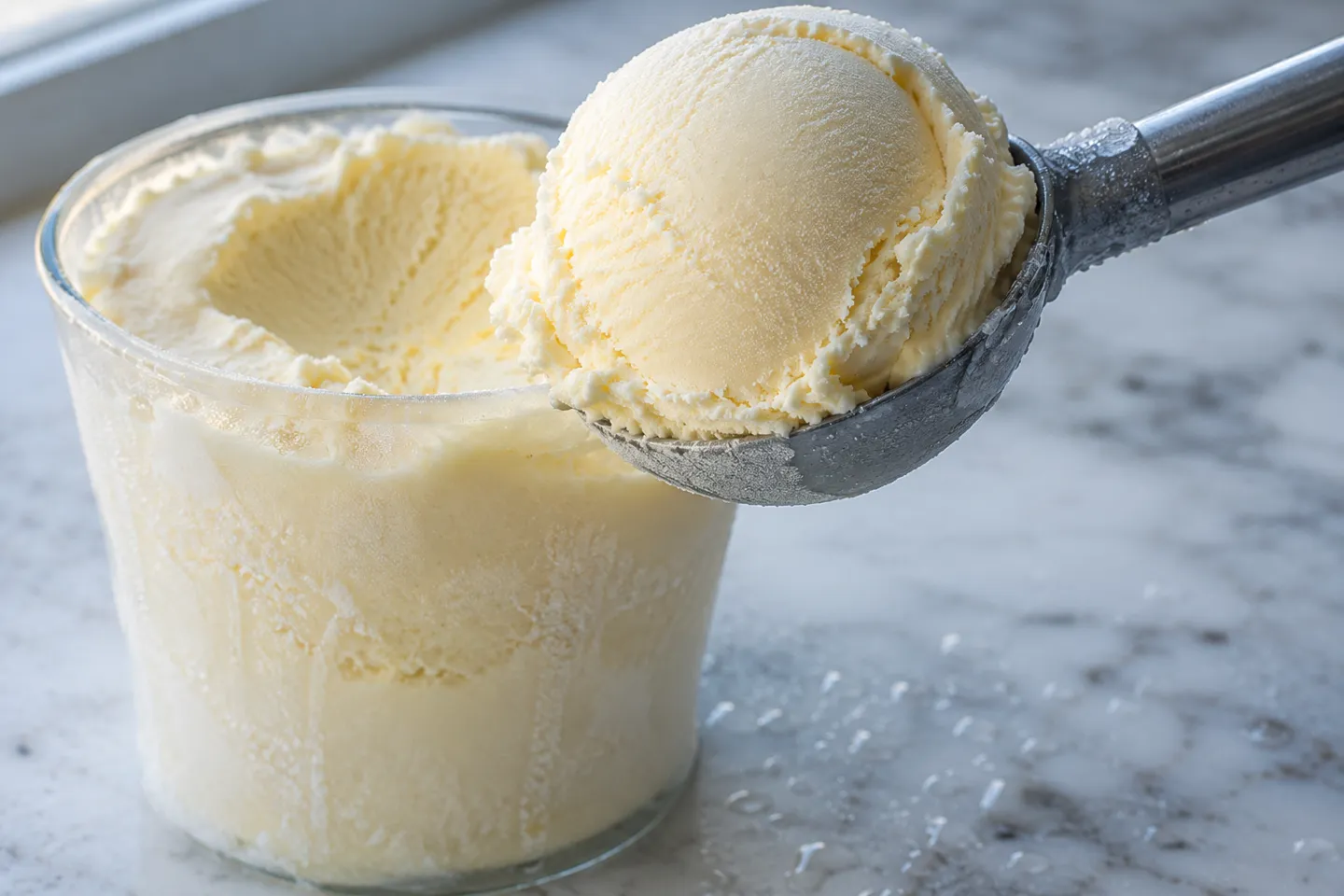
Agave syrup deserves fair treatment here. As a dissolved sugar syrup it also depresses freezing point, which is why some commercial low-sugar recipe programs leaned on it. The problem is not physics, it is accounting. Every gram of agave is a gram of added sugar with full calories, so a frozen dessert built on agave cannot honestly carry a reduced-sugar claim. That is precisely the gap allulose fills: freezing-point function without the sugar math. (r/ninjacreami, 2024)
Frozen-dessert ratios get dialed on real spec values, not forum guesswork.
Get the allulose spec sheetDrinks and Syrups: Water Activity, Shelf Life and the Real Cost
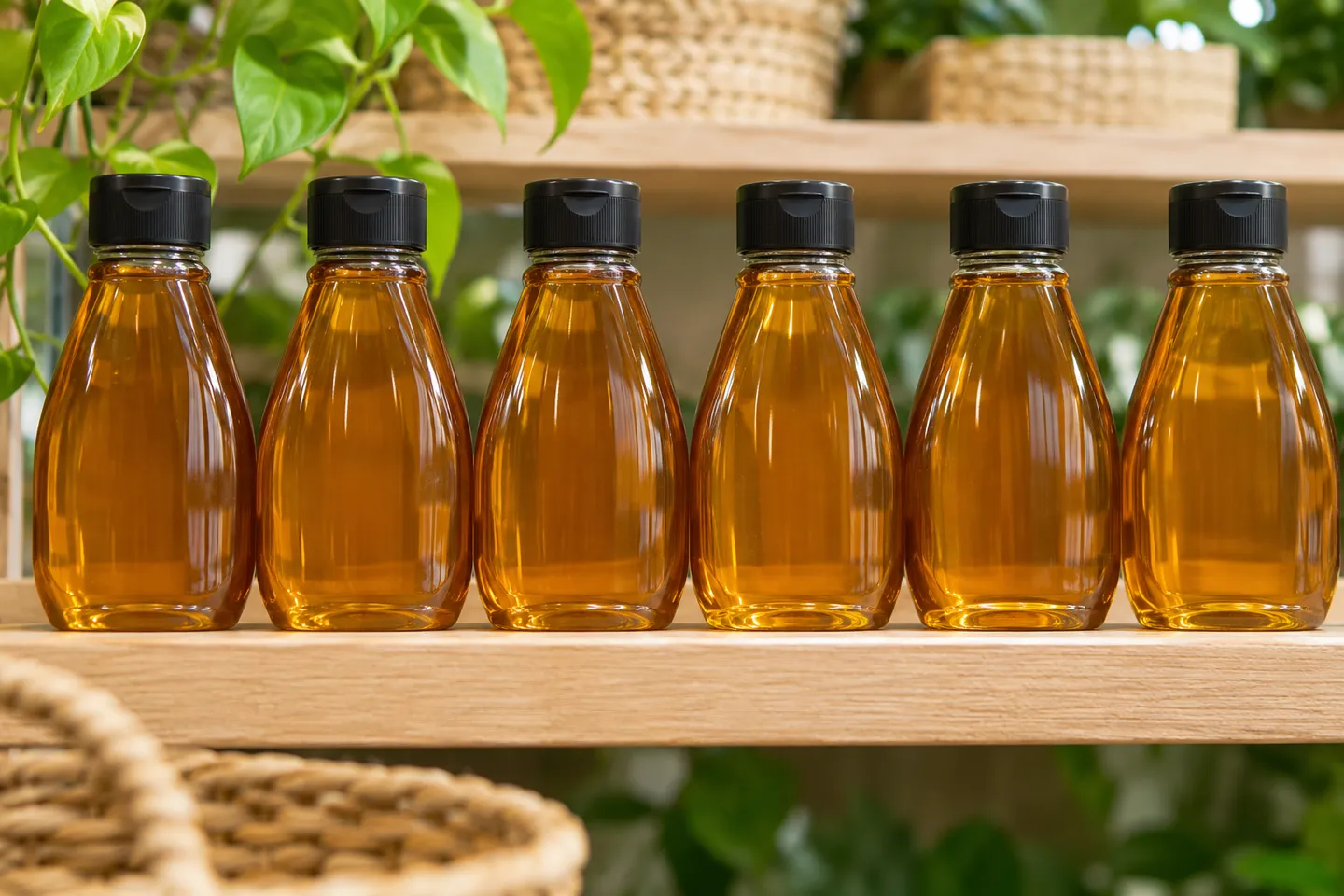
Liquid systems ask a different question: how much water is free, and how long can the product sit on a shelf. Well-made agave syrup is naturally shelf-stable because it is concentrated to very high solids. Allulose syrups answer the same question with published specifications, and a spec sheet worth demanding states both numbers explicitly. One published commercial spec for allulose syrup, for instance, lists dry matter at 70% or higher and water activity below 0.75, the parameter that predicts microbial shelf life. Home users run into this wall in miniature. In a bartender forum thread on allulose simple syrup, the opening questions were shelf life and mold risk, and one commercial user reported keeping batches only two weeks. (r/cocktails, 2024)
Cost enters at this layer too, and it reverses the ranking. The same thread contains the most honest cost data point in this whole comparison. A bar owner reported that an allulose-based syrup blend costs at least 15 times sucrose in a commercial program. (r/cocktails, 2024) The correct response is not to abandon allulose but to change the math. Compare cost per unit of sweetness delivered, and let cheaper bulk ingredients carry volume where they can. Agave has its own supply-side arithmetic: roughly 4.4 kg of fresh agave head goes into one kilogram of syrup, from plants that needed five to seven years to mature. (Saraiva et al., IJERPH, 2022)
What Each Sweetener Actually Does in a Recipe
| Función | Sacarosa | Alulosa | Agave Syrup |
|---|---|---|---|
| Dulzura | baseline | about 70%, clean taste, no aftertaste | about 1.4 to 1.5x, neutral flavor |
| Browning and Maillard | strong | browns earlier, needs lower oven temps | limited browning contribution |
| Freezing-point depression | strong | strong per gram, near-sugar texture in frozen desserts | present, but carries full sugar calories |
| Bulk and moisture | strong | gives bulk, binds moisture | adds water, changes dough balance |
| Glycemic response | high | near zero | low GI via liver-processed fructose |
Source: function comparison compiled from FDA 2020 guidance and Saraiva et al. 2022 review.
Where Each One Breaks
Every ingredient in this comparison has a hard edge, and both are worth knowing before money is spent.
Allulose’s edges are tolerance, price and geography. At high serving amounts some people report gas and bloating while others report nothing at all, so tolerance is individual and worth testing at small dose first rather than assuming. Price is structural: rare-sugar production is still scaling, which is exactly why per-sweetness blending matters. Geography is the hardest edge. As of late 2026, allulose is still not authorized as a novel food in the EU or the UK, with industry consortium applications in progress. A formula built on allulose today cannot ship into those markets unchanged. (Supplement Factory UK News, 2026) One more edge surprises brands. Whole Foods lists allulose among the sweeteners it bans under its ingredient quality standards, a retailer policy rather than a regulatory finding, but a channel-defining one for US grocery. (Whole Foods Market, 2026)
Agave’s edge is the gap between its marketing and its metabolism. The “natural, low-GI” story made it a wellness-aisle star, but the same peer-reviewed review that documents its low glycemic index also documents what the label understates. Syrup solids run roughly 80% fructose, and fructose overconsumption is the mechanism connected to liver fat accumulation and insulin resistance in the research literature. The review’s own conclusion is blunt: producers “ought not to claim that this alternative is more natural or healthier” than sugar. (Saraiva et al., IJERPH, 2022) For a product positioned on health claims, that gap is a brand risk, not just a nutrition footnote.
Both edges convert into the same three checkable actions. Confirm the regulatory status of your target market before formulation. Dose-test tolerance on real servings before scaling. Price the decision per unit of sweetness rather than per kilogram.
Two hard edges to check before you commit: allulose is not yet novel-food authorized in the EU or UK (verify your target market first) and Whole Foods bans it as a retailer policy; agave runs about 80% fructose, so avoid letting a low-GI label imply a health claim the science does not support.
Choosing by Application, Not by Hype
Once the question shifts from “which is healthier” to “which does the job,” the decision becomes an application lookup. The matrix below is the working version of everything above. Find your application row, take the recommended system, and run the boundary check before committing.
Application Matrix: Which System, Where It Fails
| Aplicación | Mejor ajuste | ¿Por qué? | Failure boundary and check action |
|---|---|---|---|
| Hot and cold drinks (home or cafe) | Allulose (syrup or dissolved crystal) | near-sugar taste, no aftertaste, no blood glucose impact | shelf life depends on water activity, demand the Aw spec and test a two-week held batch |
| Baking where browning sells (cookies, glazes) | Allulose, lower oven temp | browns like sugar and carries the Maillard job | browns faster than sucrose, drop oven temperature and watch the first test batch |
| Baking where structure sells (cakes, muffins) | Blend: partial agave or allulose plus bulk | up to 75% sucrose replacement documented for agave syrups | full liquid replacement breaks dough balance, rebalance dry ingredients |
| Postres helados | Alulosa | freezing-point depression without added-sugar math | each freezer differs, dial the ratio on a small batch first |
| Reduced-sugar or keto-labeled products | Allulose-led blend | excluded from Added Sugars on US labels (FDA 2020) | verify target market regulatory status and retail policy (EU/UK pending, Whole Foods ban) |
| Natural-positioned premium products | Agave, honestly framed | clean-label story and flavor consumers recognize | avoid health claims, fructose load is documented, keep the story sensory and sourcing-based |
Source: compiled from FDA 2020, Saraiva et al. 2022, WO2015075473A1, Whole Foods Market standards.
Blend Instead of Choosing
The mature version of this decision is rarely either-or, because the two systems fail in complementary places. Three working combinations cover most briefs. Allulose plus a high-intensity sweetener (monk fruit or stevia) closes the 30% sweetness gap at negligible cost. That is how commercial allulose blends reach the 1:1 sucrose equivalence home users buy off the shelf. Allulose plus a soluble fiber or filler rebuilds the bulk that high-intensity sweeteners cannot provide, and it can add a fiber claim where regulations allow. Agave plus allulose suits liquid systems that need agave’s cost and flavor profile with allulose’s freezing-point and label behavior. Each combination trades a little of one property for a lot of another, so name the property you cannot sacrifice before picking the ratio.
What to Demand From a Supplier
Whether the ingredient is allulose or agave, the sourcing checklist is the same discipline. Ask for the full specification sheet with the assay value, not a marketing summary. Crystalline products should state purity on a dry basis, and syrups should state dry matter, water activity and pH. Demand a batch-level COA with every shipment, since a certificate from last year’s lot says nothing about this week’s. Check certification coverage against your markets and channels (food safety management, religious dietary and non-GMO programs) before sampling, not after. Confirm MOQ and lead-time terms in writing, separating stocked formats from made-to-order ones. Finally, verify regulatory documents travel with the product. The EU novel food question and the retailer policies mentioned above are checked against documents, not websites.
Lista de comprobación de proveedores
- Full spec sheet with the assay value: crystals state purity on a dry basis; syrups state dry matter, water activity and pH.
- Batch-level COA with every shipment, not a certificate from last year’s lot.
- Certification coverage matched to your markets and channels before sampling, not after.
- MOQ and lead-time terms in writing, stocked formats separated from made-to-order.
- Regulatory documents traveling with the product: EU novel food status and retailer policies verified against paperwork.
What This Decision Looks Like on the Business Side
Market size and direction
USD 188.4M
Agave syrup market, 2025. Light agave holds an estimated 56.4% revenue share; favored by beverage and bakery formulators (Market Research Future).
283,4 millones de dólares
Allulose market, 2023, projected to USD 509.3 million by 2030, an 8.6% CAGR (Grand View Research).
Those two numbers describe the same market from opposite ends. Agave is the established volume. It still leads shelves and formulator briefs, and it will keep selling for years. Allulose is the direction. It is smaller in absolute terms but compounding fast, because it solves the two problems agave cannot: the label math and the functional gap. (Market Research Future, 2025) (Grand View Research, 2023)
The Demand Question Has Changed
Buyers used to open these conversations with “is it natural,” and agave was the perfect answer. The question has shifted to “can we claim reduced sugar and still ship the texture customers expect,” and that question has a different winner. The FDA’s 2020 guidance gives allulose the label arithmetic brands need: excluded from both Total Sugars and Added Sugars declarations under enforcement discretion, with calories declared at 0.4 kcal/g. (Administración de Alimentos y Medicamentos de Estados Unidos, 2020) Meanwhile the fructose scrutiny that pushed the peer-reviewed literature to caution against health claims keeps eroding the story agave was built on. (Saraiva et al., IJERPH, 2022)
Inventory Structure and Sourcing Filters
For distributors and wholesalers carrying both lines, the practical read of that shift is structural. The allulose-led blending system is where demand is heading. Crystalline allulose is the stockable core, since it stores and flows like a powder ingredient. Syrup is the made-to-order companion. High-intensity sweeteners and fibers are the pairing SKUs that complete a reduced-sugar brief. Single-ingredient agave stocking serves the premium natural niche, which is real but no longer the growth question buyers bring.
The sourcing filter matters more than the price list in this category. A supplier either publishes assay specs and batch COAs, or asks you to discover quality at receiving. Certification coverage either matches your markets, or blocks them. Capacity either survives a scaled-up customer, or caps your best account at one purchase order. Those four checks, specification transparency, certification coverage, capacity and lead-time terms, plus MOQ flexibility, separate a supplier that carries your growth from one that ships your first container.
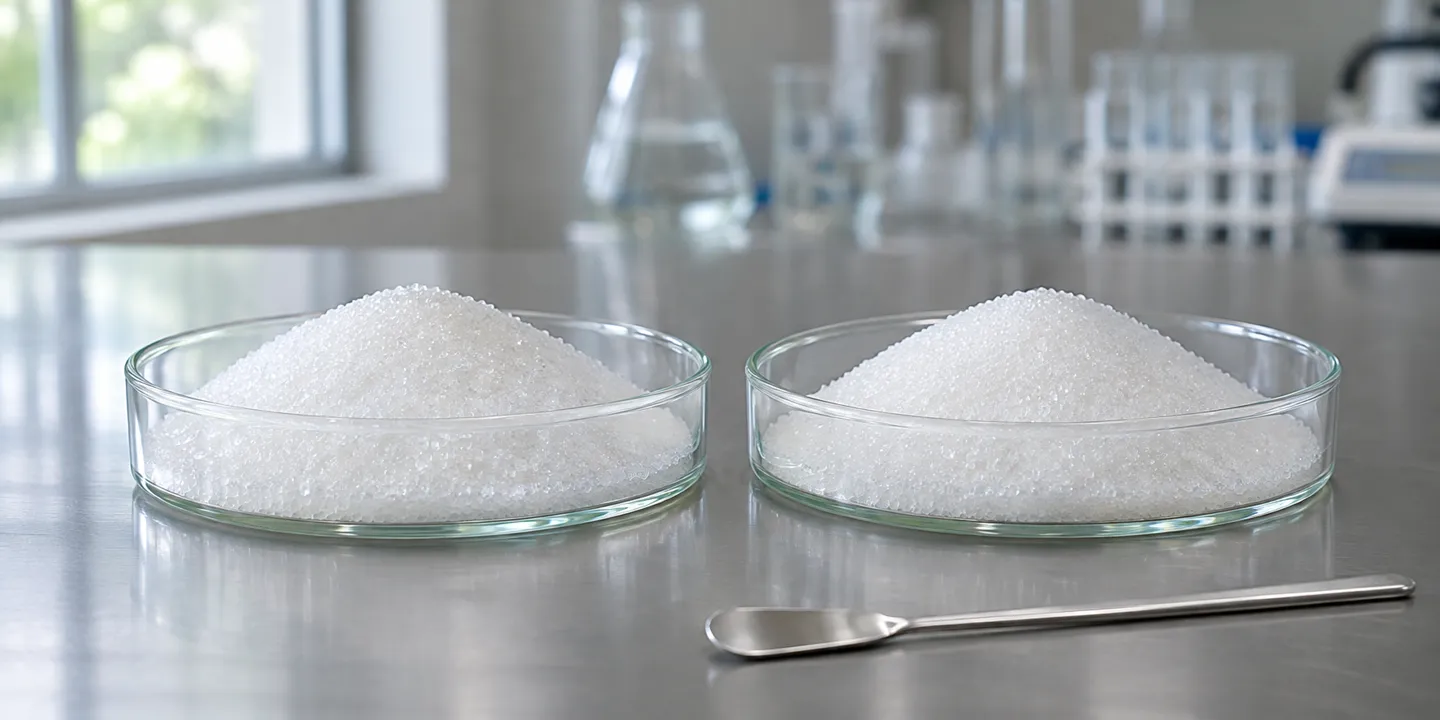
We hold our own line to that filter. SAIGAO publishes its allulose specification sheets for both crystalline and syrup formats. Our allulose specification sheets state the assay values and water activity parameters discussed above before you ever request a sample. The documents are public, so the filters start working before the first email. We produce under ISO 22000, ISO 9001, HACCP, Kosher, Halal and Non-GMO (IP) certified systems. Our products are built to meet FCC, USP, BP and EP standard requirements, and batch COAs ship with every order. The four sourcing filters above are only useful if a supplier volunteers the documents first, and we would rather hand them over than make you ask.
The short version: agave still earns its shelf space, but the question this comparison actually answers has changed. When a buyer asks for sweetness that behaves like sugar and labels like a rare sugar, the functional stack is the system that answers it. Allulose as the core, a high-intensity partner, fiber for bulk. The supplier worth shortlisting is the one whose paperwork proves it before the sample does.
Build your reduced-sugar line on documented specs
SAIGAO publishes crystalline and syrup spec sheets up front, with batch COAs and ISO 22000, Kosher, Halal and Non-GMO certified production behind every order.
Contact SAIGAO for samplesReferencias
- U.S. Food and Drug Administration. “Guidance for Industry: The Declaration of Allulose and Calories in Allulose on Nutrition and Supplement Facts Labels.” 2020. fda.gov
- Saraiva, A., Carrascosa, C., Raheem, D., Ramos, F., Raposo, A. “Agave Syrup: Chemical Analysis and Nutritional Profile, Applications in the Food Industry and Health Impacts.” IJERPH 19(12):7022. 2022. pmc.ncbi.nlm.nih.gov
- Grand View Research. “Allulose Market Size, Share & Growth Analysis Report, 2030.” 2023 data. grandviewresearch.com
- Market Research Future. “Agave Syrup Market (2026-2035).” 2025 data. marketresearchfuture.com
- World Intellectual Property Organization. “Food and beverage products comprising allulose (psicose).” WO2015075473A1. 2015. patents.google.com
- Whole Foods Market. “Food Ingredient Quality Standards.” 2026. wholefoodsmarket.com
- Supplement Factory UK. “Allulose Novel Food EU UK Process: Industry Consortium.” 2026. sfnews.supplementfactoryuk.com
- r/cocktails. “Q: Allulose Simple Syrup? Shelf Life, Sweetness, Aftertaste?” 2024. reddit.com
- r/ninjacreami. “Best sweetener to use?” 2024. reddit.com
 English
 Russian
 Spanish
 French
 Arabic