
The Verdict First: Xylitol Is an Addition to Fluoride, Not a Replacement
The fluoride-free tube sits at eye level, dressed in the same green type as every “natural” claim on the shelf. It lists xylitol like a credential. Above it, your usual fluoride paste costs less. Somewhere between the aisle and the dentist’s chair, xylitol picked up a reputation as the ingredient that replaces fluoride. The label is built on that reputation. The reputation survives because part of it is true: xylitol does fight cavities, just not in the way fluoride does.
Here is the honest version. Fluoride repairs and hardens tooth enamel, reversing the acid damage that brushing alone cannot undo. Xylitol starves the bacteria that make that acid in the first place. One fixes the damage after it starts. The other reduces the damage before it happens. No mechanism connects the two. That is why dentists keep saying the same thing: these are not competitors on one axis, they are workers on two.
What the clinical evidence actually supports is adding xylitol to a fluoride routine, not replacing fluoride with it. A 2020 systematic review went through the head-to-head trials. Its conclusion: adding xylitol to existing fluoride regimes may be beneficial, while reliable proof that xylitol alone matches fluoride’s protection does not exist (Mickenautsch & Yengopal, PMC, 2020). That single sentence, add rather than replace, is the spine of everything below.
The rest of this article shows where that verdict comes from. It covers how each ingredient works. It explains why the same xylitol gets strong evidence in one product form and weak evidence in another. It gives you a way to rank the claims you will meet on packaging. And it marks the cases where replacing fluoride would genuinely put your teeth at risk.
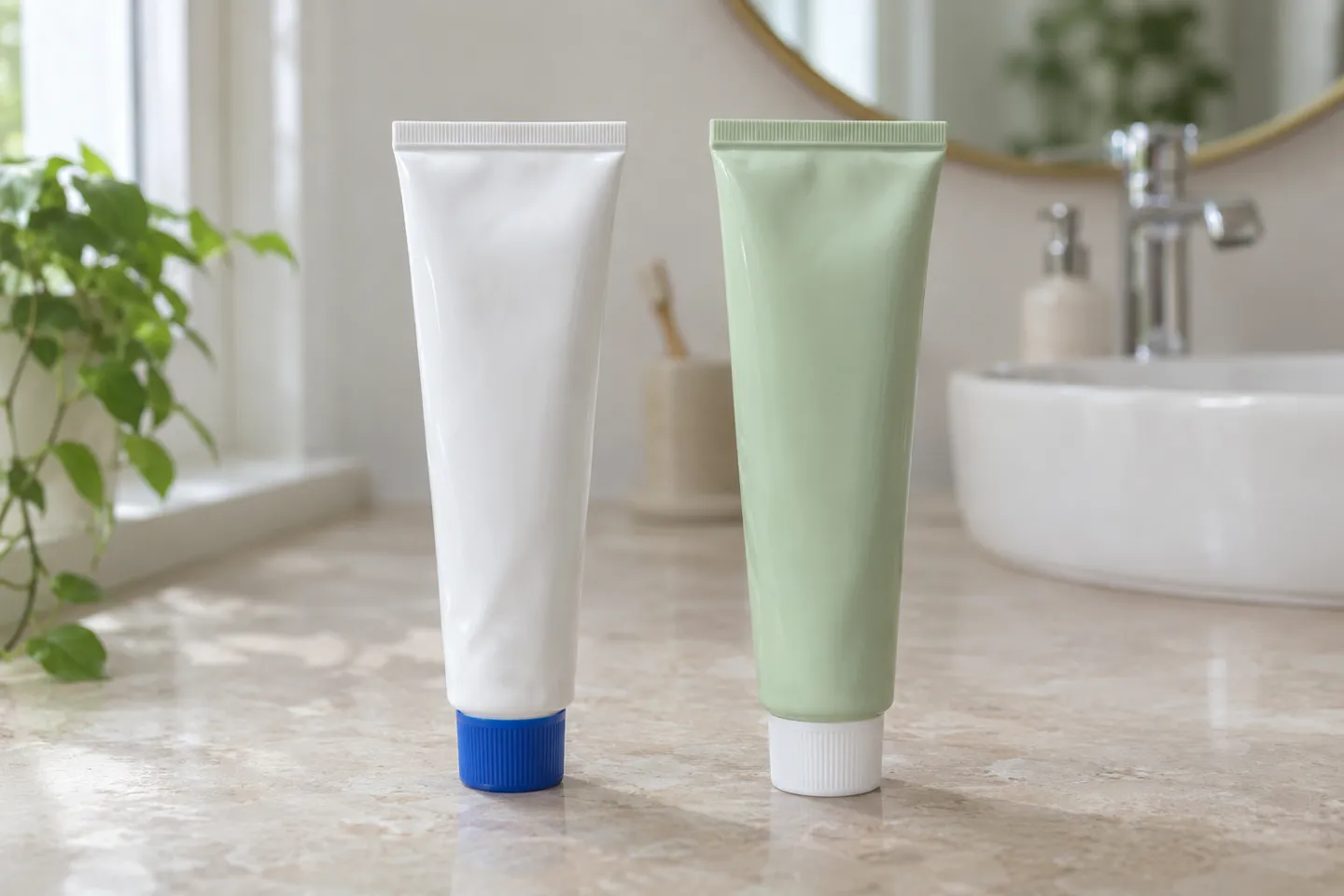
Two Mechanisms, Two Exposure Paths: Why the Same Ingredient Gets Different Evidence
Fluoride works chemically on the tooth itself. In saliva, fluoride ions combine with calcium and phosphate to rebuild enamel into fluorapatite, a harder mineral that acid dissolves more slowly (MouthHealthy, ADA, 2026). This process is remineralization, and it is cumulative. Small daily doses do more than occasional heroic ones. That is why a twice-daily habit matters more than any single product choice. Community water fluoridation alone prevents at least a quarter of tooth decay across all ages (MouthHealthy, ADA, 2026). Even before toothpaste enters the picture, this mechanism is already doing heavy work.
Xylitol works on the bacteria instead. Streptococcus mutans is the main cavity-forming species, and it cannot metabolize xylitol the way it metabolizes sugar. It burns energy trying and produces no acid. It also loses the ability to build the sticky plaque glue that anchors it to enamel. Chewing adds a second effect: it floods the mouth with saliva, which buffers acid and carries minerals back to the tooth surface. Two different targets, no overlap in mechanism, and no competition for the same job.
The confusing part is not the mechanisms. It is that xylitol seems to have strong evidence in some products and almost none in others. The difference comes down to exposure: how much xylitol the product carries, and how long it stays in your mouth. A toothpaste typically contains around 10% xylitol. Sugar-free gums and candies run at 10 to 30%. The gum stays in contact for twenty minutes after a meal, rather than being rinsed away after two (Vranic et al., PMC, 2004; ADA, 2023).
Where the two ingredients actually sit in everyday products
| Продукт | Fluoride content | Xylitol content | Mouth contact time | Evidence implication |
|---|---|---|---|---|
| Fluoride toothpaste | 1000-1500 ppm (typical) | around 10% in xylitol formulas | about 2 minutes, then rinsed | fluoride gets brief but concentrated exposure; xylitol exposure is too brief |
| Sugar-free chewing gum | none | 10-30% | about 20 minutes after meals | the best-studied xylitol exposure window |
| Xylitol mints | none | often the majority sweetener | several minutes as it dissolves | similar logic to gum |
| Mouthwash | varies by product | some formulas add xylitol | under a minute | too brief for xylitol to do much |
This table explains a pattern you may have noticed without knowing why. The American Dental Association backs sugar-free gum, suggesting chewing it for twenty minutes after meals to help prevent decay (ADA, 2023). The same organization stays more measured about xylitol toothpastes. The ingredient did not change between those positions. The delivery format did. The same logic applies to the newer ingredient families on the shelf. Nano-hydroxyapatite works on remineralization, just like fluoride does. Charcoal does essentially none of this work; it is cosmetic, so it sits outside this comparison entirely.

The Strength Ranking of the Evidence
Packaging uses one word for every kind of proof: proven. The research behind that word comes in grades. Once you can rank them, most shelf confusion resolves itself.
The pyramid, from strong to weak
The four grades of proof, strongest first
Head-to-head randomized trials
Assigned xylitol versus fluoride, then counted cavities. Missing at the quality the question needs.
Single-arm xylitol gum trials
Show reduction in chewers, but their fluoride habits blur who did what.
Laboratory studies on extracted teeth
Concentration-dependent effects in idealized conditions that may not survive a real mouth.
Mechanism-only reasoning
Plausible chemistry, zero clinical counting.
At the top sit randomized head-to-head trials. In these, cavity-prone people get assigned to xylitol versus fluoride and are followed long enough to count cavities. This is the only design that could prove “equal or better.” A 2020 systematic review went looking for trials of that quality. It found too few, and the ones it found carried too much bias to settle the question. Its working conclusion was narrower: adding xylitol to fluoride may be beneficial (Mickenautsch & Yengopal, PMC, 2020). One tier down sit single-arm trials of xylitol gum. They show cavity reduction in people who chew it. But those people usually kept ordinary fluoride habits too, which makes the xylitol contribution hard to isolate. Below that sit laboratory studies on extracted teeth. At the bottom is mechanism-only reasoning.
Why the label and the review disagree
A brand page saying “clinically proven alternative to fluoride” is claiming top-of-pyramid support. By the systematic review’s accounting, that support is not there. The ADA’s own position is the telling contrast. It certifies sugar-free gum as helpful between brushes, never as a fluoride replacement (ADA, 2023). One recent lab study sharpens the point further. Mixing xylitol into fluoride reduced enamel demineralization at every concentration tested. But only a 20% xylitol formula improved remineralization of early lesions. And that result came from extracted teeth in idealized conditions, not mouths (Carvalho & Tenuta, ScienceDirect, 2024). In vitro findings often fade at the mouth’s door. A 2024 lab result is a lead, not a license.
Evidence check for any xylitol product claim
- Head-to-head proof of matching fluoride: does not exist (systematic review, 2020).
- Proof xylitol adds benefit on top of fluoride: plausible, supported at gum exposure levels.
- Lab-only support: common on packaging, weakest tier.
- “Fluoride-free means safer for adults”: no clinical basis for cavity prevention.
The 2024 heart headline, read correctly
In 2024, a study in the European Heart Journal reported two things. People with the highest circulating xylitol levels had roughly double the rate of heart attacks and strokes. And adding a xylitol-sweetened drink to healthy volunteers’ day increased markers of platelet reactivity (Витковски и др., «European Heart Journal», 2024). Headlines compressed all that into “xylitol causes heart attacks,” which the study did not establish. Its highest-exposure group was mostly older cardiac-surgery patients. Their blood xylitol may reflect metabolic differences rather than gum-chewing. Circulating xylitol is also a different measurement from dietary intake. The honest reading has two parts. The study raises a real question worth following. It is not a reason to keep a cavity-prone child off a fluoride toothpaste, nor a reason a low-risk adult needs xylitol at all. Neither side of the fluoride debate gets ammunition from it.
The Boundaries: Who Must Stay on Fluoride, and Where Xylitol Genuinely Helps
Everything above was about what the ingredients can do in principle. Boundaries are where choices get made. The failure mode here has a specific shape. A cavity-prone adult swaps a fluoride paste for a xylitol-only one. The freshness feels convincing. At the next checkup, the swap has removed the only ingredient rebuilding their enamel.
If the formula you are building has to hold a xylitol specification, Saigao answers assay, mesh and documentation questions within 12 hours.
Ask About Xylitol SpecsWhere fluoride is non-negotiable
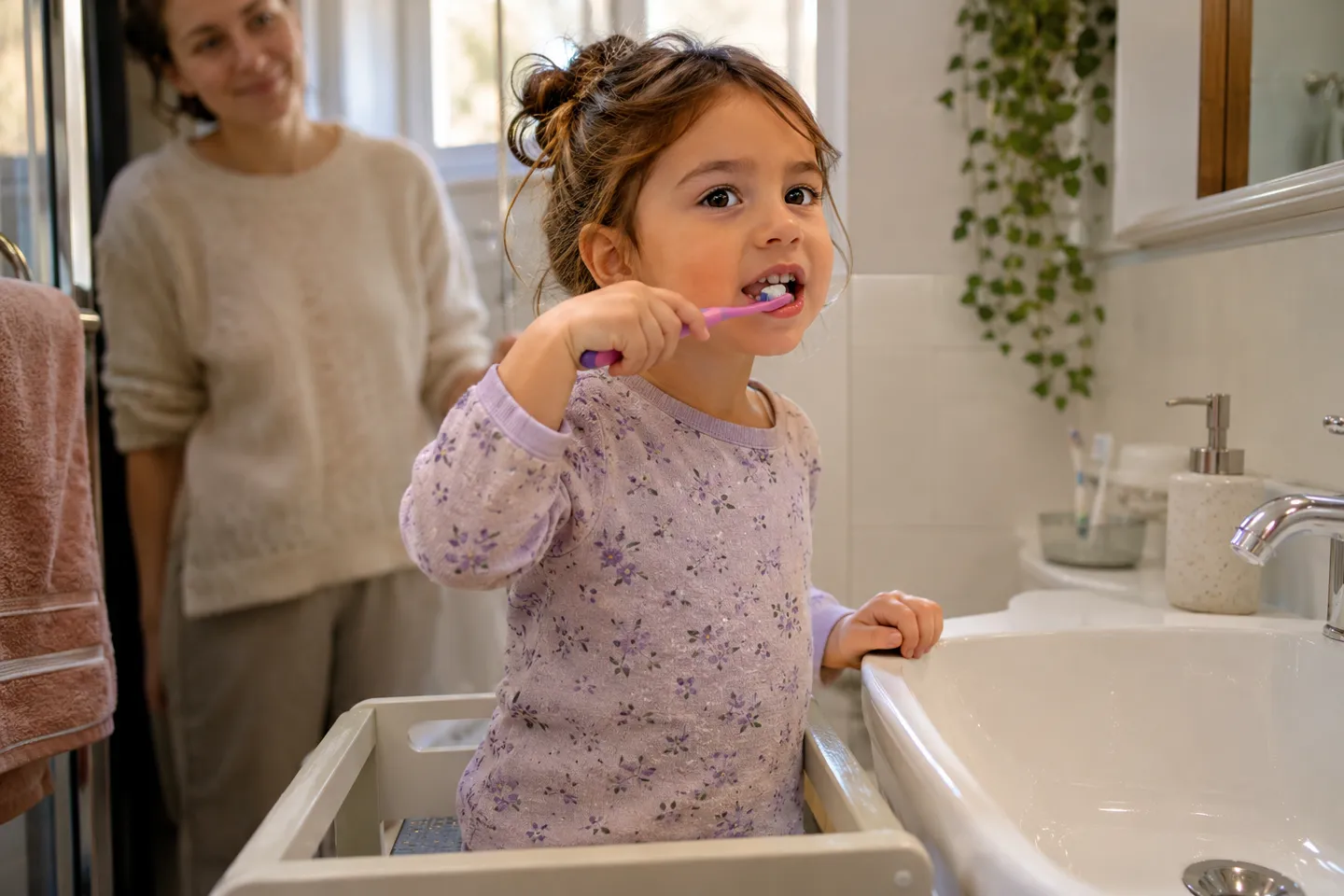
If you have had cavities or fillings in the past two years, your mouth has demonstrated something. It grows cavities faster than saliva can repair them. Fluoride’s remineralization is the ingredient with the track record of changing that (MouthHealthy, ADA, 2026). Children are the second hard boundary. For babies, brush with a grain-of-rice amount of fluoride toothpaste once teeth appear. From age three to six, use a pea-sized amount, with supervision to limit swallowing (MouthHealthy, ADA, 2026). The fluoride-free swap fails fastest in exactly these two groups. Braces wearers belong here too. Appliance edges shelter plaque, and any reduction in protection shows up as white-spot marks when the braces come off.
Where xylitol genuinely earns its place
The clearest win is dry mouth, whether from medication, aging, or sleep breathing. Less saliva means both less acid-clearing and less remineralizing. Xylitol gum attacks the problem on both fronts at once. It stimulates the saliva you are missing, and it denies bacteria the sugar they need. The second opening is the after-meal window, when you cannot brush. Twenty minutes of xylitol gum is the ADA-endorsed stand-in (ADA, 2023). The third is the low-risk adult who simply wants to add protection. For that person, xylitol mints between meals are a reasonable add-on to a fluoride paste they should keep.
Scenario boundaries at a glance
| Сценарий | Keep this | Xylitol’s real role | Check before acting |
|---|---|---|---|
| High-caries-risk adult (fillings or decay in 2 years) | fluoride toothpaste twice daily | optional add-on: after-meal gum | do not swap; add gum only |
| Child under 3 | grain-of-rice fluoride toothpaste | none needed | fluoride alone is the protocol; no xylitol products |
| Child 3-6 | pea-sized fluoride toothpaste | none needed | supervise brushing; keep sweetened gums away |
| Dry mouth (medication, aging) | fluoride toothpaste | strongest xylitol use case: gum or mints through the day | count daily gum pieces toward total polyol intake |
| Braces wearer | fluoride toothpaste | helpful between meals | ask your orthodontist at the next adjustment |
| Low-risk adult | fluoride toothpaste | reasonable add-on: mints between meals | the fluoride habit does the heavy lifting |
| Dog in the household | fluoride toothpaste | keep all xylitol products stored high and closed | check labels of gums, mints, nut butters; call a vet at once if one is eaten |
Dose and household safety
For healthy adults, the amounts in gum and mints are a few grams across a day. That sits far below the intake where sugar alcohols start causing bloating and laxative effects. The same ceiling is why label guidance says to enjoy sugar-free gum in moderation.
Dog households: store xylitol like medication
In dogs, xylitol pushes an insulin surge that can crash blood sugar within 10 to 60 minutes of eating gum, mints or toothpaste (FDA, 2024). Weakness, staggering, collapse or seizures can follow, sometimes 12 to 24 hours later. Keep every xylitol product stored high and closed, and if a dog eats any, call a vet at once rather than waiting for symptoms.
How to Combine Them, Scene by Scene
Start from the base: fluoride toothpaste, twice a day, at the right dose for your age (MouthHealthy, ADA, 2026). For most adults that is simply a full brush, twice daily. This layer is settled and cheap. Nothing in this article is a reason to change it.
Add the xylitol layer where it fits your actual day. Gum for twenty minutes after lunch, when you cannot brush. Mints through a dry-mouth afternoon. The addition costs a few dollars a month and covers the gap your brush cannot reach.
Then check labels against the marketing. A paste advertising xylitol still needs its fluoride content listed. A gum selling “sugar-free” should name xylitol high in the ingredient list. Some sugar-free gums deliver their sweetness through other polyols that bacteria can still partly digest. The claim that matters is the combination you are choosing, not the word natural.
One swap to refuse, whatever the shelf suggests. Do not replace a fluoride mouthwash with a xylitol one if you are cavity-prone. A sixty-second rinse gives xylitol nothing to work with. Fluoride mouthwash earns its place through decades of trials.
What This Means for Oral Care Products
Read the consumer story the way a product line is actually bought. Three conclusions fall out of the evidence above, not out of trend reports. The fluoride-free wave on social feeds is real demand. But the clinical recommendation channel does not carry fluoride-free products. That channel is the dental professional who tells a cavity-prone patient what to buy, and the evidence hierarchy in this article is the same one professionals are trained on. A line built on fluoride-free positioning is, structurally, a line that dental recommendation cannot reach.
That points at a different structure. The evidence supports xylitol as an addition to fluoride, so the mainline SKU is the combination. Fluoride plus xylitol in one paste or gum serves the mechanism overlap the lab work points to, and it keeps the professional channel open. Fluoride-free xylitol products remain worth making as niche SKUs, aimed at low-caries-risk adults and dry-mouth users. The consumer evidence above says those two groups genuinely fit. But a full-line bet on fluoride-free leaves the strongest distribution channel off the map.
Procurement follows the same logic. Formula percentages drive ingredient specifications. A toothpaste loads around 10% xylitol; a gum loads 10 to 30%. Both need raw material certified against pharmacopoeia reference standards, not a food-grade verbal assurance. Assay windows and particle-size grades belong in the purchase contract. The template is the publicly published xylitol specification: 98.5% to 101.0% assay, with mesh options in the 10-40, 20-60 and 100 ranges. The demand trend behind these SKUs is measurable rather than hoped for. The global xylitol market is projected to grow from $885.46 million in 2026 to $1,491.07 million by 2034, a 6.73% annual rate (Fortune Business Insights, 2026). That growth sits on top of an oral-care channel the ADA has certified sugar-free gum into since it first put its Seal on one in 1989 (ADA, 2023).
The consumer question, replace or combine, took this whole article to answer honestly, and the answer was combine. The product question has the same answer, for the same reason. That is usually the sign of a market position that is sound rather than fashionable.
If you are weighing a xylitol SKU next to your fluoride line, the numbers behind this article are on our xylitol spec sheet. They list USP/BP/FCC reference standards, 98.5% to 101.0% assay and three mesh grades, and Saigao answers specification questions within 12 hours.
Get the Xylitol Specification Sheet
USP/BP/FCC reference standards, 98.5% to 101.0% assay, mesh grades 10-40, 20-60 and 100. Specification questions answered within 12 hours.
Запросить техническое описаниеСсылки
- Mickenautsch S, Yengopal V. “Anticariogenic effect of xylitol versus fluoride: a quantitative systematic review of clinical trials.” 2020. pmc.ncbi.nlm.nih.gov
- Vranic E, et al. “Formulation Ingredients for Toothpastes and Mouthwashes.” 2004. pmc.ncbi.nlm.nih.gov
- American Dental Association. “Chewing Gum (Oral Health Topics).” 2023. ada.org
- American Dental Association, MouthHealthy. “Fluoride.” 2026. mouthhealthy.org
- Carvalho TS, Tenuta LM. “Xylitol associated or not with fluoride: Is the action on demineralization and remineralization concentration-dependent?” 2024. sciencedirect.com
- Witkowski M, et al. “Xylitol is prothrombotic and associated with cardiovascular risk.” European Heart Journal 45(27). 2024. academic.oup.com
- Управление по контролю за продуктами и лекарствами США. “Не давайте собакам ксилитол — он опасен для них”. 2024 г. fda.gov
- Fortune Business Insights. “Xylitol Market Size, Share, Trends.” 2026. fortunebusinessinsights.com
 English
 Russian
 Spanish
 French
 Arabic